vegetables

Eating With Our Eyes

Although it is technically June here in Michigan, it feels more like April.  It’s been unusually cool and wet and most crops are more than two weeks behind.  We are watching the garlic closely for signs of stress.  So far, so good but the deer, bunnies and woodchucks have had their way with all three varieties of beans we have planted.  I tilled once again and we have replanted, hoping for better results.  All things flowering have literally exploded in color which is a feast for the eyes.  The dogwood, lilacs, honeysuckle and any wild flower imaginable are in full flower, and my Korean lilac outside our kitchen door would bowl you over with its fragrance.  It challenges one’s perspective; is the glass half empty or half full?

I read last week that normally 73% of Michigan crops would be planted by this time; and the records have shown that this year farmers have only planted 33%.  This is stressful both financially and emotionally.  The mood at our farmers market is not as upbeat as it normally is at the beginning of the season.  The jury is out; we will have to stay patient and see what unfolds.  Farming is an act of faith, and we are being tested; we do not control the weather.  Tomorrow we will be planting potatoes if the weather prediction holds true.

Meanwhile, during our quieter moments, we revel in the beauty that surrounds us and feel gratitude for each day.  When creating meals we often combine both color and texture as much as possible.  The visual appeal of food is hard-wired into our brain.  The sight, aroma, taste and even the sound of food all factor in one’s decision in choosing what we eat.  The expression “you eat with your eyes” is certainly true since when a dish is visually appealing, it’s more appetizing.  Healthy food is not only beautiful, but for me its creation is an act of love.

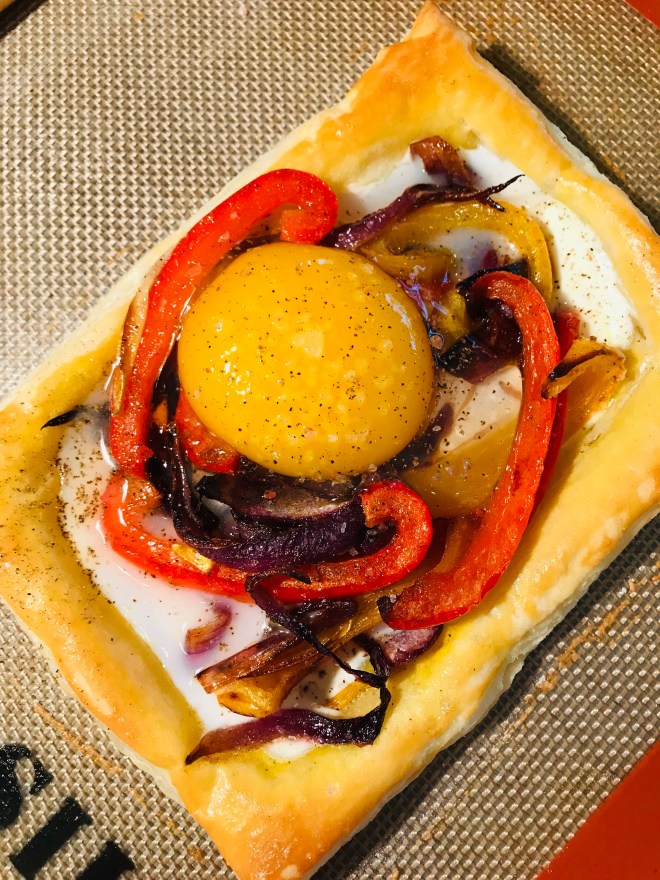
For example what seems more appealing to you; an Egg McMuffin or a Red Pepper, Onion and Duck Egg Gallette?  I certainly know which one I would choose!

SWEET PEPPER & DUCK EGG GALETTE

INGREDIENTS:

  • 2 large sweet bell peppers, (I use one red and one yellow), cut into 1/2 inch strips
  • 2 small red onions, halved and cut into 1/2 inch wedges
  • 3 fresh thyme sprigs, leaves removed
  • 1 teaspoon ground cumin
  • 1 teaspoon ground coriander
  • 6 tablespoons extra-virgin olive oil
  • Handful of fresh parsley, chopped
  • Handful of fresh cilantro, chopped
  • 1 sheet frozen puff pastry, thawed
  • 1 farm fresh egg, beaten, for brushing the pastry
  • 3 tablespoons sour cream
  • 4 farm fresh duck eggs
  • Kosher salt and freshly ground black pepper to taste

img_4381

img_4443

DIRECTIONS:

  1. Preheat oven to 400 degrees F.
  2. Mix together the pepper, onions, thyme leaves and spices in a medium bowl.  Add the olive oil and toss well so that everything is coated with the oil and spices.
  3. Spread on a baking sheet and roast for about 30 minutes, stirring and rearranging the vegetables a few times so that they don’t burn.  Remove from oven and sprinkle with half of the fresh herbs; set aside.
  4. Turn the oven up to 425 degrees F.  Roll out the pastry sheet on a floured surface until it reaches a 12 x 12 inch square.  Cut into four 6 inch squares.  Transfer to two parchment or silpat lined baking sheets.
  5. With a butter knife, score a 1/2 inch frame around each square (don’t cut all the way through).  Prick the inside of the square all over with the tines of a fork.  Put back in the fridge for 30 minutes.
  6. Remove the pastry from the fridge and brush all over with a beaten egg.  Spread the inside of each square with 3 teaspoons of sour cream.
  7. Bake for 10 minutes, until rising and starting to brown.  Remove and carefully crack an egg into the center of each galette.
  8. Put back into the oven for about 10 minutes, or until the egg is set.
  9. Sprinkle with salt, pepper and remaining herbs.  Drizzle lightly with olive oil and serve immediately.

Serves 4

img_4445

img_4446-1

             “In the spring I have counted 136 different kinds of weather inside of 24 hours.”                       —Mark Twain


Frittering Our Time Away

Time.  It’s slippery isn’t it?  It never seems as though we have enough, while our lists keep getting longer.  Time has been on my mind in a big way these days; particularly when thinking about the family and friends no longer with us.  We are coming up on the one year anniversary of the passing of our dear friend and neighbor Lynner.  Not a day goes by that we don’t miss her.  We have dozens, upon dozens of photos with her, usually eating, drinking and generally being merry.  She had one of the biggest hearts I have ever known, not to mention being an excellent sous chef and Small Engine Goddess.

img_1381

When you loose someone unexpectedly, I feel that there is a responsibility for the living to celebrate and remember that person.  I ask myself what would Lynner expect from us?  How would she want us to live?  Perhaps the answer is in the question itself; to stay strong and continue living.  Lynner will always be a part of our lives.  I feel her when I appreciate all things in nature.  I feel her when her dog Willow licks my face, when we sit down with our evening cocktail, or when we prepare a meal.  Our cherished memories are salve for our hearts, as we understand that we are only promised today.  We must learn to be grateful and use each day wisely.

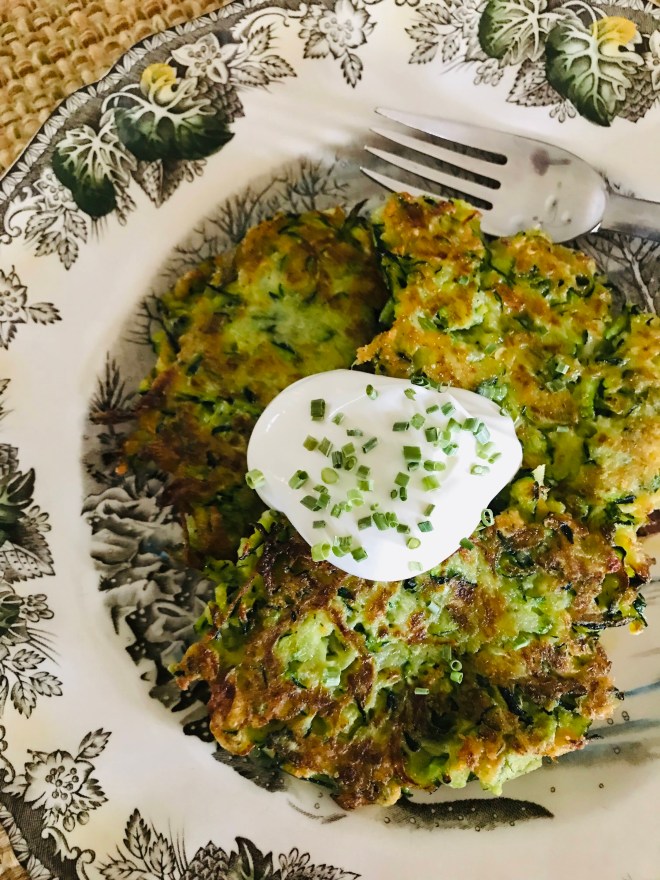
Lynner was often at our house, or we her’s for dinner and drinks.  She loved all things vegetable, as do we.  These zucchini fritters would be right down her alley.  I can hear the laughter in the kitchen now….

img_4437-1

ZUCCHINI FRITTERS

INGREDIENTS:

  • 1 1/2 pounds zucchini (about 2 large), grated
  • 1 teaspoon kosher salt
  • 1/4 all-purpose flour
  • 1/4 cup Parmesan or pecorino, grated
  • 2 cloves garlic, grated
  • 1 large farm fresh egg, light beaten
  • Kosher salt and freshly ground black pepper to taste
  • 2 tablespoons extra-virgin olive oil
  • Sour cream and chopped chives for garnish


img_4440-1

DIRECTIONS:

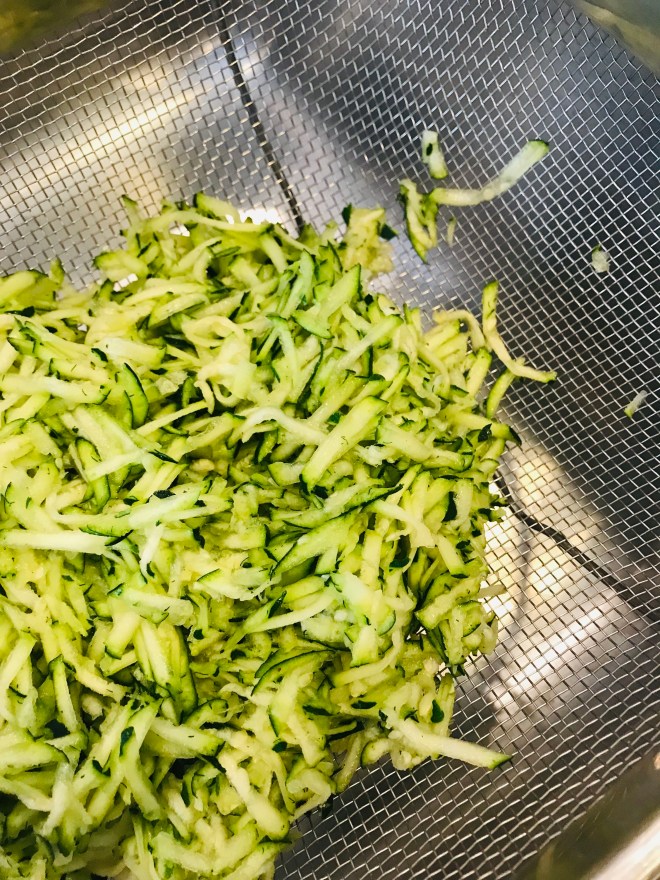
  1. Place grated zucchini in a colander over the sink.  Add salt and gently toss with your hands to combine; let sit for 10-15 minutes to allow the salt to extract the water in the zucchini.  Using a clean kitchen towel, drain zucchini by gently squeezing the liquid out completely.
  2. In a large bowl, combine zucchini, flour, cheese, garlic and egg; season with salt and pepper, to taste.
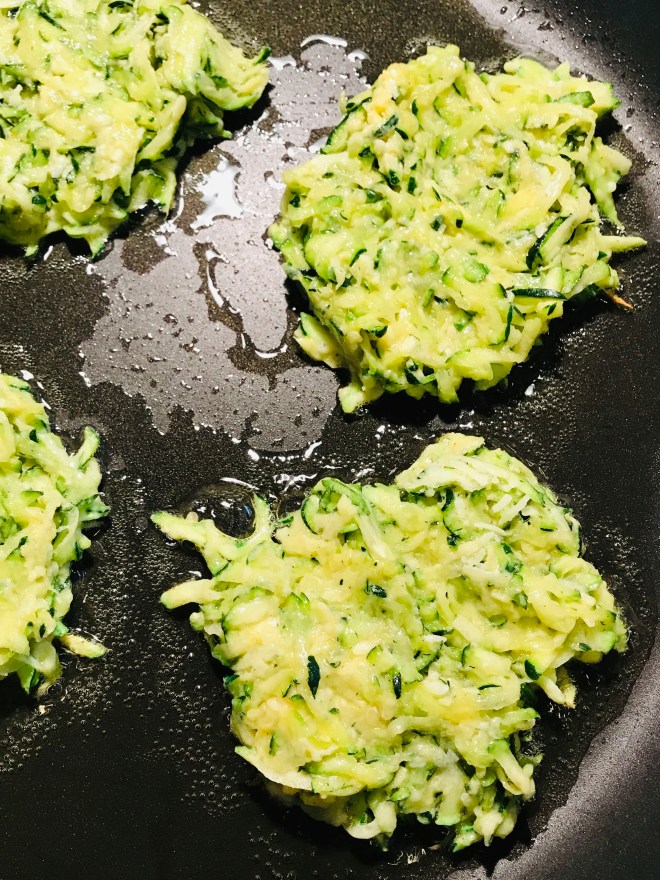
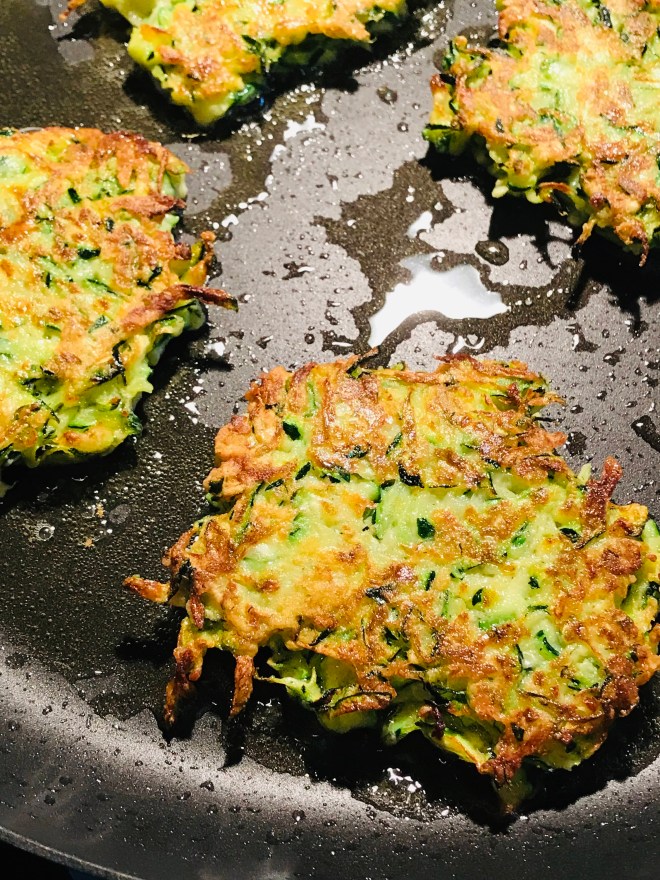
  3. Heat olive oil in a large non-stick skillet over medium-high heat.  Using a 1/4 measuring cup, scoop up a scant amount for each fritter; and then flatten with a spatula.  Cook until the underside is golden-brown, about 2-3 minutes.  Flip and cook on the other side, about 1-2 minutes longer.  Work in batches, placing the cooked fritters on a plate lined with paper towel.
  4. Serve immediately with sour cream and chives.

img_4441-1

img_4442-1

“Many people will walk in and out of your life, but only true friends will leave footprints in your heart.”  —Eleanor Roosevelt.

Nature is Nurture

Sunday….a day of much needed rest.  We are getting back to the swing of things here on the farm.  Spring is indeed a beautiful time of year.  We got up early this morning to enjoy coffee in the screen porch.  It is peaceful listening to the birds waking up around us.  We are fortunate to have lake, marsh, meadow and woods on our land.  We spotted several pair of Baltimore Orioles, Rose-Breasted Grosbeaks, Hairy, Downy, Red-Headed and Red-Bellied Woodpeckers, along with Yellow and Purple Finches, Sandhill Cranes, Canadian Geese and Blue Heron.  We also have two pairs of Loons and Bald Eagles on our lake.  If there is a bird nirvana, this is it.

May is an intense time on the farm.  Tilling, sowing and transplanting are the order of the day.  This spring has been very cool and wet.  Just keeping up with the mowing can be a challenge between raindrops. (I swear you can hear the grass grow!)  The garlic and onions, along with carrots, beets, sugar-snap peas, chard, spinach, lettuce and herbs are planted.  Tomorrow we start transplanting tomato seedlings from their 48-packs to 4 1/2 inch pots.  This will allow them to beef up and receive full spectrum light before they are transplanted to our field.  Unfortunately we do not grow my favorite vegetable, asparagus.  This isn’t for lack of trying, but between our dense clay soil and accidentally tilling in our newly planted starts a few years ago, I’m happy there was an abundance of them at market yesterday!  There are so many ways to use them, whether it is breakfast or dinner.  I gorge on them when they are on, because it is the one vegetable I will only eat fresh.

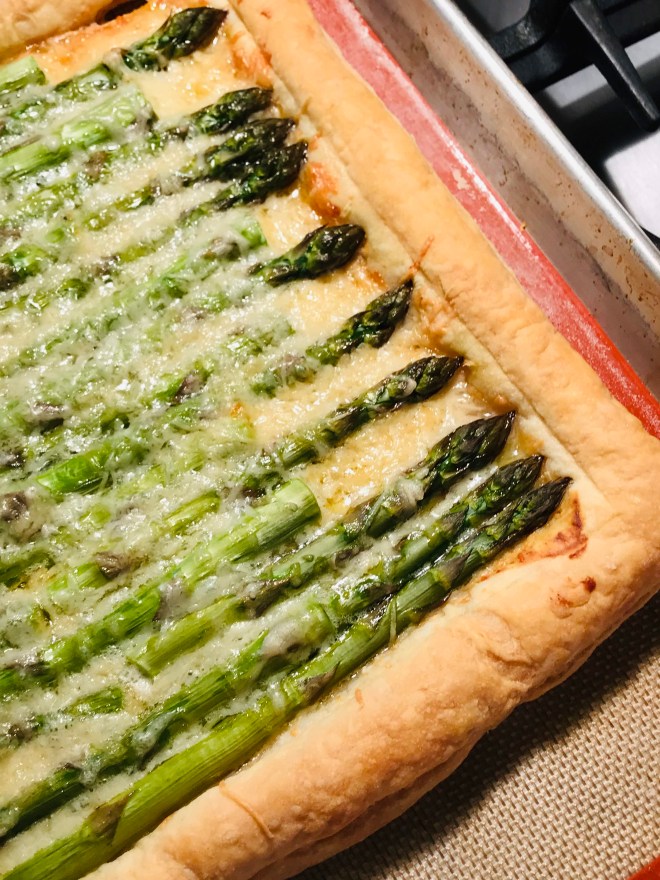
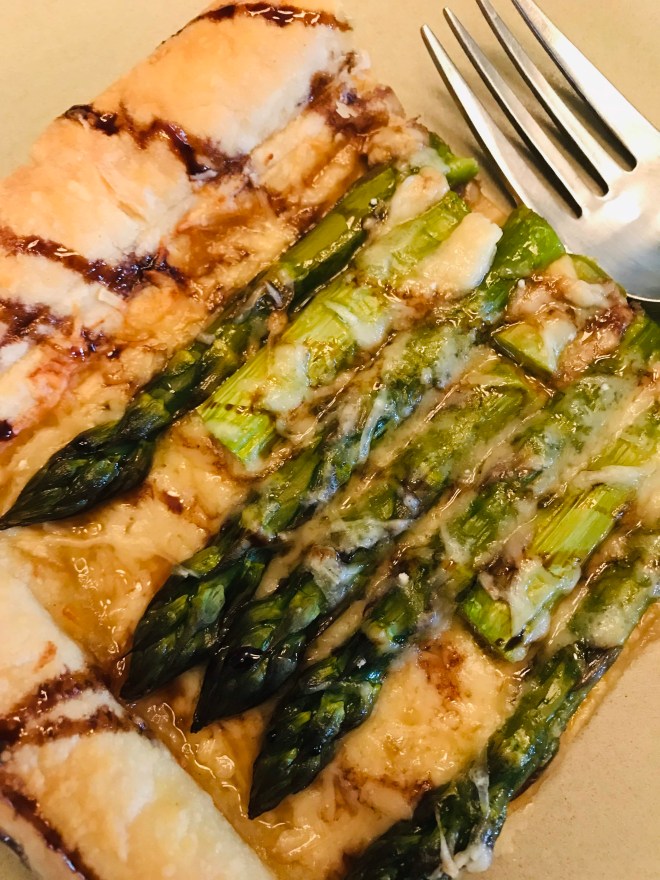
One of our favorite ways to enjoy them is in a vegetable tart.  It looks impressive and comes together with ease using pre-made puff pastry dough.  A little Dijon mustard, Gruyere cheese and balsamic syrup and you have yourself a beautiful meal.

img_4427-1

ASPARAGUS GRUYERE TART WITH BALSAMIC SYRUP

INGREDIENTS:

  • 1 sheet frozen puff pastry dough, thawed according to package directions
  • 2 tablespoon Dijon mustard
  • 1/2 pound fresh asparagus, washed and tough ends trimmed (about 20 stalks)
  • 1 1/2 cup shredded Gruyere or Comte cheese
  • 1/4 cup balsamic vinegar*
  • 2 tablespoons brown sugar

img_4428-2

DIRECTIONS:

  1. Preheat oven to 400 degrees F.
  2. One a floured surface, roll out puff pastry to approximately 11×14 inches.  Transfer to a parchment lined sheet pan or silicone mat.
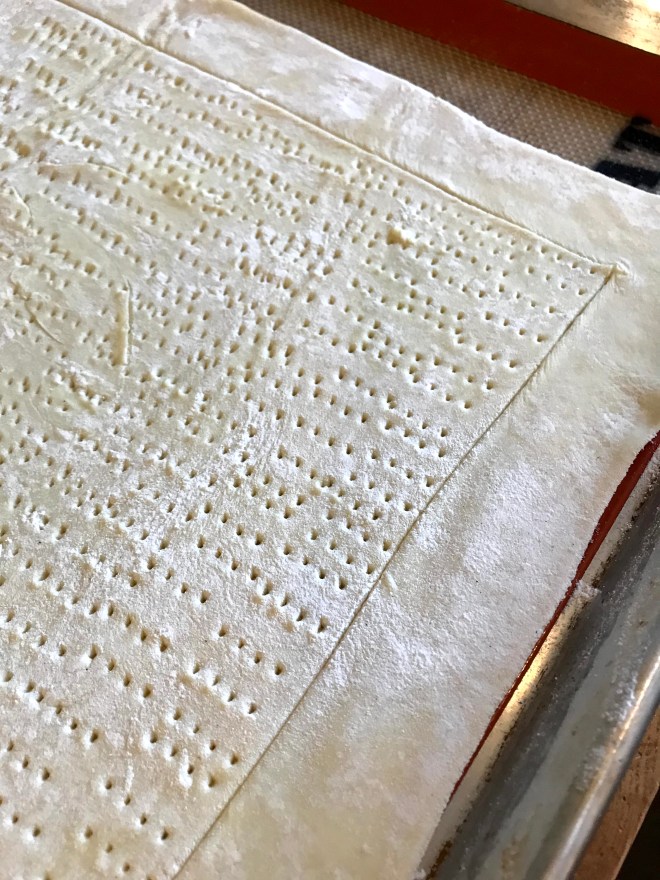
  3. Create a 1 inch border (do not cut all the way through); and then prick pastry all over the inner area.
  4. Brush evenly with Dijon mustard, leaving border untouched.
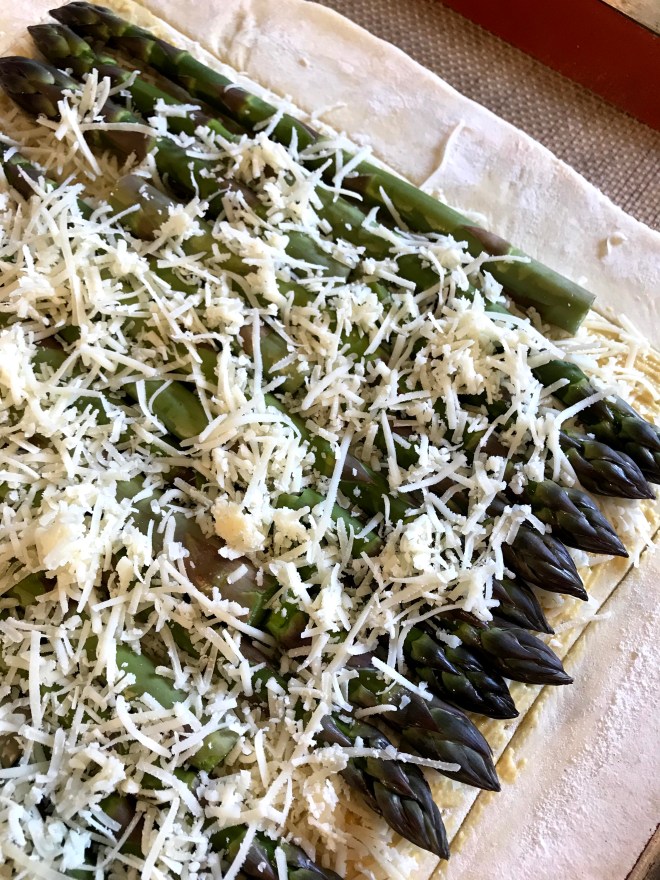
  5. Sprinkle with 1 cup shredded cheese, and then top evenly with asparagus spears.  Sprinkle with remaining 1/2 cup shredded cheese.
  6. Bake for 20 minutes or until cheese is melted and tart is golden brown.  Serve warm.

*Balsamic syrup:  In a small saucepan over medium high heat, mix together vinegar and brown sugar.  Bring to a boil and reduce by half.  Allow to cool.  Place syrup in a baggie and snip a very small hole in the corner of bag.  Drizzle over tart.

img_4433-1

img_4435-1

Serves 18 as an appetizer or 6-8 as an entree.

“In the spring, at the end of the day, you should smell like dirt.” —Margaret Atwood

Simple Pleasures


As spring continues its bipolar journey, kicking and screaming into the next season, I am warmed by our wood burner.  Our home is quiet.  A steady rain drips its cadence on the metal roof of our porch.  Val is reading; our dogs are sleeping next to each other.  I hear one of our wind chimes begin to sing.  Whenever I experience this pause in our busy life I am grateful.  There is a rhythm to the life on our farm; the days start quietly.  We make time for coffee, building fires, observing nature, watering plants, playing with dogs and of coarse conversation.

I consider it a luxury when we wake up naturally, without an alarm.  Most days are spent either on the farm or working in the soap kitchen.  There is movement, labor and chipping away at our unwritten list of to do’s.  We are never caught up, yet this does not concern us.  We stay directionally correct; always heading forward, but never completely arriving at our goals.  We aren’t driven by more, we are grounded by enough.

Most of our days are dictated by the weather; something to adjust for rather than complain about.  After our block of labor is complete, we may bring out the Cribbage board or dominoes.  We laugh, in a world crushed by endless technology, does anyone still play board games?  I write on a computer and I have a smart phone, but our time spent “unplugged” is meaningful to us.  We can’t think of anything more important than our relationships with friends, family and each other.  Overdosing on technology takes us away from our hearts, while shared activity bring us closer together.  It’s important to strike a balance between the immediate and the gradual.

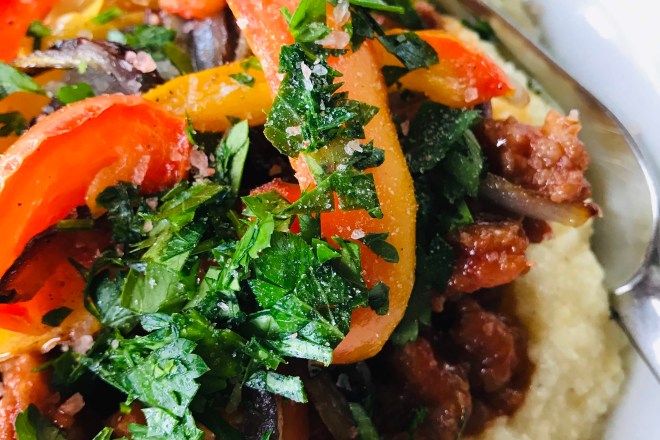
We decide in the morning what we might like for dinner.  Our evening meal is always made together, with music in the background and a glass of wine in hand.  The kitchen is the heart of our home.  Nourishment comes in many forms, and we are mindful of how our labor feeds us both physically and emotionally.  Tonight we have decided on roasted red pepper, red onion,  and Italian sausage over white cheddar polenta.  One delicious bowl in a day filled with simple pleasures.

RED PEPPER, ONION & SAUSAGE WITH WHITE CHEDDAR POLENTA

INGREDIENTS:

FOR TOPPING:

  • 1 pound bulk sweet Italian sausage
  • 2 red, yellow or orange bell peppers, or a combination, seeded and sliced into 1/2 inch slices
  • 1 medium red onion, vertically sliced into 1/2 inch pieces
  • 2 tablespoons olive oil
  • Kosher salt and freshly ground black pepper, to taste
  • 2 tablespoons tomato paste
  • 1/2 cup water

img_4381

img_4383

FOR POLENTA:

  • 1 1/4 cup instant polenta
  • 5 cups water
  • 1 tablespoon kosher salt
  • 1 cup half & half
  • 1 tablespoon freshly ground black pepper
  • 2 cups (6 ounces) freshly shredded sharp white cheddar cheese
  • Fresh flat-leaf parsley, chopped for serving

img_4384

DIRECTIONS:

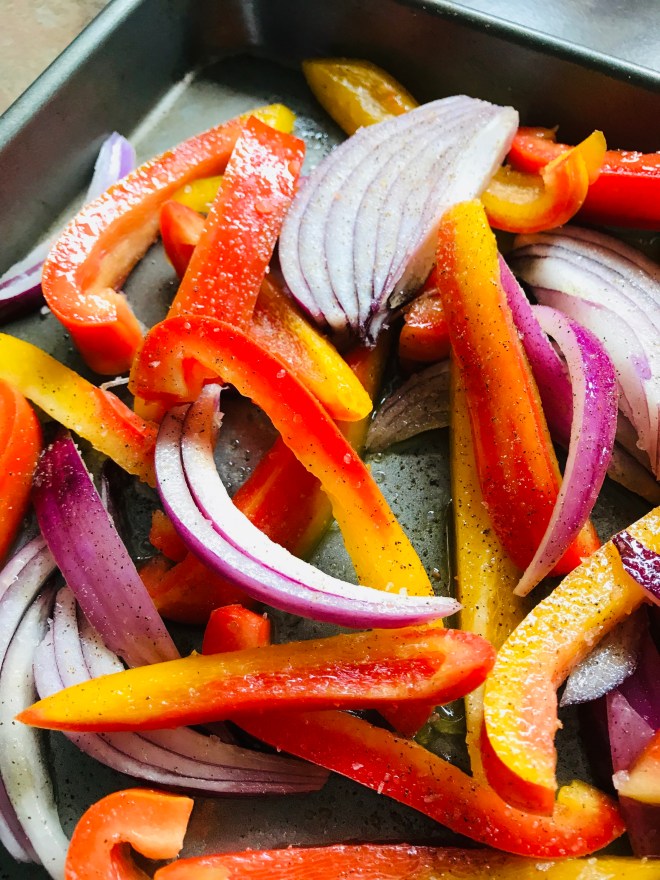
  1. Preheat oven to 400 degrees F.  Toss peppers and onion in olive oil; spread on large baking sheet.  Sprinkle with salt and pepper.  Roast in oven for 30 minutes; tossing vegetables halfway through.
  2. In the meantime, brown sausage in a skillet over medium heat, about 10 minutes or until there is no pink left.  Add tomato paste and water, combine and continue to cook until sauce thickens slightly, about 5-10 minutes more.  Remove from heat.
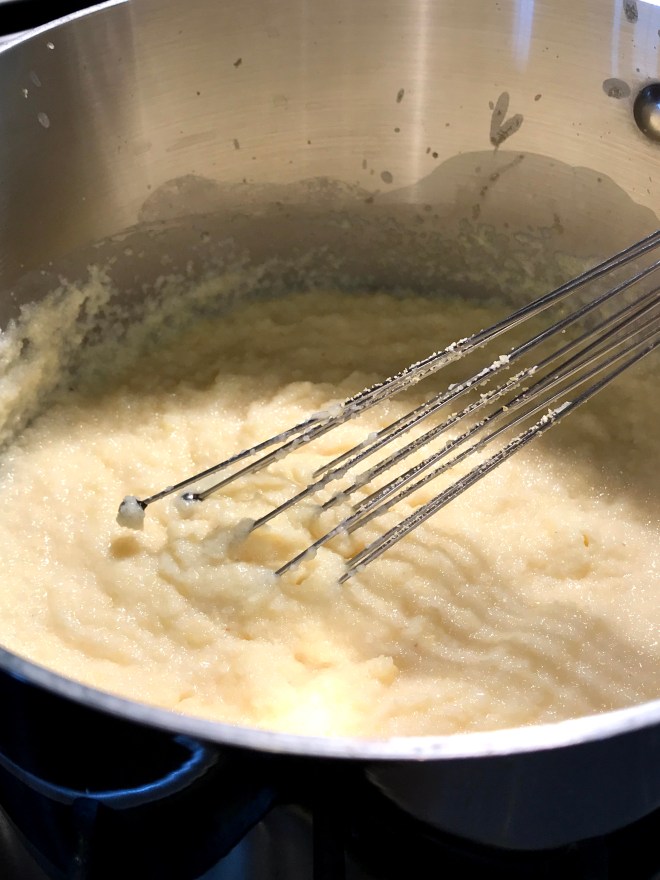
  3. Bring 5 cups of water to boil in a heavy medium saucepan.  Add the salt.  Gradually whisk in the polenta over moderate heat.  Cook, stirring with a wooden spoon, until thickened and smooth, about 5 minutes.
  4. Stir the half & half and pepper into the polenta.  Remove from heat and stir in the cheese.  Spoon polenta onto a warm platter or individual bowls.  Top with meat sauce, then roasted vegetables.  Garnish with parsley.

Serves 4

img_4385-1

“Happiness is an inside job.  If you can be happy with simple pleasures, you will discover the joys of slowing down, and being present.”


Getting a Little Nutty

So let me ask…..how many of you have vegetable gardens?  How many of you frequent farmer’s markets?  Until I lived and worked on a farm, I was pretty clueless about growing food.  So why should we be concerned?

Food gardens and orchards were once common in the western world, but have been replaced by manicured lawns and a few ornamentals.  How is this possible when surveys show gardening as our favorite pastime?  Yet when it comes to whole food, the closest most of us get is the local produce section of our grocery stores.  The enlightened might venture out to the farmer’s market and hopefully spend their food dollars with a genuine farmer.

Not long ago we were an agricultural rather than industrial society.  Most farms were family farms until the 1940’s.  These farms were not mono-cultures, but grew and raised a variety of vegetables, fruits and livestock.  These were largely self-sustaining farms that grew their own feed grains to feed their livestock, using field rotation and organic methods.  They would compost and return their manure to their fields to fertilize the soil.  Pests were controlled by having multiple crops in smaller fields.  Although it was labor intensive, the hoe and the plow were the weed control methods of the day.

Enter WWII.  Many left family farms to serve, creating an exodus to the cities by many who no longer valued agrarian life.  There was opportunity in the city.  With this change came the battle cry of bigger is better; mono-crops replaced the thoughtful and common sense approach to farming.  Cheap petroleum, along with new science, created the world of pesticides, to address the new push of agribusiness for mono-crops.  Commodities replaced food.  Herbicides were the preferred weed control method.  Free range animals were sequestered into feed lots, resulting in the need for preemptive antibiotics.  Chemicals were more cost-effective than manual labor.  The family farm was lost.

Rachel Carlson was before her time when she wisely commented: “Future historians may well be amazed at our distorted sense of proportion.  How could intelligent human beings  seeking to control a few unwanted species by a method that contaminated the entire environment and brought the threat of disease and death even to their own kind?”

Our food system is more fragile than we realize.  Dr. Vandana Shiva stated, “Seeds controlled by Monsanto, agribusiness trade controlled by Cargill, processing controlled by Pepsi and Phillip Morris, retail controlled by Wal-Mart–is a recipe for food dictatorship.  We must occupy the food system to create food democracy.”

As these concerns play out, organic farming and the local food movement has tried to respond by educating the consumer about how to change our food system to become more sustainable.  Concerns about quantity over quality, profit over sustainability and the environment, will need to be seriously addressed in our lifetime.  Our current industrial practices are not sustainable.

I had never put up food before I came to the farm over 12 years ago.  I would simply purchase whatever I needed whenever I needed it.  I was not conscious of the connection between food and health.  When fresh became my motto, I learned that if I planted it, raised it and harvested it, it’s going to taste better than if I bought it.  Fresh herbs and whole foods became my passion.

These days I am driven to put up the food we grow.  You might ask, “How in the world do you find the time?”  My response to that is twofold; one, we are NOT television watchers, and two, it’s a labor of love.  The flavor of home-grown vegetables is so superior, I literally find the time.  Since doing this we have cut our grocery food budget by more than half, saving thousands of dollars annually.  But the monetary savings is only one form of wealth.  We are so much richer for the life on our farm.  The sound of birdsong, the physical labor, the smell of fresh earth, the excitement of watching seeds grow into mature plants, which produce vegetables so good that you close your eyes when you eat.  This is not a need for nostalgia, but a prayer of gratitude for seeing with new sight.  Knowing what is possible when food is home-grown or grown locally, makes me want to sing its praises and encourage others to dynamite their lawn and put in a food garden.

Family relationships become deeper when you work together and a family food garden is a great place to start.  When seeds are planted, there is a sense of purpose; a stewardship of your plot of land.  With attention to what’s needed your efforts will be rewarded with food grown with your own hands for your own table.  I know each spring when row after row of seeds are sown, there is nothing quite like the thrill of seeing rows of tiny green seedlings breaking ground and reaching for the sun.  It’s a birth and there you stand like a proud parent.

Then it starts.  You read, you experiment, and you want the best for those seedlings.  How much water is too much; how much too little?  Those little seedlings will inform you whether or not you are on the right track.  You will weed and weed again.  Each day you will observe.  Didn’t it grow twice as big after the last rain?  You will curse the cut-worm or slug that caused it to fail.  You will take it personally.  You will uncover your creativity and discover solutions for problems and challenges.  All the while, each of you will be invested in the outcome.  With shovel and hoes in hand, your investment will bare fruit as you slowly become closer to the earth and each other.  You will find that you do indeed reap what you sow.  If your space is limited, you might consider incorporating vegetables in your perennial garden as borders or backdrop.  Many vegetables offer both color and texture to the aesthetic eye.

So start now.  Whether it’s a few pots on your balcony or deck, or planning a small 10 x 10 plot; learn what it takes to grow food.  The learning curve is immense, but the reward will more than match your efforts.  What I have learned about farming and growing food is not planted in the soil, but in the heart.  In these fields of plenty, we are all asked to the table.

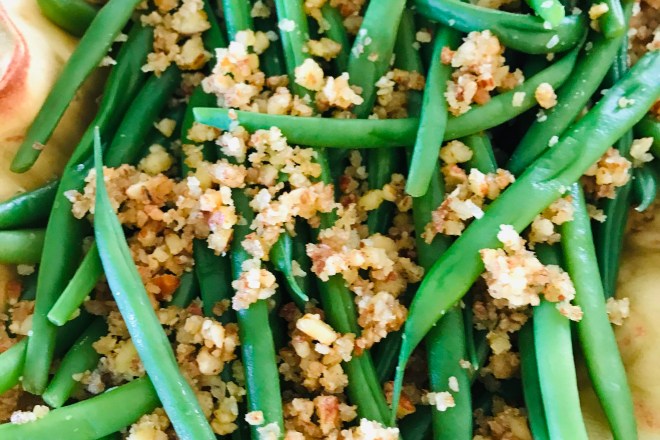
I’m sure there are as many pesto recipes as there are cooks; in this recipe almonds are front and center rather than herbs.  I love the texture difference, and this works great on any fresh bean.  This recipe makes enough for a crowd, but you can adjust the amount of beans for your family.  The pesto will easily keep in the refrigerator for a week or more to use as needed.

HARICOT VERTS WITH ALMOND PESTO

INGREDIENTS:

  • 2 pounds haricot verts (or as we call them: Skinny French Girls)
  • 1 cup (5 ounces) whole almonds, toasted and cooled
  • 1 1/4 ounces Parmesan or pecorino cheese, grated
  • 1 garlic clove, peeled and crushed
  • 1 teaspoon fresh thyme leaves
  • 1/2 teaspoon Kosher salt
  • 3 teaspoons white wine vinegar
  • 1/3 cup extra-virgin olive oil + extra for drizzling

img_4280

DIRECTIONS:

  1. Bring a large pot of salted water to a boil.  Trim green beans and blanch in boiling water for 3 minutes.  Remove beans with tongs and plunge them into an ice water bath to stop the cooking process.  Allow to fully cool.  Drain and pat dry with a clean kitchen towel.
  2. In a food processor, place almonds, cheese, garlic, thyme, and and pepper in bowl and pulse 6-8 times or until they are a coarse paste.  Add vinegar, and pulse again.  Place contents in small mixing bowl and stir in olive oil.
  3. Toss cooled haricot verts with some of the pesto.  Place beans on a platter, and drizzle with a little extra-virgin olive oil.

Serves 6-8

img_4281

img_4283

img_4301-1

“Everything that slows us down and forces patience, everything that sets us back into the slow circles of nature, is a help. Gardening is an instrument of grace.”  –May Sarton

Zorba the Sheet….Pan

Ok.  We’re all pressed for time aren’t we?  Sheet pan dinners get it on the table not only quickly, but deliciously.  They come together in short order, you place them in a hot oven; it even gives you time for a cocktail while it’s cooking.  I say it’s a win, win.

Have any of you seen the movie Zorba the Greek (1964)?  It’s a classic in every sense.  An uptight British writer travels to Crete on business, and finds his life forever changed when he meets a gregarious Greek named Alexis Zorba.  I LOVE this movie.  It demonstrates how if you open your heart to the unfamiliar, you can be altered when you face it head on.  Stream it; you’ll love it.

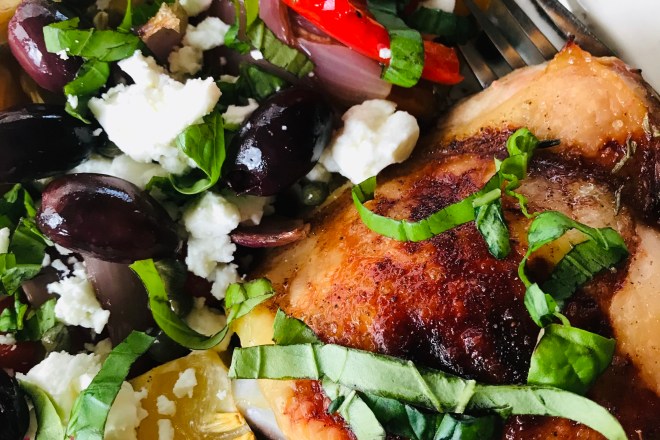
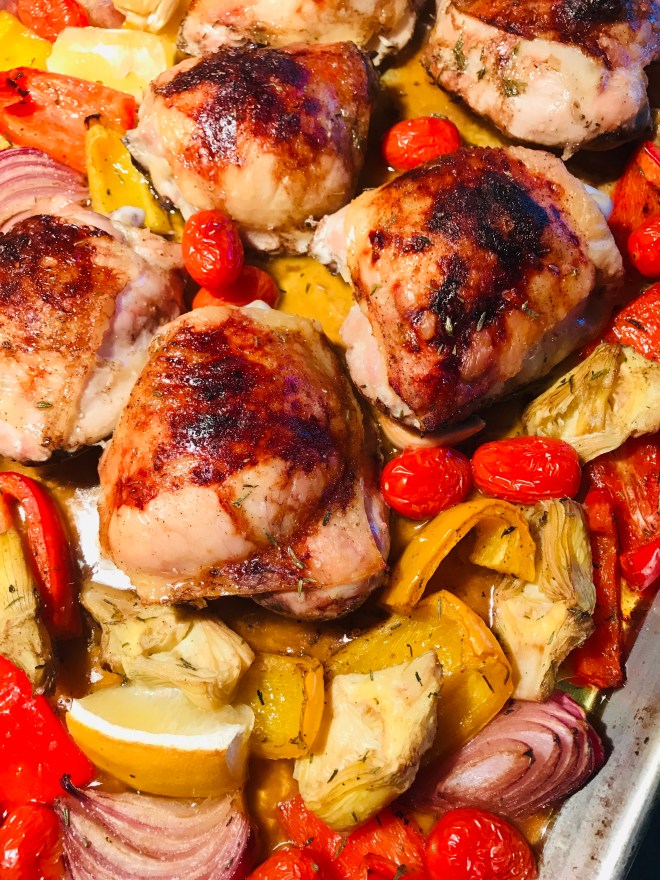
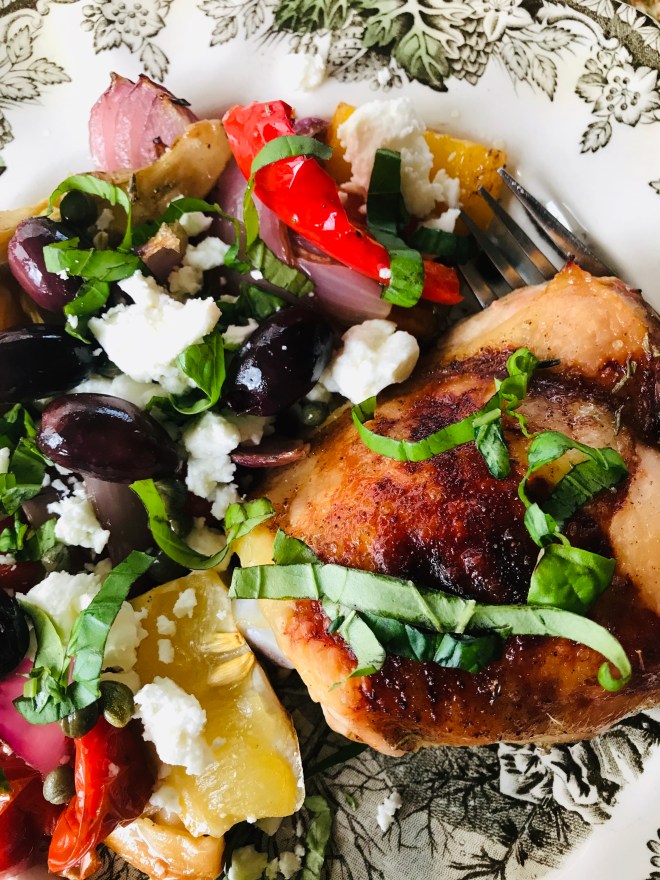
Meanwhile, back in the kitchen….each culture has distinct flavors.  Greek food has its roots in Mediterranean cuisine.  It makes wide use of olive oil, wine, meat (in this case chicken) vegetables, olives and cheese.  It’s savory, distinct, herbaceous, and authentic.  Personally, anything from the Mediterranean is fine with me.  And as the Greek’s would say: “Gia sas!” (cheers)

GREEK SHEET PAN DINNER

INGREDIENTS:

  • 1 1/2 red bell pepper, seeded and cut into 2 inch pieces
  • 1 1/2 yellow bell pepper, seeded and cut into 2 inch pieces
  • 1 red onion, cut in half lengthwise, then into sixths
  • 2 cups red cherry tomatoes
  • 1 can baby artichokes, drained and cut in half
  • 4 cloves garlic, crushed
  • 1 lemon, cut in half lengthwise, then into sixths
  • 4-6 bone-in, skin on, chicken thighs
  • 1/4 cup extra-virgin olive oil
  • 1 1/2 tablespoons balsamic vinegar
  • Kosher salt and freshly ground black pepper to taste
  • 2 sprigs fresh rosemary
  • 2 sprigs fresh thyme
  • 2 tablespoons fresh basil, thinly sliced
  • 2/3 cups kalamata olives
  • 2 tablespoons capers, drained
  • 1/4 cup feta, crumbled

img_4245

DIRECTIONS:

  1. Preheat oven to 400 degrees F.  Line a large rimmed baking sheet with foil.
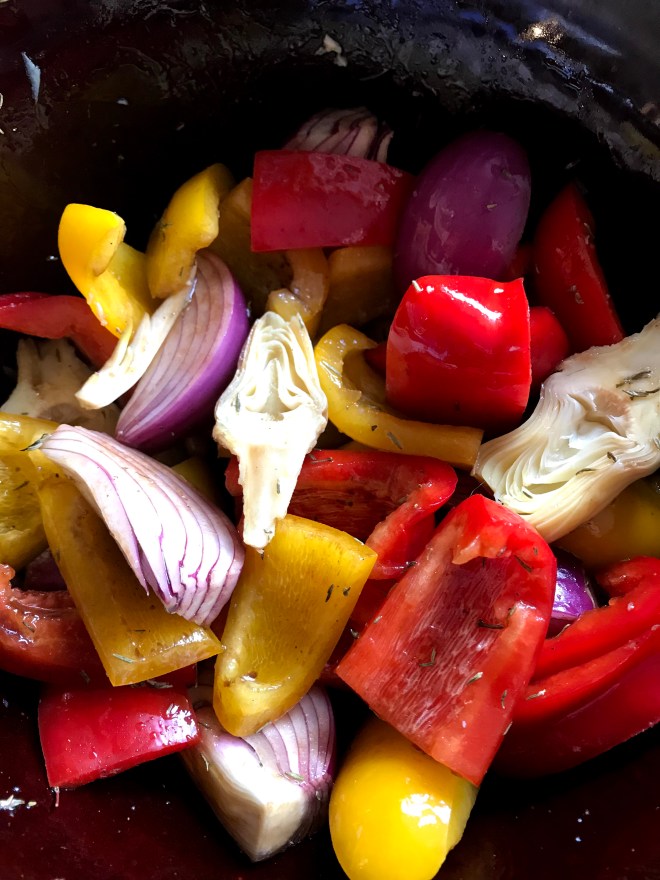
  2. In a large bowl, add peppers, onion, olive oil and balsamic vinegar.  Toss, and then place on baking sheet, leaving space in the center for chicken.  Save the oil and vinegar that falls to the bottom of the bowl.
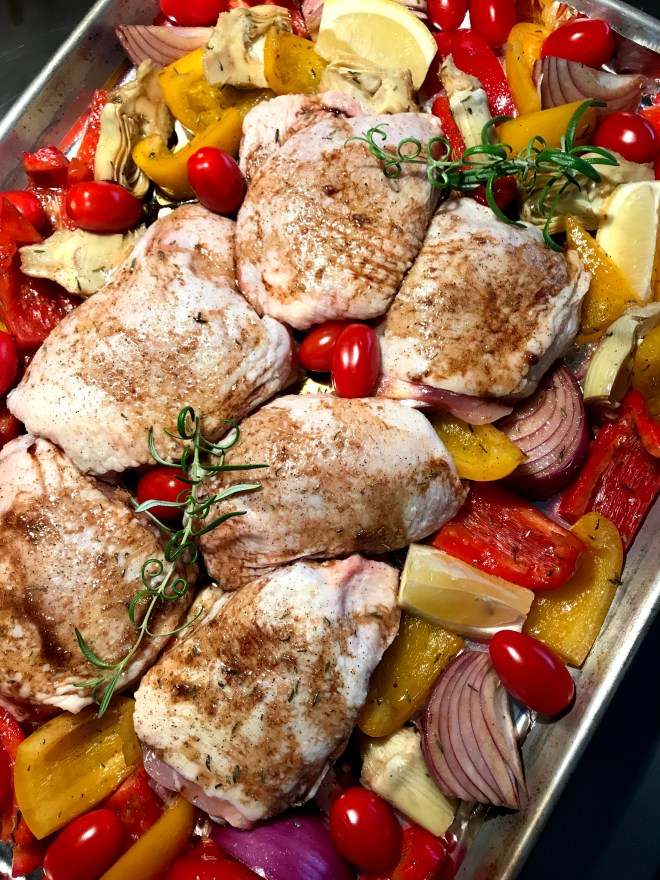
  3. Salt and pepper the chicken and place in center of sheet pan.  Brush with some of the oil and vinegar from bowl.
  4. Sprinkle the cherry tomatoes, artichoke hearts, lemon sections and garlic over vegetables.  Place herb sprigs on top of chicken.
  5. Bake for 25-30 minutes or until chicken reaches 160 degrees when tested with instant read thermometer.
  6. Remove herb sprigs.  Place chicken on platter, and  surround with veggies; then sprinkle olives, capers, feta and basil over everything.  (I like to finish this with a little homemade basil oil; see page  )

Serves 4-6

img_4246

img_4247

img_4248

“You can knock on a deaf man’s door forever.”   —Nikos Kazantzakis

Eggs with Tomato-Pepper Sauce & Feta

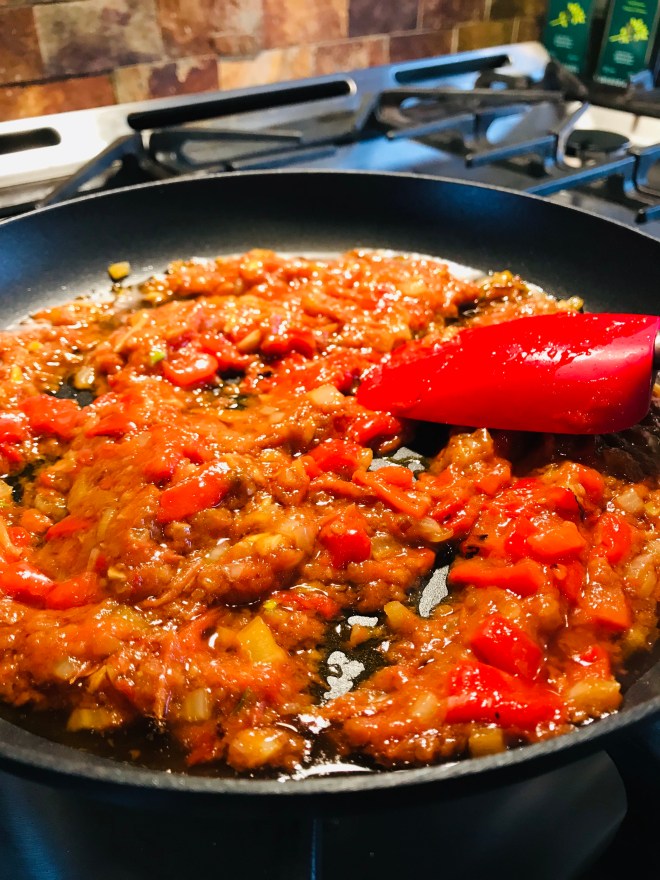
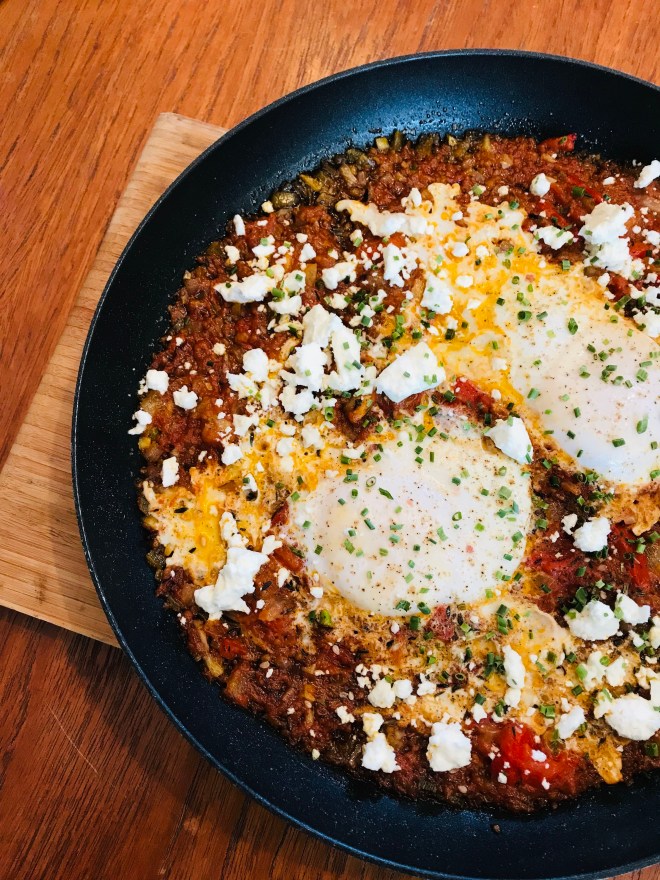
As I practice alternate fasting days, I want the days when I do eat loaded with everything delicious.  This skillet egg concoction fills the bill perfectly.  Those of you who have followed my blogs for a while will notice this is yet another way to use the Roasted Tomato Sauce you put up last summer (if you have any left!).  This is also when I’m happy to have a well stocked pantry.  The roasted red bell peppers are a great marriage with the tomato sauce.  Add onions, garlic, za’atar, feta and eggs and you’re golden.  This works well in a 10-inch skillet for 2-4 eggs, or a 12-inch skillet as you increase the amount of eggs for a gathering.  The recipe below serves 2, but can easily be doubled or tripled.

img_4172

Eggs with Tomato Pepper Sauce and Feta

INGREDIENTS:

  • 1 pint homemade Roasted Tomato Sauce or 15 ounce can of fire-roasted diced tomatoes, pureed in a blender
  • 2 jarred whole roasted red bell peppers, drained, patted dry and chopped
  • 1 tablespoon extra-virgin olive oil
  • 1 medium onion, chopped
  • 2 cloves garlic, minced
  • 3/4 teaspoon za’atar
  • 3 ounces (about 1/4 cup) feta cheese, crumbled
  • 2-4 farm fresh eggs (crack each of these into ramekins)
  • 1 tablespoon fresh chives or parsley, minced

img_4173

DIRECTIONS:

  1.  Heat a 10 or 12 inch non-stick oven-proof skillet on medium-high.  Add olive oil and onion, saute until onion is soft and translucent about 3-4 minutes; add garlic saute for 1 minute more.
  2. Add tomato sauce and roasted bell peppers, and then sprinkle with za’atar.  Simmer until hot about 3-4 minutes more.  Meanwhile preheat broiler on high with oven rack about 4 inches below.
  3. With a silicone spatula, make wells in the sauce for your eggs.  Gently place an egg in each well.  Sprinkle with crumbled feta.  Place skillet under broiler for 2-3 minutes or until egg whites are set, but yolks are still loose.  Watch closely.
  4. Serve with minced fresh chives or parsley.

Serves 2

img_4174-1

img_4175

“Hope makes a good breakfast.  Eat plenty of it.”  –Ian Fleming


Zukes Not Nukes

Although you might think there are four seasons in the calendar year, I’m here to tell you there’s a fifth: mud season.  Most of the snow has melted, and the frost line is disappearing beneath the soil.  The sun is just beginning to have some warmth in it and the robins are back in full force.  We anxiously await evidence of  something, anything growing.  We are ready to till and get our first crops in the ground.  But the mud!  There is literally no safe place to walk that doesn’t present the challenge of having your Wellies sucked off your feet.

Our dogs Willow and Nante smell spring in the air and run wild around the yard like children at recess.  We love seeing them so joyful, until they bring their muddy legs and paws into the house making confusing circles of happiness over the slate kitchen floor.  It’s useless to mop; we would spend most of our waking hours cleaning up after them.

When we walk the farm this time of year, we are itching to get going and overwhelmed when we comprehend how much work there is to do.  You have to take the attitude that ‘slow and steady wins the race’; or you’re licked before you start.  We notice how the scent on the air has shifted.  There is a smell to the land after the snow pack has melted; it is the smell of possibility.  Our winter plans are anxious to be put into action.  Each new season holds promise; the promise of growth, the promise of hard work and the promise of humility.  After all, farming is an act of faith.

The following recipe is not difficult to make, yet the flavors contrast each other in such a way that you will find yourself putting it on frequent rotation.  The savory Ras el Hanout (recipe in the previous blog for Moroccan Almonds) combined with lamb and dried apricots works amazingly well.  See if you don’t agree.

img_4146

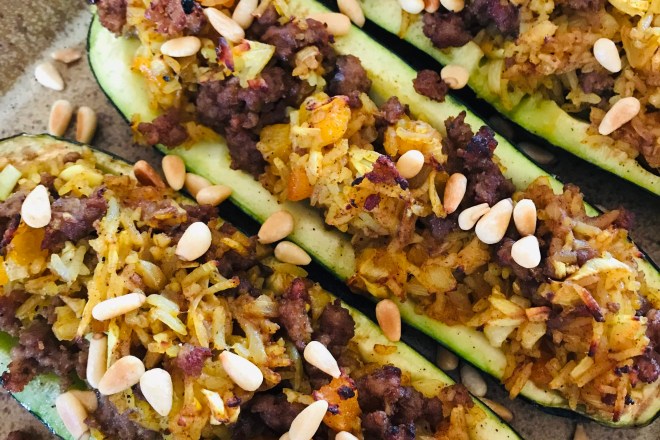
STUFFED ZUCCHINI WITH LAMB, DRIED APRICOTS AND PINE NUTS

INGREDIENTS:

  • 4 zucchini (8 ounces each), halved lengthwise and seeded (I find a melon-baller works best for this)
  • 2 tablespoons extra-virgin olive oil
  • Kosher salt and freshly ground black pepper
  • 8 ounces ground lamb
  • 1 onion, chopped fine
  • 4 garlic cloves, minced
  • 2 teaspoons ras el hanout
  • 2/3 cup chicken broth
  • 1/2 cup cooked jasmine rice
  • 1/4 cup dried apricots, chopped fine
  • 2 tablespoons pine nuts, toasted
  • 2 tablespoons fresh parsley, minced

img_4148

DIRECTIONS:

  1. Adjust your oven racks to upper-middle and lowest possible positions.  Line a large baking sheet with parchment paper.  Preheat oven to 425 degrees F.
  2. Brush cut sides of zucchini with olive oil and season with salt and pepper.  Lay zucchini cut side down and roast for about 20-25 minutes or until they are slightly softened and the cut sides are slightly golden.  Remove from oven and flip cut side up on baking sheet; set aside.
  3. Meanwhile, heat a large skillet over medium-high heat and add ground lamb with salt and freshly ground pepper to taste.  Break up meat as you cook, until browned, about 5-6 minutes.  Using slotted spoon, transfer lamb to a plate lined with paper towels.
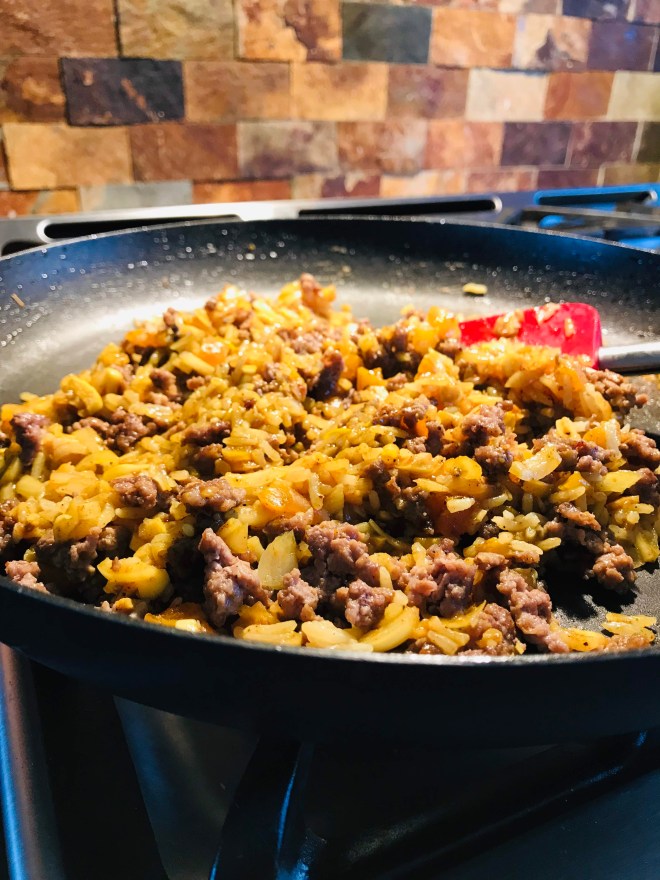
  4. Pour off all but 1 tablespoon fat from skillet.  Add onion and saute over medium heat until softened, about 5 minutes.  Stir in garlic and ras el hanout and cook until fragrant, about 1 minute.  Stir in broth, rice and apricots and bring to a simmer.  Cook until most of liquid is absorbed, about 15 minutes.

img_4149

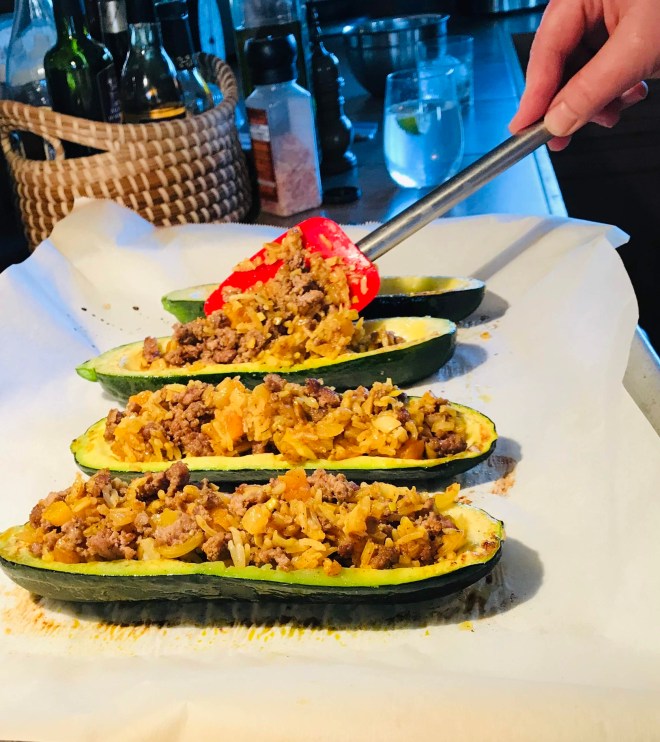
5.  Fill zucchini halves with mixture.  Place baking sheet on upper rack in oven and                 bake until heated through about 8-10 minutes.  Sprinkle with pine nuts and chopped         parsley.  Serve with Cucumber-Yogurt Sauce (recipes follows).

CUCUMBER- YOGURT SAUCE:

  • 1 cup plain Greek yogurt (I use Fage)
  • 2 tablespoons extra-virgin olive oil
  • 2 tablespoons fresh dill, minced
  • 1 garlic clove, minced
  • 1 half English cucumber, grated on large holes of box grater
  • Kosher salt and fresh ground black pepper to taste

Whisk yogurt, oil, dill, and garlic, together in medium bowl until combined.  Stir in cucumber and season with salt and pepper.  Serve along side stuffed zucchini.

img_4155

“I am a weak, ephemeral creature made of mud and dream. But I feel all the powers of the universe whirling within me.”
― Nikos Kazantzakis

The Hummus Among Us

It the world of junk food, it’s comforting to know we can make something substantial, healthy and satisfying: hummus.  Typically this Lebanese dip or spread is made with chickpeas, garlic, tahini, lemon juice, and salt.  But creative people have shaken up tradition but making it with additions of roasted root vegetables such as beets, carrots and red bell pepper.  It’s flexible.  It’s a great source of plant-based protein, decreases inflammation and is good for heart and bone health.  I however love it because it tastes so dam good!

img_4090

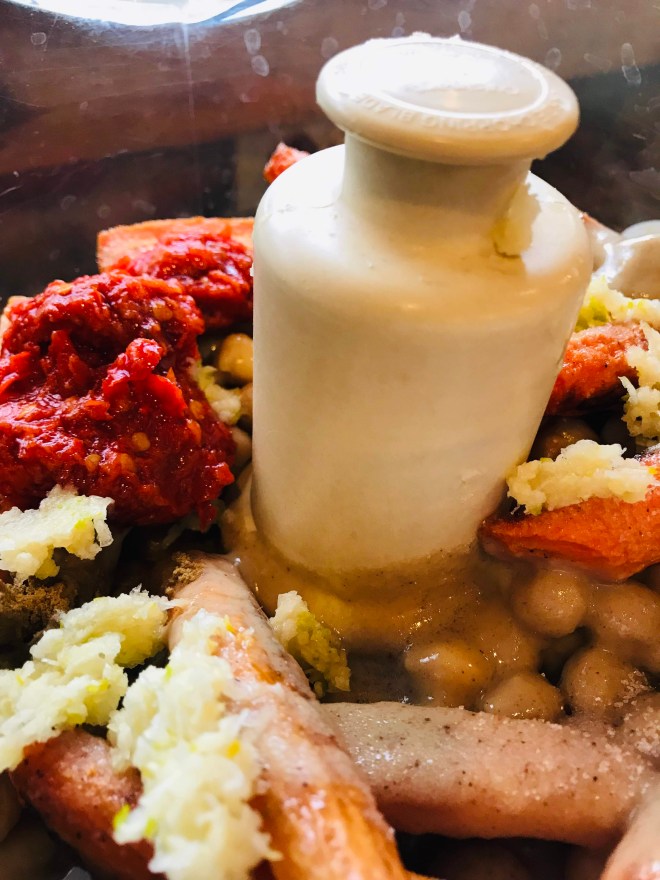
SPICY ROASTED CARROT HUMMUS

INGREDIENTS:

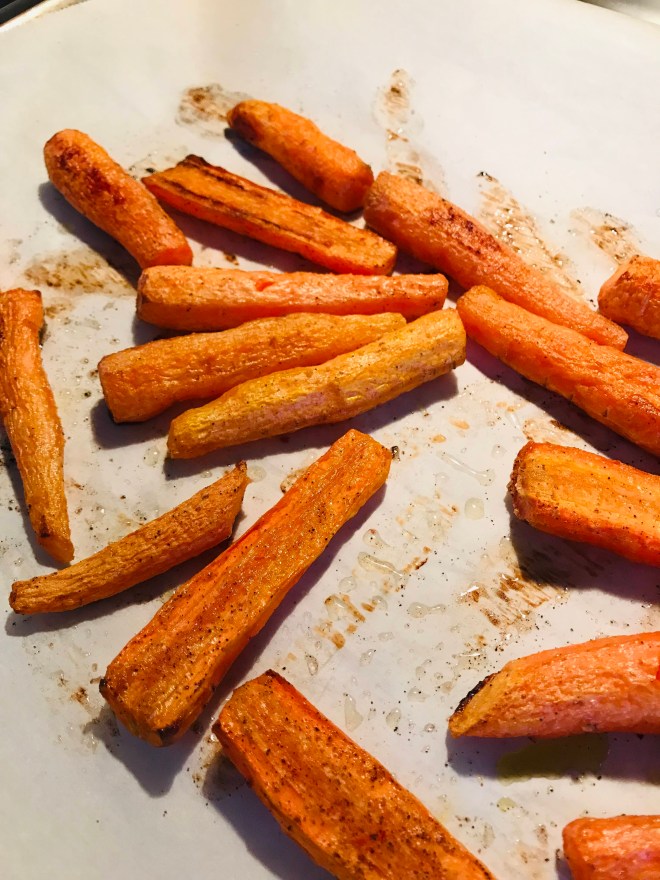
  • 3 large carrots (about 6 ounces), peeled, ends trimmed
  • 1 tablespoon extra-virgin olive oil
  • 1 15.5 ounce can chickpeas, rinsed and drained*
  • 1/3 cup tahini, well mixed
  • 1/4 cup fresh lemon juice
  • 2 garlic cloves, finely grated
  • 1 tablespoon (or more) harissa, Sriracha or gochujang
  • 1 teaspoon (or more) kosher salt
  • 1/2 teaspoon ground cumin
  • 2 tablespoons extra-virgin olive oil, plus more for drizzling
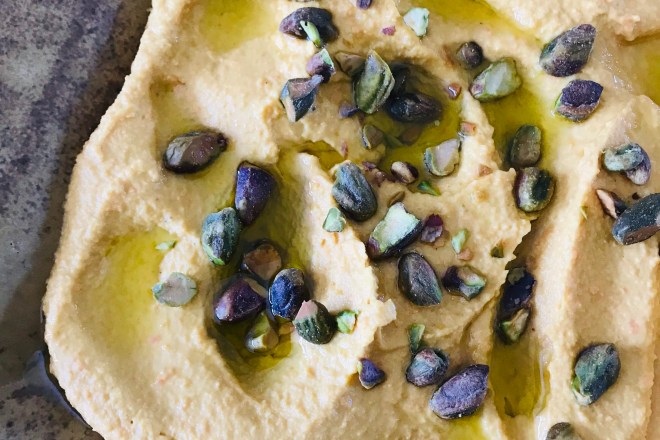
  • Roasted pistachios or toasted sunflower seeds, plus chopped parsley for serving


img_4091


img_4093

DIRECTIONS:

  1. Preheat oven to 400 degrees F.  Place carrots on a large baking sheet line with parchment paper and drizzle with 1 tablespoon extra-virgin olive oil; sprinkle with salt and pepper.  Roast until carrots are very tender, about 40-45 minutes.  Let cool.
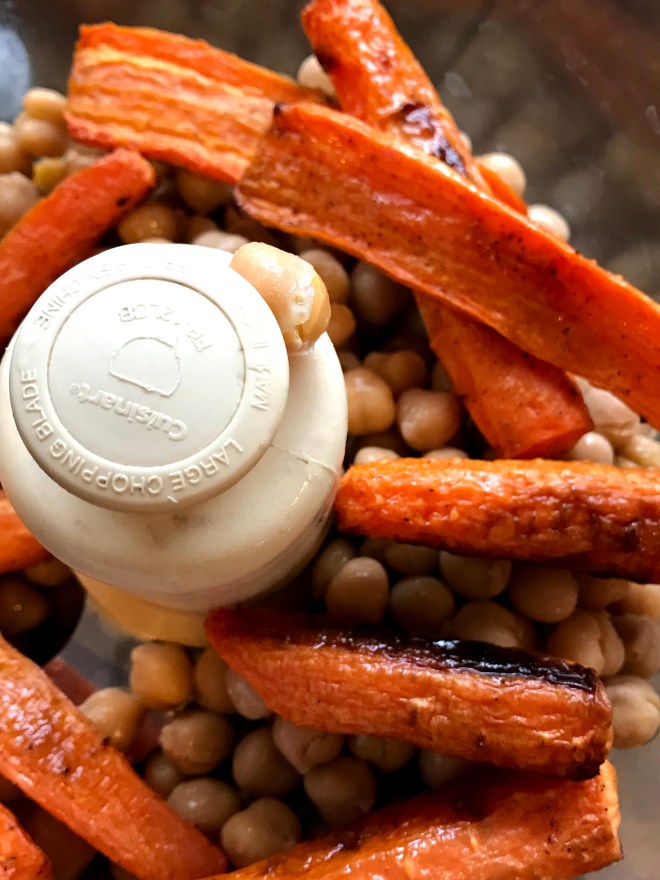
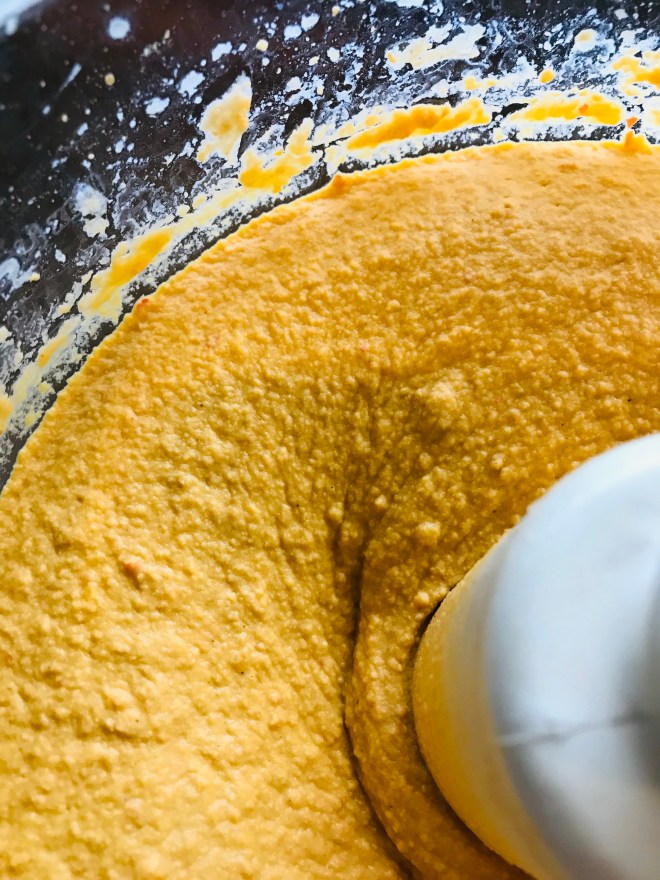
  2. Process roasted carrots, chickpeas, tahini, lemon juice, garlic, harissa, salt, and cumin in food processor until mixture is smooth, about 1 minute.
  3. With the motor running, stream in 2 tablespoons of olive oil, then continue to process until hummus is very light and creamy, 1-2 minutes more.  Taste and season with more salt if needed.  Add more harissa to make hummus spicier if desired, then process to incorporate, a few more seconds.
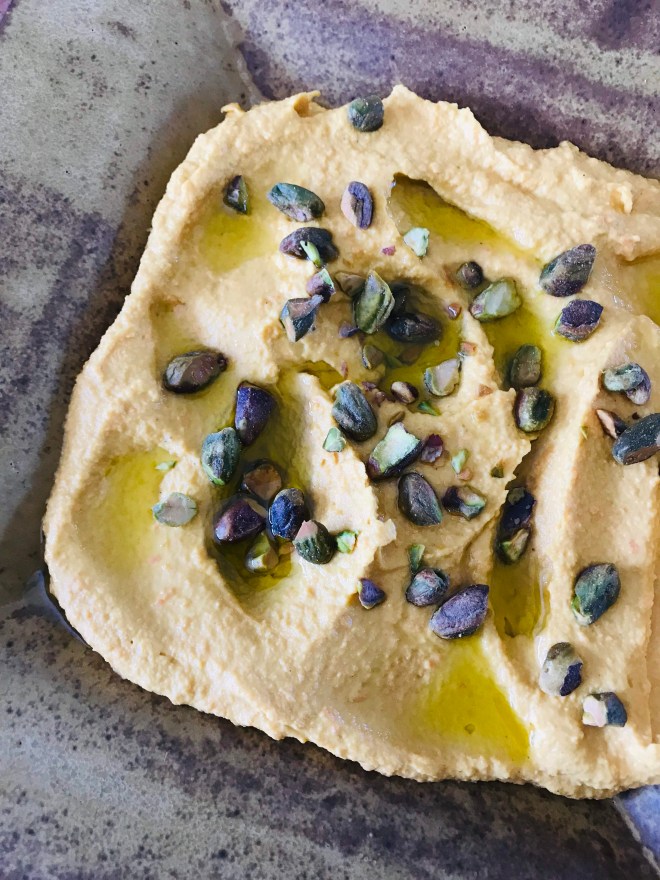
  4. Transfer hummus to a small platter or plate.  Top with nuts and parsley; drizzle with additional olive oil.  Can be refrigerated for about 5 days.

Yield: 2 cups

Note:  If you would like an even creamier hummus, take the time to slide the skins off the chickpeas.  The skins will make the hummus slightly grainy.  If this is not an issue for you, consider it optional.

img_4094

img_4098

img_4131-1

“I can’t turn water into wine, but I can turn hummus into breakfast, lunch and dinner.”  –Rebecca Barum

Beeting the System

While doing some research I came across a staggering statistic: 70% of Americans don’t cook.  That’s right.  Most Americans eat out at least 4 times a week.  We heat up, microwave or assemble food; but cooking from scratch is becoming something of a novelty.  I asked myself, “Are we really that busy?”  I can’t imagine myself not cooking regularly.  For me, it’s my most sincere expression of love.  I wonder if people understand what they are missing?  The kitchen has always been the heart of the home; a place where intimacy takes place, both in the preparation of food and the sharing of it around our tables.  As I contemplate this, I feel as though we’ve been sold a collective bill of goods.  As we scramble to meet our financial needs, we are forgetting some of the fundamental, simple pleasures of life; cooking fresh food with love, for our friends and family.  Isn’t it time we break bread together?

Those of you who have followed this blog or my previous one Basics with a Twist, know I have not been a beet lover until recently.  Alas I have come to my senses.  The first time I  had this salad was as a guest in the home of Kat and Tom Vanhammen.  When she told me what we were having for dinner I remember thinking, “Oh-oh, I’ve never had raw beets and can’t say I was excited about the prospect.  But as a child I was instructed to be a gracious guest and took a serving.  Wow.  Now I can’t leave this salad alone.  I could eat it for breakfast, lunch and dinner.  I make it several times a month.  It’s as though my body literally craves it..

And no wonder!  You simply can’t beat beets!  Your body does love them.  They are chock-full of nutrients like B vitamins, iron, manganese, copper, magnesium, and potassium.  They can lower your blood pressure, lower your risk of heart disease, improve your stamina, help you brain work better, and detox your liver.  Whew.  Now that’s real nutrition!

img_4115

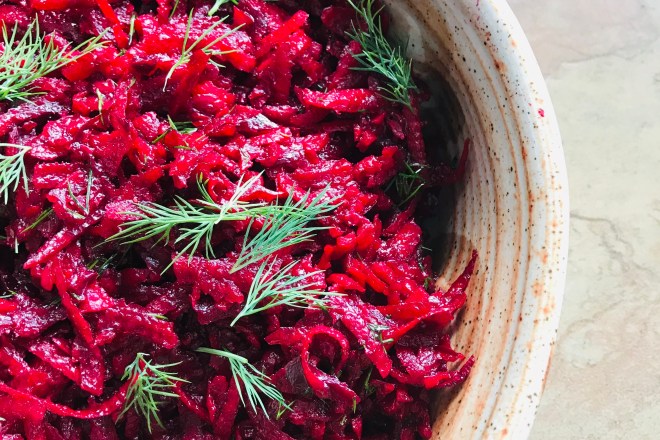
Raw Beet Salad

INGREDIENTS:

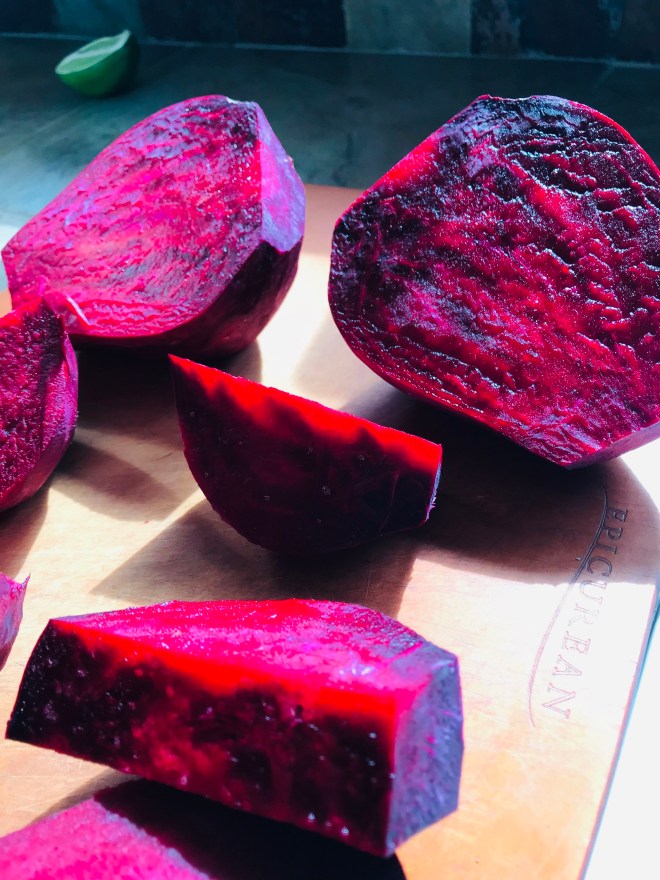
  • 2 pounds of beets, scrubbed and peeled
  • Kosher salt and freshly ground black pepper to taste (don’t be shy)
  • 1/4 cup extra-virgin olive oil
  • 1/3 cup apple cider vinegar (I use Braggs; this might seem like a lot of vinegar, but look at it as a raw pickled beet)
  • 1/4 cup fresh dill, chopped

img_4116

DIRECTIONS:

  1. Grate the beets by hand on a box-grater, or food processor fitted with a metal blade or a Kitchen Aid fitted with a shredder cone.  Place in a large bowl.
  2. Toss beets with the salt, pepper, oil and vinegar.  Add chopped dill.  Let the salad macerate on your kitchen counter for about 1 hour.  Taste and adjust with more vinegar, salt or both.  I like mine with a little zing.

Serves 4

img_3992

“The food you eat can either be the safest & most powerful form of medicine or the slowest form of poison.”   —unknown