Root vegetables

Down To Earth

At times it just comes down to basics. Favorite dishes using simple ingredients, handed down through each generation of women. Each woman adding their fingerprint on a family history. We are never alone in our kitchens. Our kitchens are crowded with a sense of that history. A Grandmother’s pottery mixing bowl, a well-used potato masher, an old Zeroll Co. ice-cream scoop (patent #20) are touchstones of things shared in an unbroken line.

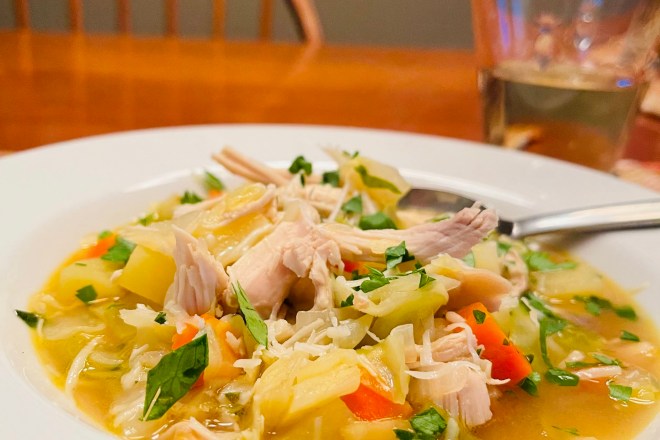
Cabbage, potatoes and chicken although simple ingredients can be turned into something rich and satisfying. Chicken soup with cabbage and potatoes echoes a Eastern European history. Many cultures use these ingredients in ways that define them. It was a time when nothing was wasted. Chicken carcasses were turned into stock, along with onion and potato peels. Seasoning could be anything from vinegars, seeds or herbs. I love the idea of these benchmarks when I cook. Something old and something new arrive in steaming bowls of healthy goodness. In the remains of the day, food is still love.

CHICKEN, CABBAGE & POTATO SOUP

INGREDIENTS:

  • 3 tablespoon extra-virgin olive oil
  • 1 medium onion, chopped
  • 3 cloves garlic, minced
  • 6 cups shredded white cabbage
  • 1/2 bulb of fennel, sliced thinly
  • 3 Yukon Gold potatoes, cut in 1/2 inch cubes
  • Kosher salt and freshly ground black pepper to taste
  • 4 cups shredded chicken from roasted or rotisserie chicken
  • 6 cups chicken stock *(see note)
  • 1 tablespoon fennel seeds
  • 2 tablespoons sherry vinegar **
  • 1 cup freshly shredded Parmesan, Pecorino or Gruyere cheese to top bowls of soup ***
  • Garnish with fennel fronds or chopped Italian parsley

INSTRUCTIONS:

  1. Heat oil in a large Dutch oven or heavy pot over medium heat. Add onion and cook stirring often until onion is translucent, about 4-6 minutes. Add cabbage, fennel and garlic; cook stirring often until the cabbage and fennel soften, about 6-8 minutes. Season with salt and pepper.
  2. Stir in chicken stock, potatoes, and fennel seed. Bring to a boil over medium-high heat; reduce the heat to low and simmer for about 20 minutes, making sure potatoes are softened.
  3. Remove from heat; stir in vinegar. Spoon into bowls and top with desired cheese, fennel fronds or parsley. Serve with crusty bread.

Serves 4-6

NOTES:

* I can’t say how important homemade chicken stock is to the overall quality of this soup. Consider taking the time for this (particularly on a quiet, cold winter’s day).

** Spanish sherry vinegar is equally important to the quality of this soup. I use Columela Reserva Sherry Vinegar, which can be found in many well-stocked grocery stores.

***If using Parmesan or Pecorino, shred these cheeses on a fine box shredder; if using Gruyere use the larger holes.

“Soup is the song of the hearth and the home.”

Les Carottes, Oui!

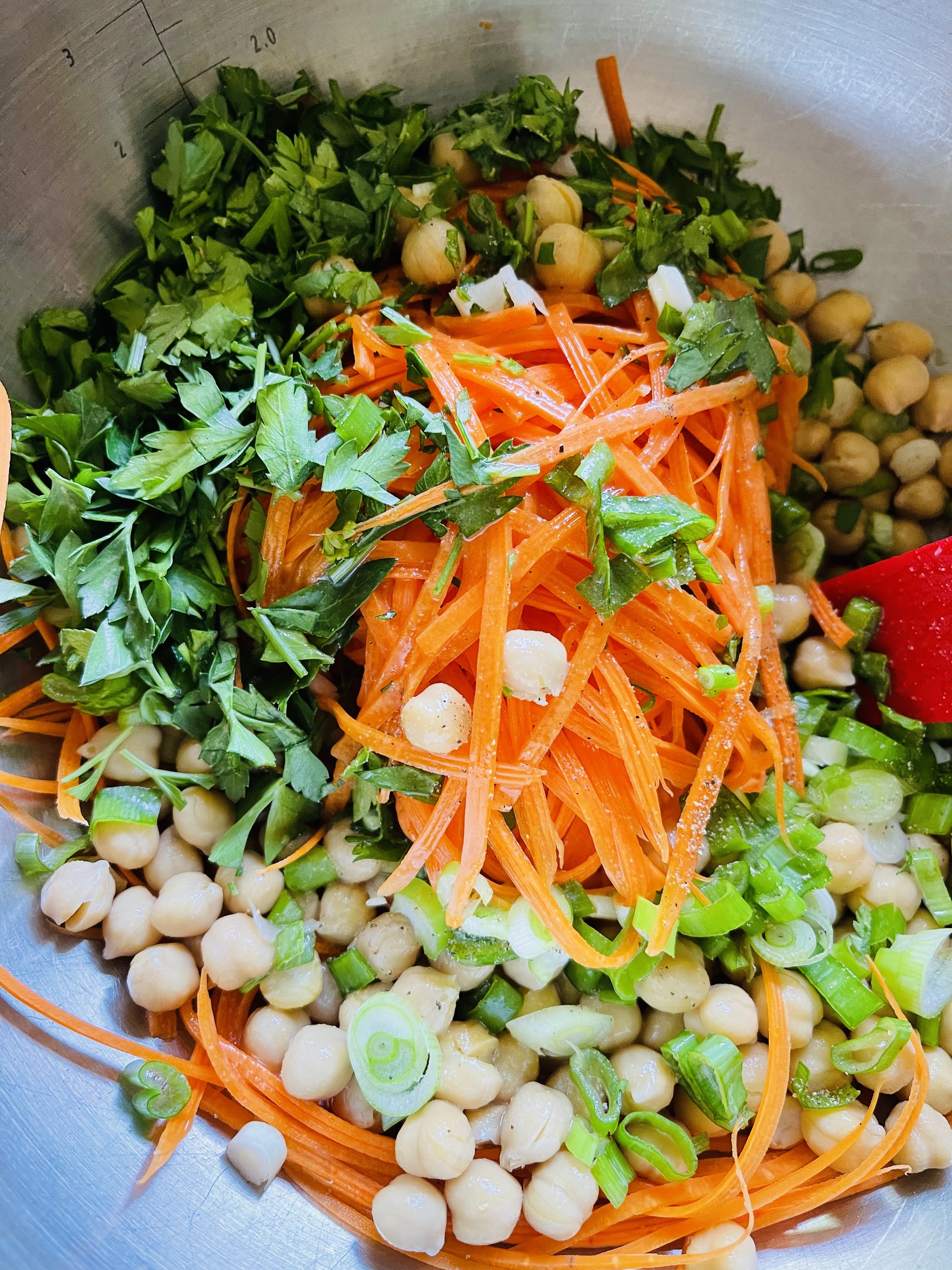
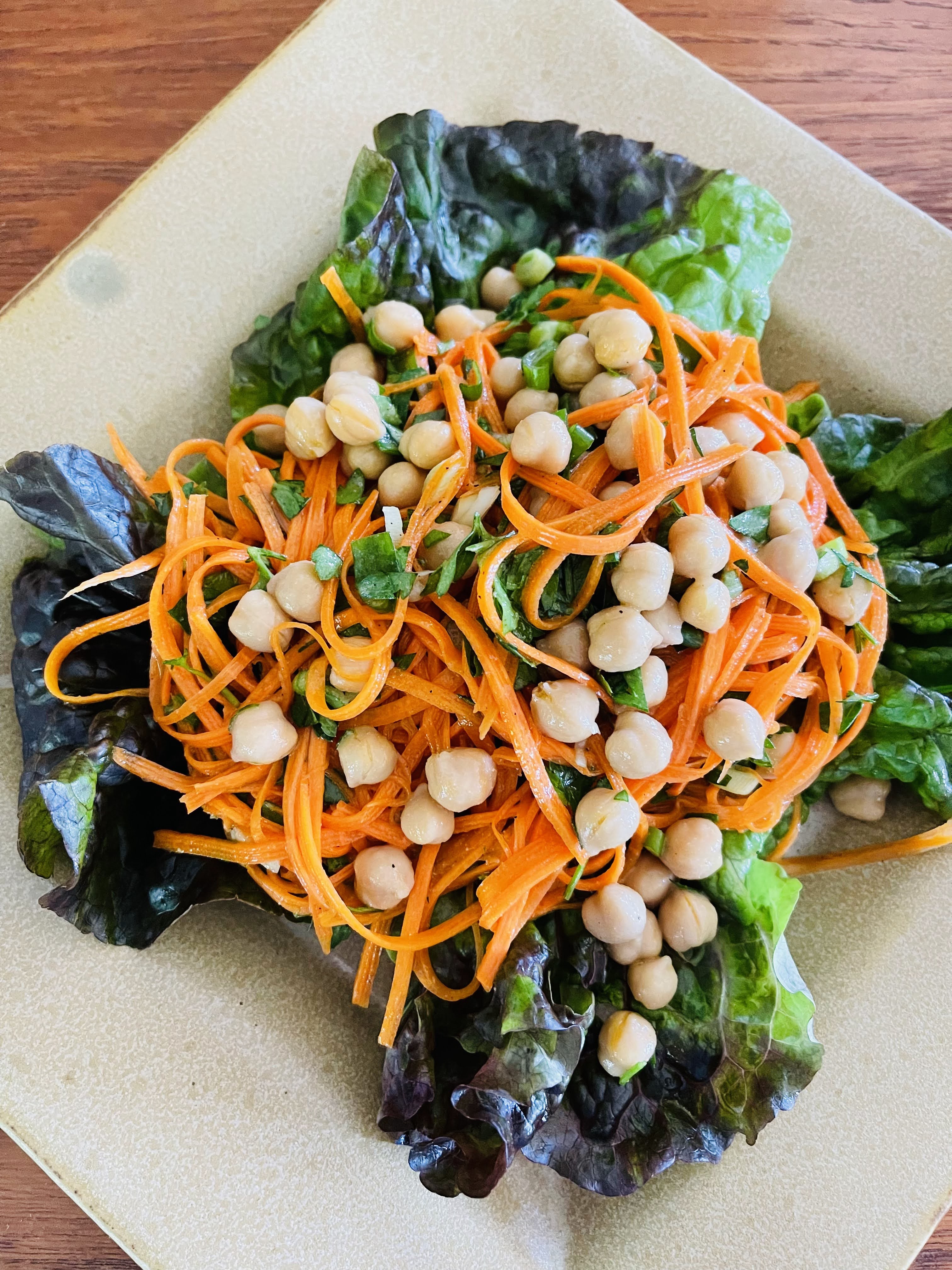
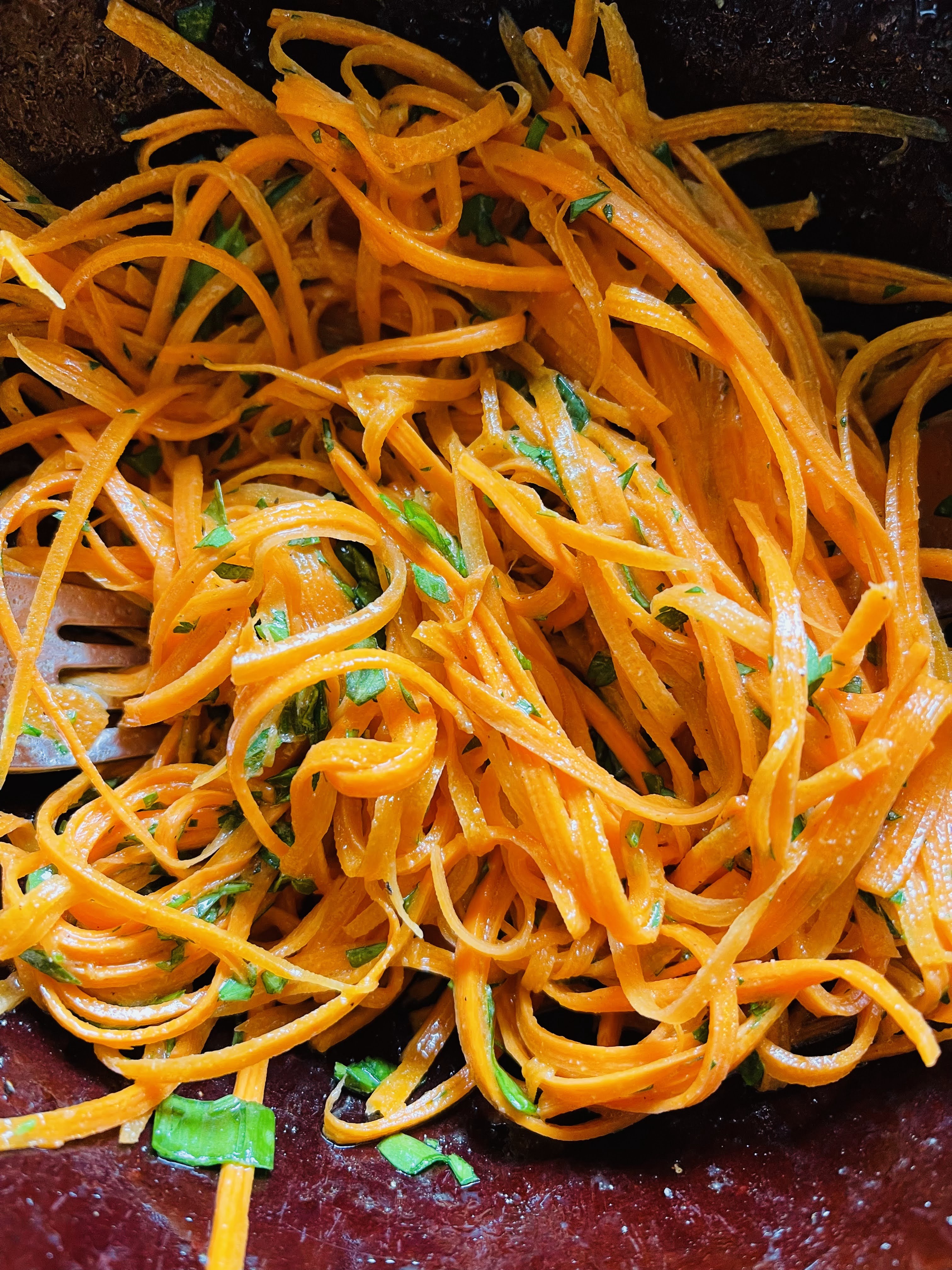
I have always appreciated the versatility of vegetables, as the possibilities are endless. It certainly doesn’t hurt that we are vegetable farmers. There are times when fresh, simple ingredients will make combinations shine. The French are masters of this approach to cooking. This is a salad that can be tweaked on so many levels. Herb choices can be varied, such as parsley, mint, cilantro, or a mixture. If you want to bulk it up, it’s so easy to add chickpeas or cannellini beans. You could add sliced radishes, snap peas, or snow peas. Think color and texture. Frankly, I can’t get enough of this salad!

Typically, this salad uses grated carrots, but I find that they become slightly mushy when used as the centerpiece. I prefer to use a julienne peeler as it gives it more loft and texture interest. I’ve used a few of these peelers over time and have not been plused. However, I finally found one that works perfectly as advertised. The Sunkuka Julienne Peeler, is made of stainless steel and performs beautifully. This salad also holds for up to 3 days in the refrigerator.

FRENCH CARROT SALAD WITH LEMON DIJON VINAIGRETTE

INGREDIENTS:

  • 1 pound carrots, peeled and julienned
  • 2 scallions, sliced thinly
  • 1/4 cup fresh parsley, chopped
  • 2 teaspoons Dijon mustard
  • Juice of half a lemon
  • 1.5 tablespoons avocado oil
  • 1.5 tablespoons good quality extra-virgin olive oil
  • 2 teaspoons local honey
  • Sea salt and freshly ground black pepper to taste

INSTRUCTIONS:

  1. Peel and julienne carrots. Place in a large bowl. Add scallions and parsley (and any other salad ingredients you choose).
  2. In a pint mason jar, combine avocado and olive oil, Dijon, lemon juice, honey, salt and pepper. Place lid on jar and shake vigorously. Add to salad and toss gently. Serve on a bed of lettuce.

OPTIONS:

  • 1 can of chickpeas, drained and rinsed
  • 1/2 cup radishes, thinly sliced
  • 1 cup snap peas, sliced in thirds
  • 1 cup snow peas, sliced in thirds
  • 1/4 cup cilantro and/or mint

Serves 4

The majority of my diet is probably vegetables, but I’m not a vegetarian or vegan. –Abigail Spencer

Anything Moroccan!!

I am a big fan of ethnic food, particularly anything from the Mediterranean. French, Italian, Spanish, North African and especially Moroccan. Mediterranean cuisine is so darn full of fresh, savory ingredients! I just can’t get enough. Moroccan food is particularly known for their national food the tagine, it has the unique taste of popular spices such as saffron, cumin (my favorite), cinnamon, ginger, and cilantro. Most recipes are healthy and loaded with vegetables. The delicious combination of mouth-watering flavors is what makes it unique…Oh, and what flavors!

This recipe is a stew that is on regular rotation at our house. The combination of butternut squash, red potato, chickpeas and spices works beautifully together; but the green olives give it not only a punch of color, but a salty counterpoint to the sweetness of the squash. The color of this dish alone is one of the reasons to try it. You can serve this stew over, couscous, rice or cauliflower rice (which is what I use). I also love to use my homemade cilantro-chili sauce, rather than fresh cilantro. You can find it on this blog under Indian Roasted Potatoes, February 2, 2021.

MOROCCAN STEW

INGREDIENTS:

  • 1 tablespoon unsalted butter
  • 1 tablespoon olive oil
  • 1 medium yellow onion, medium dice
  • 1 head garlic, cloves thinly sliced
  • 3 teaspoons ground cumin
  • 1 (3-inch) cinnamon stick
  • Kosher salt & freshly ground black pepper to taste
  • 1 pound butternut squash, large dice
  • 3/4 pound (about 3 medium) red potatoes, large dice
  • 2 cups chicken or vegetable stock (homemade will really add depth)
  • 1 (14-ounce) can chickpeas, drained and rinsed
  • 1 (14-ounce) can diced fire-roasted tomatoes
  • Pinch of saffron
  • Zest from one lemon
  • 1 cup green olives, (I use Castelvetrano)
  • Fresh cilantro leaves for garnish
  • Toasted slivered almonds for garnish
  • Plain Greek yogurt for garnish
  • Your favorite hot sauce (optional)

INSTRUCTIONS:

  1. In a large Dutch oven, heat butter and oil over medium heat. Add onion, garlic, cumin, cinnamon, salt and pepper. Cook stirring occasionally, until spices are aromatic and onions are soft and translucent, about 5 minutes.
  2. Add squash and potatoes, stir to coat, and cook for about 3-5 minutes. Add stock, chickpeas, tomatoes with their juices, and saffron. Bring mixture to a boil then reduce heat to low. Cover and simmer for 10-15 minutes, or until squash and potatoes are fork tender.
  3. Remove from heat and add lemon zest and olives. Serve over grain of choice. Garnish with cilantro, almonds and yogurt.

Serves 4-6

“Ethnic diversity adds richness to a society.” –Gary Locke

Satisfying Soupa!

I think many of us would agree that in the winter, soups and stews are so comforting. There is something about their warmth and aroma that is deeply satisfying. When I’m not eating at the table, I have a particular bowl that fits nicely in the palm of my hand. I love to spoon soup from it while staring out on the landscape outside my writing window. It is then when I feel particularly satisfied on multiple levels.

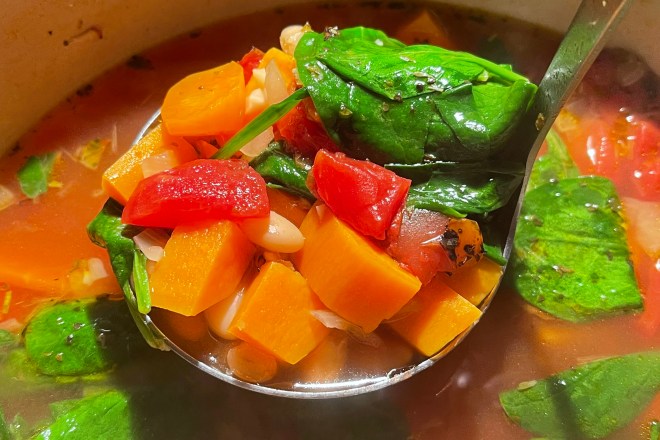
Root vegetables in particular work well in soup. When you combine these with homemade stock you have something nourishing and healthy to offer your family. Maybe it just feeds our soul. One of my favorites soups that is on constant rotation is Minestrone. It can literally be any combination of vegetables you choose or have on hand. Add some beans and greens and you are all set.

BRICKYARD FARMS MINESTRONE

INGREDIENTS:

  • 1 medium onion, chopped
  • 3-4 cloves garlic, minced
  • 3 tablespoons olive oil
  • 2 cups sweet potatoes, cut in cubes
  • 2 cups carrots sliced on the bias
  • 2 cups zucchini, cubed
  • 2 quarts homemade chicken or vegetable stock; or 2 cartons organic stock
  • 1 (15 oz) can fire-roasted tomatoes with juice
  • 1 (15 oz) can cannellini beans, drained and rinsed
  • 2 teaspoons Italian seasoning
  • 4 cups baby spinach OR Swiss chard OR kale, stemmed and chopped
  • Freshly grated Parmesan or pecorino cheese (optional)

INSTRUCTIONS:

  1. In a large pot over medium-high heat, saute onions and garlic in olive oil until soft and translucent. Add carrots, sweet potatoes and zucchini and saute for 4-5 minutes.
  2. Add stock, tomatoes with juice and Italian seasoning. Bring to a boil, then turn down to medium-low and simmer until sweet potatoes and carrots are soft, about 25 minutes.
  3. Add cannellini beans and spinach (or whatever green you choose) simmer just until greens wilt.
  4. Ladle into bowls and top with Parmesan or pecorino.

Serves 6-8

“To feel safe and warm on a cold wet night, all you really need is soup” –Laurie Colwin

Summer + Corn = Delicious

It’s been a while since my last post, but when the farm season is on it demands most of our waking hours. It has been hot and humid for the past month. At the end of the day, all I want is a shower and a cocktail! We had a successful garlic harvest that was sold in just two days! We are currently harvesting our early potatoes and onions. When my brother in law brought a dozen ears of corn to us, I knew I wanted to make some corn chowder. It is such a pleasure to use vegetables from our farm, at their peak of freshness.

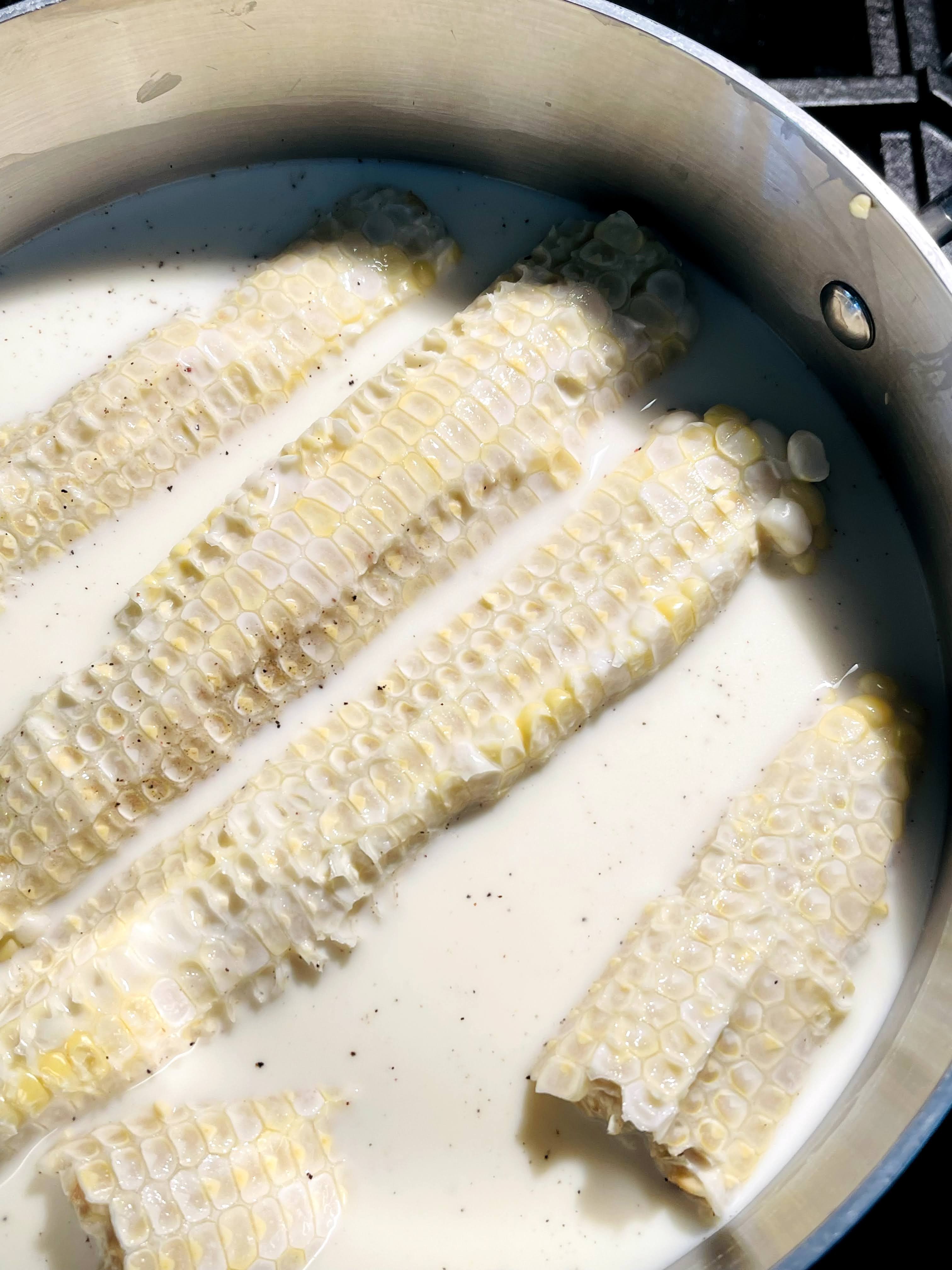
Making a stock out of the corn cobs really deepens the flavor profile. I prefer the sweetness of white summer onions, red potatoes and dill for this soup; but use whatever suits your taste. You could substitute the red potatoes for Yukon golds, use a sweet yellow onion like Walla Walla, and cilantro instead of dill. This soup uses a mirepoix for a base, but you could use onions and jalapeño for a southwestern flare. Either way, the end result will not disappoint.

SUMMER CORN CHOWDER

INGREDIENTS

FOR CORN STOCK:

  • 4 cups chicken stock (homemade if possible)
  • 1 1/2 cups whole milk
  • 1 cup heavy cream
  • Reserved corn cobs

FOR CORN CHOWDER:

  • 4 cups corn kernels (from about 4-5 ears of corn), reserving cobs for stock
  • 6 slices bacon, chopped
  • 1 large onion of choice, finely diced (approximately 1 1/2 cups)
  • 1 large carrot, peeled and finely diced (1 cup)
  • 3 stalks celery, finely diced (1 cup)
  • 3 medium potatoes, scrubbed and cut into 1/4 inch cubes
  • 2 teaspoons sea salt or to taste
  • Freshly ground black pepper to taste
  • Pinch of red pepper or to taste
  • 3 tablespoons fresh dill, chopped

INSTRUCTIONS:

  1. Make the corn stock by cutting kernels from the cobs with a sharp knife. Set corn kernels aside, and place cobs in a stock pot.
  2. Add 4 cups chicken stock, milk, and heavy cream. Add salt and freshly ground pepper to taste. Bring to a boil, then turn down to a simmer. Cook 30 minutes while you make the chowder. Use tongs to remove and discard cobs.
  3. In a large Dutch oven or heavy pot, brown chopped bacon over medium-high heat. Remove bacon bits to paper towels to drain with a slotted spoon.
  4. In the same pot, add chopped onion, carrot and celery to the bacon fat and cook uncovered, stirring occasionally until onion is soft and translucent.
  5. Add corn kernels, potatoes, additional salt, freshly ground black pepper to taste, and a pinch of cayenne. Add corn stock and simmer uncovered for 15 minutes or until potatoes are soft. Add fresh chopped dill and ladle into bowls. Top with bacon bits.

Serves: 4-6

“Summertime, and the living is easy.” –George Gershwin

Stocking Up!

During the fall and winter there is nothing I enjoy more than a steaming bowl of soup. Commercial stocks are inexpensive, plentiful and convenient, but they will never replace homemade. I typically make 36 quarts of chicken, and 24 quarts of vegetable stock each season, and freeze it for future use. Not only does the house smell terrific while it simmers, it is the foundation for all sorts of delicious meals that include soups, stews and risotto. I find that vegetable stock in particular, benefits from a little love and attention to the ingredients.

If you roast or brown the vegetables before you assemble the stock, the caramelization improves the flavor profile. Adding dried porcini mushrooms and tomato paste will impart a savory or umami element that deepens the end result. Unlike chicken stock which is simmered up to 24 hours, vegetable stock is simmered no longer than 90 minutes. The addition of herbs and onion skins add flavor and color to the stock.

VEGETABLE STOCK

INGREDIENTS:

  • 1 ounce dried porcini mushrooms
  • 4 tablespoons olive oil
  • 4 cups chopped onion (save the skins)
  • 2 cups chopped celery
  • 3 cups chopped carrot
  • 2 cups chopped parsnip
  • 1 cup chopped fennel bulb
  • 2 large garlic cloves, smashed (can leave skins on)
  • 1 tablespoon tomato paste
  • 1 tablespoon fresh rosemary
  • 2 teaspoons dried thyme
  • 1 teaspoon black peppercorns
  • 4 bay leaves
  • 1/2 cup chopped parsley
  • 2 large handfuls spinach

INSTRUCTIONS:

  1. Rehydrate dried mushrooms. Place the dried mushrooms in a 4 cup glass Pyrex measuring cup and pour 4 cups boiling water over them. Set aside.
  2. Brown the onions, celery, carrots, parsnips and fennel. Heat the olive oil over high heat in a large stockpot. Add the chopped vegetables and stir to coat. Sprinkle with salt. Cook over high heat for several minutes, stirring only occasionally. Be patient with the browning of the vegetables, as they have a high moisture content. It may take 10-15 minutes or longer to brown them.
  3. Add the garlic and tomato paste and stir to combine. Cook, stirring often, for 2-3 minutes, or until the tomato paste begins to turn a rusty color.
  4. Add the mushrooms and their soaking water, the rosemary, thyme, onion skins, peppercorns, bay leaves, parsley and 4 additional quarts of water. Bring to a simmer, then lower heat to low. After 45 minutes add spinach. Continue to simmer for a total of 90 minutes.
  5. Strain the stock with a basket skimmer or slotted spoon, removing all the big pieces of vegetables and mushroom. Discard or compost. Set up a large bowl with a wire mesh strainer in it. Line strainer with a layer of cheesecloth. Using a ladle or 2 cup measuring cup, pour stock through strainer. When the liquid slows down, you may have to change the cheesecloth.
  6. Pour into jars, or 1 quart plastic deli containers and chill or freeze. Make sure you leave 1 1/2 inches of headspace if freezing.

Yields: 4-5 quarts

“The secret to change, is to focus all your energy not on fighting the old, but on building the new.” –Socrates

Indian Roasted Potatoes

Since I’m on a mission to lose my Covid-19 weight, I’ve been eating a lot a vegetables; and I mean a lot of vegetables!! This is not a particular hardship, since I love them. I’ve been challenging myself to keep it interesting by coming up with creative ways to serve them. Visual appeal and taste are paramount. As I have mentioned in previous posts, adding spices and condiments really change things up. This week, we are going Indian with the use of Garam Masala, which is a spice blend that includes, but not limited to coriander, cumin, black pepper, cardamom and cinnamon. This side can be made ahead and served at room temperature. I am also using my continual go-to condiment cilantro-chili sauce. I just can’t get enough of it! It is easy to make and I find that I have been putting it on my hard-boiled eggs, as well as mixing it with Greek yogurt as a dressing for chicken, or grilled flank steak salads.

INDIAN ROASTED POTATOES WITH CILANTRO-CHILI SAUCE

INGREDIENTS:

  • 3-4 Yukon gold potatoes, scrubbed and sliced 1/2 inch
  • 1/4 cup plus 2 tablespoons extra-virgin olive oil
  • 2 teaspoons Garam Masala
  • 1/2 bunch cilantro, both leaves and tender stems
  • 2 green chilies, seeded and finely chopped (I use jalapeño)
  • 2 garlic cloves, pressed or grated
  • 1/4 cup sliced and toasted blanched almonds
  • 1 tablespoon white wine vinegar
  • 2 tablespoons fresh lime juice
  • 1 cup Greek yogurt
  • 1/4 sliced green onions
  • 1 teaspoon nigella seeds or black sesame seeds (optional)

INSTRUCTIONS:

  1. Heat oven to 400 degrees F. Line a large baking sheet with parchment paper.
  2. Scrub and slice Yukon golds 1/2 inch (I use 1 medium potato per person). Place in a large bowl and drizzle olive oil; then toss with your hands. Place on parchment paper leaving 1 inch between slices. Sprinkle each slice with garam masala.
  3. Roast potato slices in oven for 40-50 minutes, turn slices over after the first 25 minutes. Potatoes are done when slightly golden and a knife slides easily through each slice.
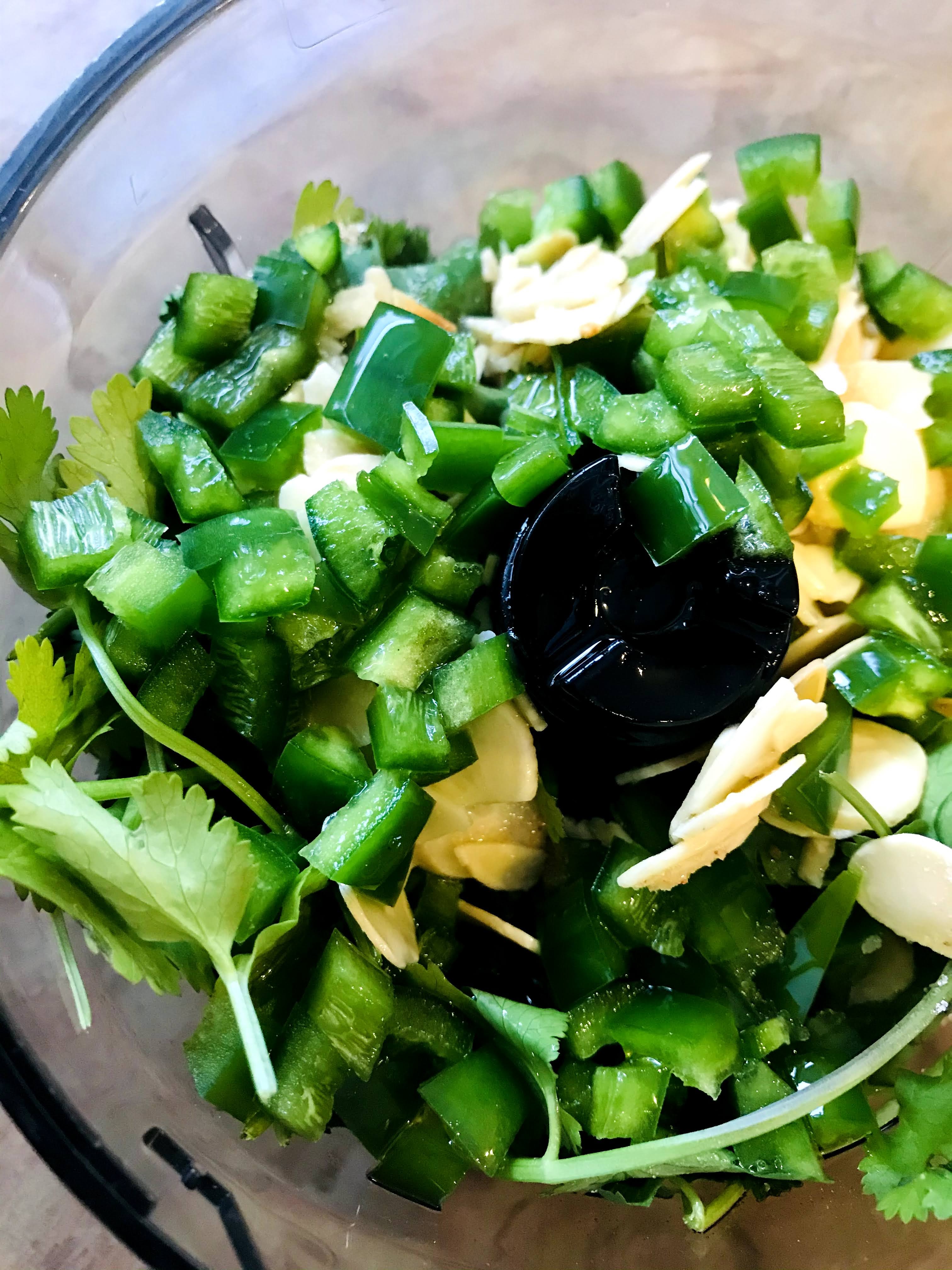
  4. Meanwhile in a food processor, pulse to combine, 1/4 cup extra-virgin olive oil, the cilantro, chilies, garlic, almonds, lime juice, and a large pinch of salt, until it forms a chunky puree. Taste and add more salt if needed.
  5. In a small bowl, combine Greek yogurt with salt and freshly ground black pepper to taste. Thinly slice green onions, both the white and the green.
  6. On a decorative platter, spoon yogurt on the bottom. Stack your potato slices so they make a pyramid. Place small spoonful’s of cilantro-chili sauce on potatoes. Sprinkle with green onions and nigella seeds.

Serves:2-4

“Every challenge, every adversity, contains within it the seeds for opportunity and growth.”

Roy Bennett

Sweet and Spicy!

There are times when we just have to shake it up a bit! We all have our go-to rotations for meal planning, but it is interesting how a different condiment or sauce can really take a side to the next level (thank you Yotam Ottelenghi). I also appreciate a sauce that can go with many different things, from vegetables, to chicken, lamb or fish. This sauce has it all. Even the color contrast of this dish is striking. As I mentioned last week, using the addition of a flavored olive oil is really wonderful, in this case Persian Lime. It pairs nicely with the fresh lime juice. Skip it if you don’t have it. If you have people in your family that don’t like too much heat, the Greek yogurt that accompanies this side will easily tamp it down.

Sweet potatoes are a terrific vegetable for people watching their weight. They are high in vitamin A, they support digestive and heart health, and they are rich in dietary fiber, keeping you full longer. They also stabilize your blood-sugar, fuel your brain, and since they are loaded with beta-carotene they are terrific for your eyes. So what’s not to like?

SWEET POTATOES WITH YOGURT & CILANTRO-CHILI SAUCE

INGREDIENTS:

  • 1/2 cup extra-virgin olive oil divided (Persian Lime if available)
  • 1/2 tablespoon local honey
  • Juice of 2 limes, divided
  • Kosher salt and freshly ground black pepper to taste
  • 2 1/4 pounds sweet potatoes, scrubbed and cut into 1-inch wedges
  • 1/2 bunch cilantro
  • 2 green chilies, seeded and chopped (I use jalapenos)
  • 2 garlic cloves, pressed or grated
  • 1/4 cup sliced blanched almonds
  • 1 tablespoon white wine vinegar
  • 1 cup Greek yogurt

INSTRUCTIONS:

  1. Heat oven to 400 degrees F. Line a large baking sheet with parchment paper.
  2. In a large bowl, combine 1/4 cup extra-virgin olive oil, honey, juice from 1 lime, salt and pepper to taste, and potato wedges. Toss to coat. Spread in a even layer on baking sheet, bake until tender and lightly browned in spots, about 45-55- minutes. Sprinkle with additional salt to taste.
  3. Meanwhile, in a food processor, pulse to combine 1/4 cup extra-virgin olive oil, the cilantro, chilies, garlic, almonds, juice from remaining lime, vinegar and a large pinch of salt, until it forms a chunky puree. Taste and add more salt if needed.
  4. Arrange sweet potatoes on a platter; spoon sauce in dollops over the potatoes, dollop with yogurt, drizzle with some olive oil, and serve with additional sauce and yogurt on the side.

Serve 4-6

“Our very survival depends on us staying awake, to adjust to new ideas, to remain vigilant, and to face the challenge of change.” –Martin Luther King
Feel The Beet!

Wow, what a week we have had! There are times that writing a food blog under these circumstances is challenging, and seemingly unimportant. However I also recognize we all need something positive to hold on to when the world is unraveling around us. After the new year, I finally insisted I get on the scale, and wasn’t surprised with what stared back at me, but disappointed in myself. So I’m doing veggie/protein as a lifestyle. I have forgiven myself for the need to be endlessly in the kitchen as a survival strategy in 2020, but I know I can’t continue feeling out of control. To that end this side dish is probably one of my favorites for using beets.

Some of you remember my story about loathing beets most of my life, but it is worth repeating. Before I moved to a vegetable farm, there were only two vegetables I absolutely hated, okra and beets (I still hate okra!). I remember asking Val early on why she grew so many beets? Do people really like them? I have since learned that all root vegetables are directly affected by growing methods. They absorb the off taste of chemical fertilizers for example. Those chemicals will make both beets and carrots taste off, orslightly bitter. Most of us have experienced that off taste and have decided that we did not like that particular vegetable. Once I tasted clean tasting vegetables from our farm, I totally came around. Now, I positively love beets!

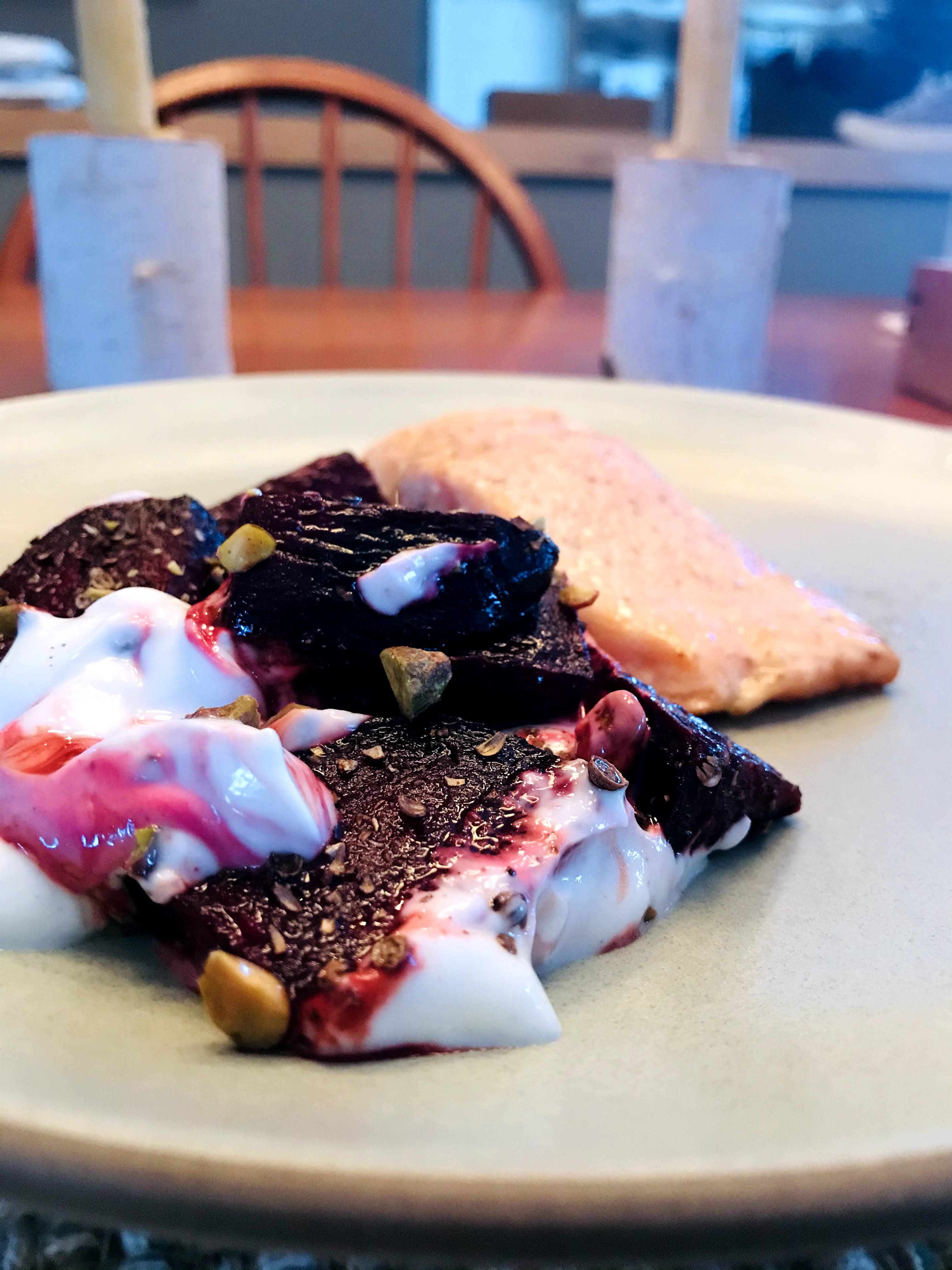
This recipe is a lovely side for most things grilled, or as a part of a Mezza spread. It is simple enough for weeknight’s and showy enough for company. The various contrasts of textures really add interest; but the real coup d’ etat is if you can get your hands on some blood orange olive oil. This ingredient will really put this recipe over the top! The other ingredient that will make a serious difference is a high quality balsamic vinegar. I was gifted with some incredible 18 year stuff that was wonderful!

ROASTED BEETS WITH YOGURT, PISTACHIOS & CORIANDER

INGREDIENTS:

  • 6-8 small to medium beets (about 2 pounds total)
  • 3 tablespoons extra-virgin olive oil (or that luscious blood orange stuff)
  • 1 teaspoon ground coriander
  • Kosher salt and freshly ground black pepper to taste
  • 2 tablespoons whole coriander seeds
  • 2/3 cup Greek yogurt
  • 1 tablespoon balsamic vinegar
  • 1/4 cup roughly chopped roasted pistachios

INSTRUCTIONS:

  1. Heat the oven to 400 degrees F. Peel the beets, halve them vertically, then cut each half in 3 or 4 wedges. Toss the beets with 2 tablespoons regular extra-virgin olive oil and the ground coriander on a rimmed baking sheet lined with parchment paper. Roast tossing once halfway through for 30-45 minutes until almost fully tender, (the time will be determined on the size of your wedges).
  2. Meanwhile, toast the coriander seeds in a small skillet over medium, shaking the skillet, until golden and fragrant, 1-2 minutes. Set aside.
  3. Season the yogurt with salt and pepper and spread it on a platter. Add the remaining olive oil (this is where you would use your blood orange olive oil if you have it) and the balsamic vinegar to the roasted beets and toss to coat. Arrange the beets and their juices over the yogurt. Sprinkle with the chopped pistachios and toasted coriander seeds. Serve warm or at room temperature.

Serves 4

“Embrace each challenge in your life as an opportunity for self-transformation.” –Bernie Siegel

Riff It…Riff It Good!

Being vegetable farmers, we love all things vegetable; but no one pushes that envelope better than Yotam Ottolenghi. This man fascinates me with his amazing combinations. I love his cookbooks. They are a treasure trove of ideas and visual art. He encourages all of us to jump head first into the unusual. He is my mentor for true creativity in the kitchen. In his new cookbook Flavor, he introduces his philosophy of layering ingredients for optimal impact. He prefers plates and platters to bowls, and I have largely adopted that approach. By layering textures and flavors every ingredient has a chance to stand out on its own. He prepares condiments ahead of time, as flavor bombs. The simplest roasted vegetable takes on new life when topped with a sauce, relish or spice. The visual impact of food is also important, as we eat with our eyes; so color contrast takes on a whole new meaning. From the platter, to the color and texture of each layer, to the final garnishes, every element is crucial to the presentation of the dish.

In the spirit of trying a little used vegetable, we tried his celeriac steaks with Café De Paris sauce. This dish from Ottolenghi’s Flavor cookbook was so unusual, it was a literal treat for the tastebuds. After roasting the celeriac steaks, they were placed on top of a sauce of butter, shallot, garlic, anchovy, mustard and curry powder, capers, chives, tarragon and parsley. There are really no words to adequately describe this dish. Talk about a flavor bomb! Dishes like these can really get you thinking outside the box. So when I contemplated what vegetables we had on hand, and how I could use them creatively; I came up with the following recipe. You can make “steaks” out of many root vegetables, and we had an abundance of large turnips still in the ground. So I made turnip steaks. Then I needed another vegetable that would offer a color contrast to the turnip. I decided on carrots that I roasted and pureed with a little maple syrup and olive oil. I added a small amount of water; just enough to loosen it in my food processor without changing the flavor. The final decision was a dressing or sauce. I settled on a mustard vinaigrette, as both turnips and carrots would be enhanced by this addition. I garnished with chopped parsley and toasted breadcrumbs; but in hindsight thought a sprinkle of dukkah would have also worked well.

TURNIP STEAKS WITH CARROT PUREE & MUSTARD VINAIGRETTE

INGREDIENTS:

  • 3-4 large turnips (3 slices per person), peeled and sliced 1/2 inch thick
  • 6 large carrots, peeled and sliced in 2-inch chunks
  • 6 tablespoons extra-virgin olive oil, divided
  • Sea salt and freshly ground black pepper to taste
  • 1 tablespoon pure maple syrup
  • 1 tablespoon Dijon mustard
  • 2 teaspoons grainy Dijon mustard
  • 2 tablespoons white balsamic or white wine vinegar
  • 3 tablespoons extra-virgin olive oil
  • 1 large shallot, minced
  • 2 tablespoons fresh parsley, minced
  • 2 tablespoon toasted fresh breadcrumbs, or dukkah

INSTRUCTIONS:

  1. Preheat oven to 400 degrees F. Prepare two large sheet pans, one for the carrots, and one for the turnip steaks by lining them with parchment paper.
  2. Scatter the carrots on one sheet pan and drizzle them with 1 tablespoon olive oil; toss with your hands. Sprinkle with salt and freshly ground black pepper. Roast in oven for 30-40 minutes, turning carrots halfway through, until lightly browned and soft when tested with a knife. Let cool for 15 minutes.
  3. Place turnip steaks on sheet pan, leaving 1-inch between each slice. Baste both sides with olive oil. Sprinkle with salt and pepper. Roast for about 30-40 minutes, turning each slice over halfway through. They should look brown around the edges.
  4. In a food processor, place roasted carrots, 2 tablespoons olive oil and 1 tablespoon maple syrup; pulse 3 or 4 times. You want to leave some texture; if too thick add water 1 tablespoon at a time until you reach desired consistency. Place in bowl.
  5. Make vinaigrette, by combining both mustards, white balsamic vinegar, minced shallot, and 3 tablespoons extra-virgin olive oil in a pint jar. Shake vigorously until combined.
  6. On a platter, place turnip steaks overlapping down the center. Spoon pureed carrots around the edge of platter. Drizzle dressing down the center of the turnips. Garnish with chopped parsley and breadcrumbs or dukkah.

Serves 4

“Winter is a season of recovery and preparation.” — Paul Theroux