vegetables

Feel The Beet!

Wow, what a week we have had! There are times that writing a food blog under these circumstances is challenging, and seemingly unimportant. However I also recognize we all need something positive to hold on to when the world is unraveling around us. After the new year, I finally insisted I get on the scale, and wasn’t surprised with what stared back at me, but disappointed in myself. So I’m doing veggie/protein as a lifestyle. I have forgiven myself for the need to be endlessly in the kitchen as a survival strategy in 2020, but I know I can’t continue feeling out of control. To that end this side dish is probably one of my favorites for using beets.

Some of you remember my story about loathing beets most of my life, but it is worth repeating. Before I moved to a vegetable farm, there were only two vegetables I absolutely hated, okra and beets (I still hate okra!). I remember asking Val early on why she grew so many beets? Do people really like them? I have since learned that all root vegetables are directly affected by growing methods. They absorb the off taste of chemical fertilizers for example. Those chemicals will make both beets and carrots taste off, orslightly bitter. Most of us have experienced that off taste and have decided that we did not like that particular vegetable. Once I tasted clean tasting vegetables from our farm, I totally came around. Now, I positively love beets!

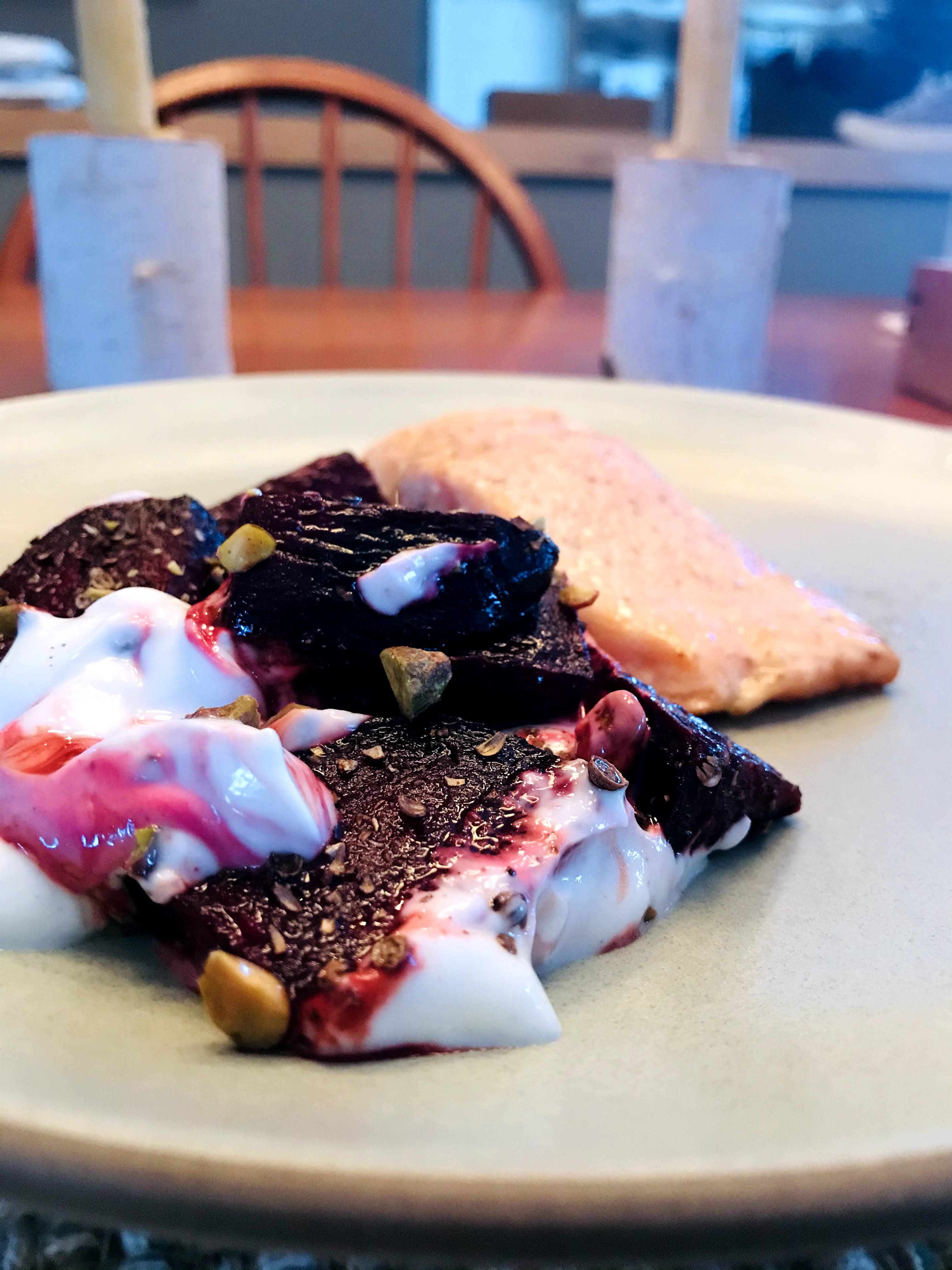
This recipe is a lovely side for most things grilled, or as a part of a Mezza spread. It is simple enough for weeknight’s and showy enough for company. The various contrasts of textures really add interest; but the real coup d’ etat is if you can get your hands on some blood orange olive oil. This ingredient will really put this recipe over the top! The other ingredient that will make a serious difference is a high quality balsamic vinegar. I was gifted with some incredible 18 year stuff that was wonderful!

ROASTED BEETS WITH YOGURT, PISTACHIOS & CORIANDER

INGREDIENTS:

  • 6-8 small to medium beets (about 2 pounds total)
  • 3 tablespoons extra-virgin olive oil (or that luscious blood orange stuff)
  • 1 teaspoon ground coriander
  • Kosher salt and freshly ground black pepper to taste
  • 2 tablespoons whole coriander seeds
  • 2/3 cup Greek yogurt
  • 1 tablespoon balsamic vinegar
  • 1/4 cup roughly chopped roasted pistachios

INSTRUCTIONS:

  1. Heat the oven to 400 degrees F. Peel the beets, halve them vertically, then cut each half in 3 or 4 wedges. Toss the beets with 2 tablespoons regular extra-virgin olive oil and the ground coriander on a rimmed baking sheet lined with parchment paper. Roast tossing once halfway through for 30-45 minutes until almost fully tender, (the time will be determined on the size of your wedges).
  2. Meanwhile, toast the coriander seeds in a small skillet over medium, shaking the skillet, until golden and fragrant, 1-2 minutes. Set aside.
  3. Season the yogurt with salt and pepper and spread it on a platter. Add the remaining olive oil (this is where you would use your blood orange olive oil if you have it) and the balsamic vinegar to the roasted beets and toss to coat. Arrange the beets and their juices over the yogurt. Sprinkle with the chopped pistachios and toasted coriander seeds. Serve warm or at room temperature.

Serves 4
“Embrace each challenge in your life as an opportunity for self-transformation.” –Bernie Siegel

A Pantry Darling

It is blustery and cold today at the farm. It has been a challenging year. A year marked by the pandemic, angry politics, frustration and despair for so many. It has caused us to rethink our lives going forward, and adjust our priorities. As 2020 starts to wind down, I am grateful for the love in my life, shelter from the howling wind outside, and our loving animals. But the one thing that has kept me going day after day is being in my kitchen to create something that not only feeds our bodies, but our souls. Nourishment. We require it as much as the air we breathe. I find this nourishment in the act of feeding others. It is an act of love.

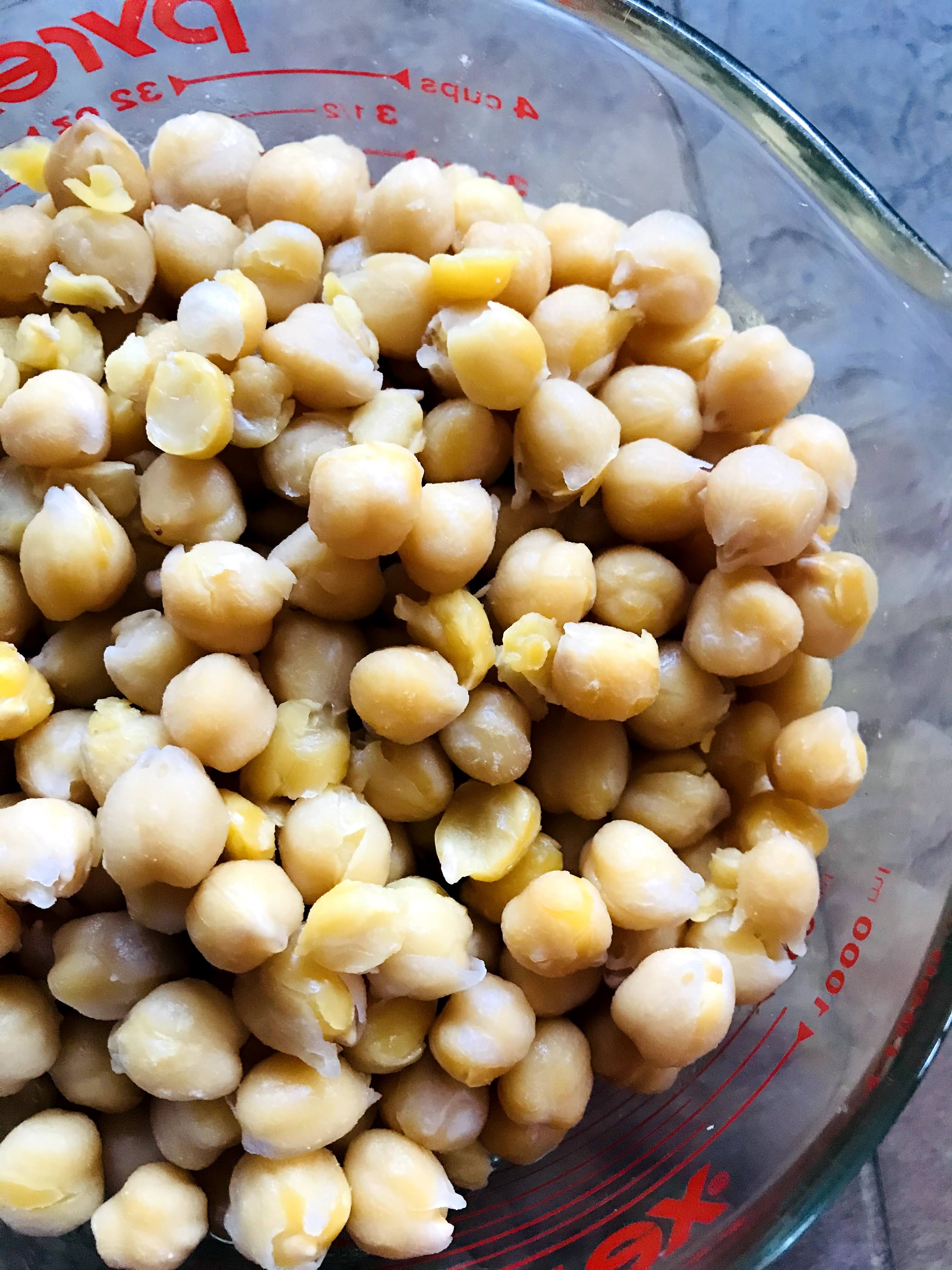
When it comes to what we create in our kitchens, I find there are some ingredients that I return to again and again. I put up dozens and dozens of jars of tomatoes in all their various forms. They are truly a pantry staple. When I reflected on other ingredients, I had to acknowledge an item that has just as much versatility; the humble chickpea. Whether canned or dried this protein warrior is far more than your simple hummus. Everything from spreads, to soups, to salads and entries, the garbanzo bean has it all. Although I appreciate having canned chickpeas on hand, I can’t recommend enough cooking them from their dried state. Quite frankly, they are dirt cheap! But they are also surprisingly delicious made from scratch. When soaked overnight, they cook in about 40 minutes. I usually make a large batch and freeze some of them with their cooking liquid for additional options. Remember to add 3/4 teaspoon of baking soda to every 2 cups of dried chickpeas, in your soaking water. After draining them before cooking add the same amount to your cooking water. This helps soften them. Also, never add salt to your cooking water, as your beans will never get soft.

INDIAN BUTTER CHICKPEAS

INGREDIENTS:

  • 4 tablespoons unsalted butter
  • 1 large onion, chopped
  • 1 1/2 teaspoons kosher salt
  • 4 garlic cloves, grated or finely minced
  • 1 tablespoon grated fresh ginger
  • 2 teaspoons ground cumin
  • 2 teaspoons sweet paprika
  • 2 teaspoons garam masala
  • 1 small cinnamon stick
  • 1 (28-ounce) can whole peeled tomatoes (I use a quart of homemade)
  • 1 (15-ounce) can whole coconut milk, stirred with whisk in separate bowl before adding
  • 2 (15-ounce) cans chickpeas, drained OR equivalent of 4 cups cooked chickpeas
  • 1/4 to 1/2 teaspoon ground cayenne (optional)
  • 2 cups packed fresh baby spinach
  • Cooked white rice, for serving
  • 1/2 cup cilantro leaves and tender stems, for serving
  • 1 cup Greek yogurt, for serving (optional)
  • 1 lime cut in wedges, for serving

INSTRUCTIONS:

  1. Melt butter in a large heavy-bottomed pot or Dutch oven over medium heat. Stir in onion and 1/2 teaspoon salt; cook until golden and browned around the edges, stirring occasionally, about 20 minutes. Don’t be tempted to turn up the heat (you don’t want to burn the butter).
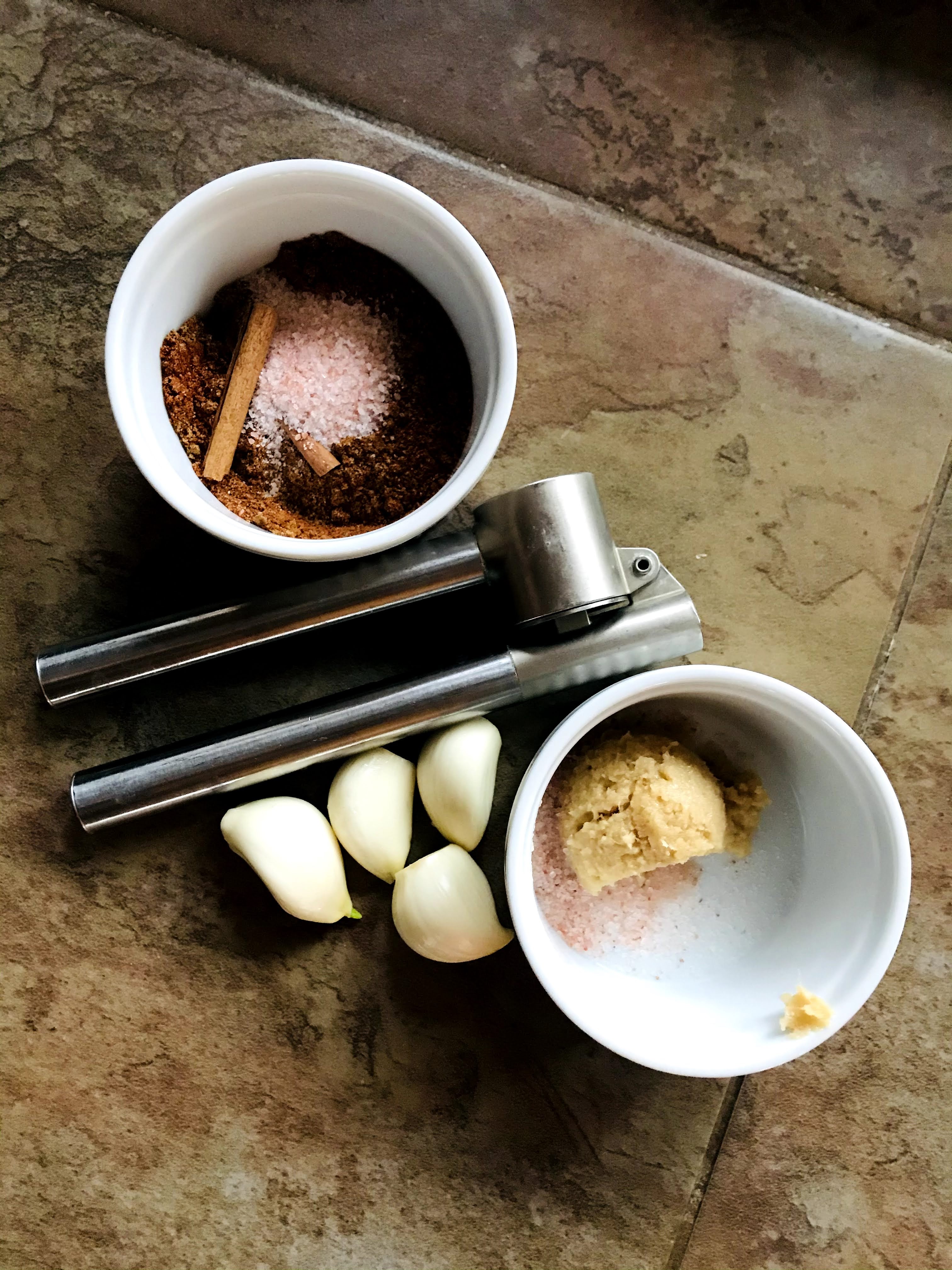
  2. Stir in the garlic and ginger, and cook another minute. Stir in cumin, paprika, garam masala and cinnamon stick, and cook another 30 seconds.
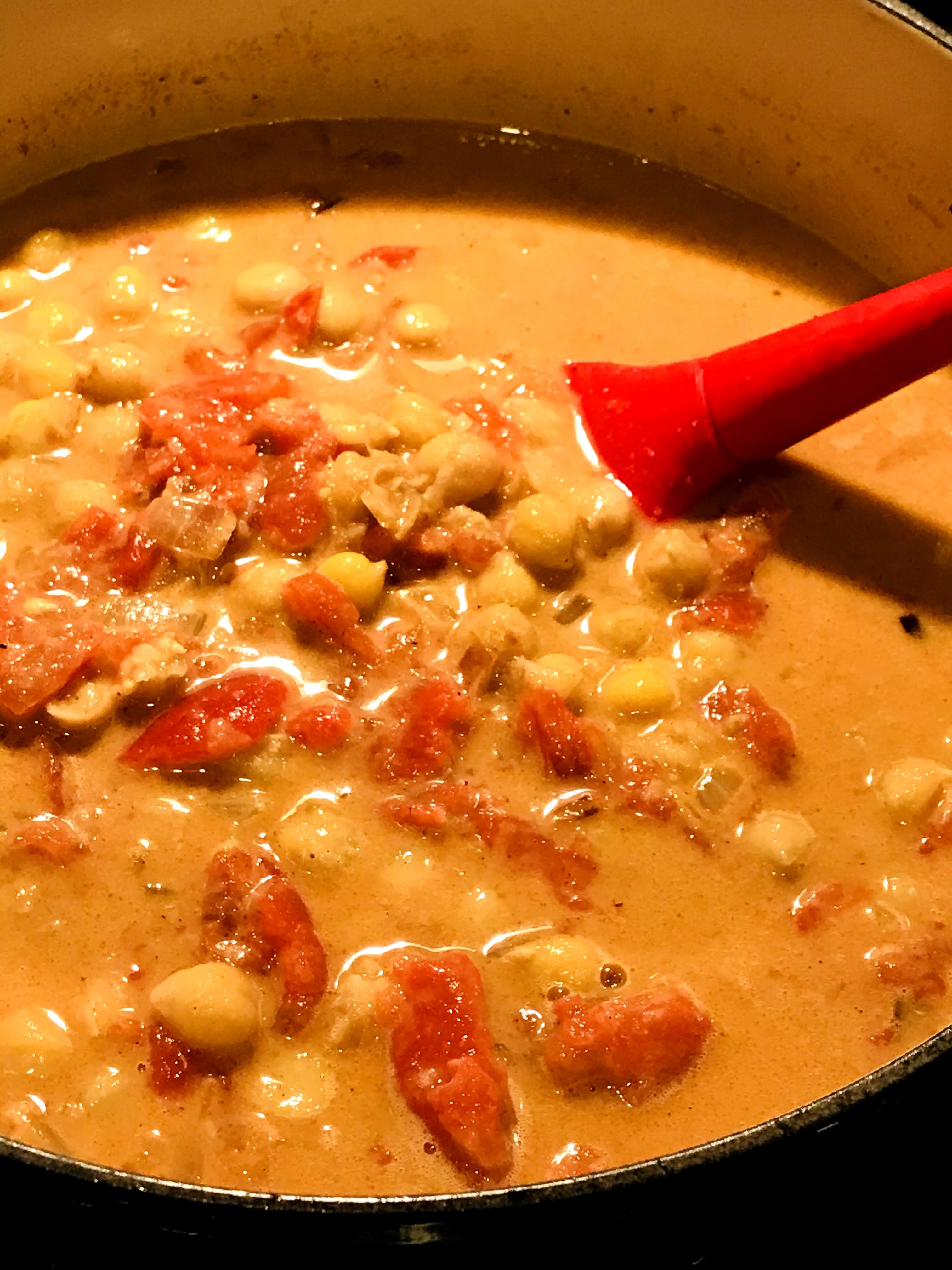
  3. Add tomatoes with their juices. Using a large spoon, break up and smash the tomatoes in the pot. Stir in whisked coconut milk and the remaining 1 teaspoon salt. Bring to a simmer, and continue to cook for 10 minutes, stirring occasionally, and continuing to break up the tomatoes if necessary.
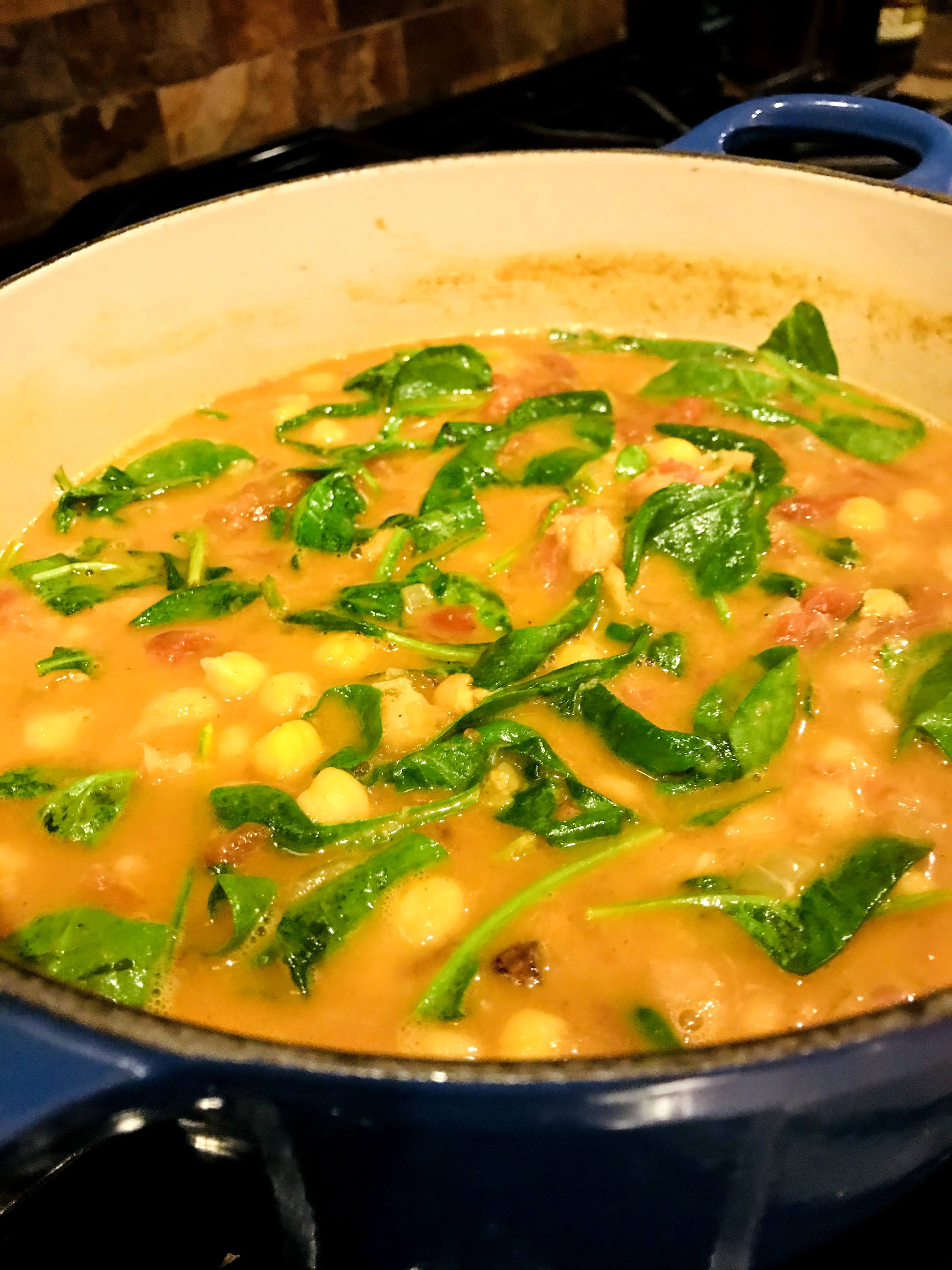
  4. Stir in chickpeas and cayenne if using, simmer and cook, stirring occasionally, for another 10 minutes. Add 2 cups packed baby spinach of heat. It will wilt as you stir in in. Serve in bowls over rice, garnishing with cilantro and a dollop of Greek yogurt.

Serves 4-6

“What the new year brings to you, will depend on what you bring to the new year.”

Riff It…Riff It Good!

Being vegetable farmers, we love all things vegetable; but no one pushes that envelope better than Yotam Ottolenghi. This man fascinates me with his amazing combinations. I love his cookbooks. They are a treasure trove of ideas and visual art. He encourages all of us to jump head first into the unusual. He is my mentor for true creativity in the kitchen. In his new cookbook Flavor, he introduces his philosophy of layering ingredients for optimal impact. He prefers plates and platters to bowls, and I have largely adopted that approach. By layering textures and flavors every ingredient has a chance to stand out on its own. He prepares condiments ahead of time, as flavor bombs. The simplest roasted vegetable takes on new life when topped with a sauce, relish or spice. The visual impact of food is also important, as we eat with our eyes; so color contrast takes on a whole new meaning. From the platter, to the color and texture of each layer, to the final garnishes, every element is crucial to the presentation of the dish.

In the spirit of trying a little used vegetable, we tried his celeriac steaks with Café De Paris sauce. This dish from Ottolenghi’s Flavor cookbook was so unusual, it was a literal treat for the tastebuds. After roasting the celeriac steaks, they were placed on top of a sauce of butter, shallot, garlic, anchovy, mustard and curry powder, capers, chives, tarragon and parsley. There are really no words to adequately describe this dish. Talk about a flavor bomb! Dishes like these can really get you thinking outside the box. So when I contemplated what vegetables we had on hand, and how I could use them creatively; I came up with the following recipe. You can make “steaks” out of many root vegetables, and we had an abundance of large turnips still in the ground. So I made turnip steaks. Then I needed another vegetable that would offer a color contrast to the turnip. I decided on carrots that I roasted and pureed with a little maple syrup and olive oil. I added a small amount of water; just enough to loosen it in my food processor without changing the flavor. The final decision was a dressing or sauce. I settled on a mustard vinaigrette, as both turnips and carrots would be enhanced by this addition. I garnished with chopped parsley and toasted breadcrumbs; but in hindsight thought a sprinkle of dukkah would have also worked well.

TURNIP STEAKS WITH CARROT PUREE & MUSTARD VINAIGRETTE

INGREDIENTS:

  • 3-4 large turnips (3 slices per person), peeled and sliced 1/2 inch thick
  • 6 large carrots, peeled and sliced in 2-inch chunks
  • 6 tablespoons extra-virgin olive oil, divided
  • Sea salt and freshly ground black pepper to taste
  • 1 tablespoon pure maple syrup
  • 1 tablespoon Dijon mustard
  • 2 teaspoons grainy Dijon mustard
  • 2 tablespoons white balsamic or white wine vinegar
  • 3 tablespoons extra-virgin olive oil
  • 1 large shallot, minced
  • 2 tablespoons fresh parsley, minced
  • 2 tablespoon toasted fresh breadcrumbs, or dukkah

INSTRUCTIONS:

  1. Preheat oven to 400 degrees F. Prepare two large sheet pans, one for the carrots, and one for the turnip steaks by lining them with parchment paper.
  2. Scatter the carrots on one sheet pan and drizzle them with 1 tablespoon olive oil; toss with your hands. Sprinkle with salt and freshly ground black pepper. Roast in oven for 30-40 minutes, turning carrots halfway through, until lightly browned and soft when tested with a knife. Let cool for 15 minutes.
  3. Place turnip steaks on sheet pan, leaving 1-inch between each slice. Baste both sides with olive oil. Sprinkle with salt and pepper. Roast for about 30-40 minutes, turning each slice over halfway through. They should look brown around the edges.
  4. In a food processor, place roasted carrots, 2 tablespoons olive oil and 1 tablespoon maple syrup; pulse 3 or 4 times. You want to leave some texture; if too thick add water 1 tablespoon at a time until you reach desired consistency. Place in bowl.
  5. Make vinaigrette, by combining both mustards, white balsamic vinegar, minced shallot, and 3 tablespoons extra-virgin olive oil in a pint jar. Shake vigorously until combined.
  6. On a platter, place turnip steaks overlapping down the center. Spoon pureed carrots around the edge of platter. Drizzle dressing down the center of the turnips. Garnish with chopped parsley and breadcrumbs or dukkah.

Serves 4

“Winter is a season of recovery and preparation.” — Paul Theroux

Beyond Lettuce

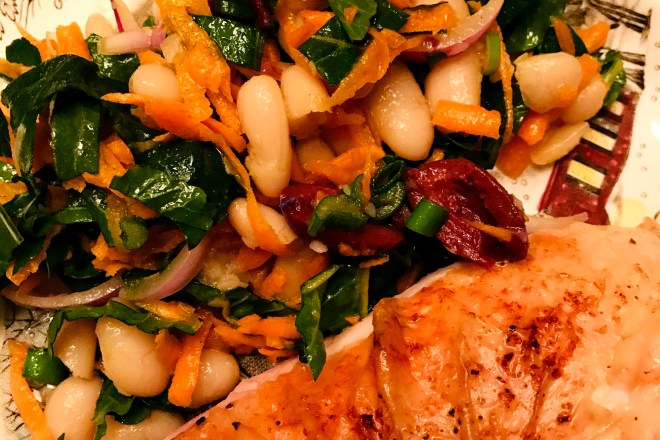
When we elect to stay home as much as possible and self-shelter during this pandemic, how we have prepared can really make a difference. I really notice this during the winter as well. When it comes to salads, we need to think outside the box and get creative. For example, when Val and I were walking the dogs the other day on our farm, we came across a row of overgrown arugula. Rather than going to flower, it was still sending up small new leaves. They weren’t as tender as during the summer months, but they were still quite viable; more like field spinach. We picked about 12 cups of the stuff, and it’s working rather well in all sorts of dishes. Add this to dry cooked or canned beans and shredded carrots and you’ve got yourself a delicious healthy salad. No arugula, try spinach or kale. Both chickpeas and cannellini beans work, and most of us have olives, lemon juice and olive oil.

Having sturdy root vegetables on hand is also another way to get some ‘fresh’ in during winter. I go to the store about every 6 weeks, and when it comes to fresh vegetables it is as follows: potatoes, beets, peppers, carrots, cabbage, oranges and cherry tomatoes. Root vegetables are excellent, and the peppers and cherry tomatoes are throw in all sorts of recipes until their gone. I never buy lettuce in the winter! Most times it has been traumatized during transit and goes south in a matter of days. This is the seasonal time for citrus, so that can be a welcome addition.

BEAN SALAD WITH CARROTS, ARUGULA AND OLIVES

INGREDIENTS:

  • 2 (15-ounce) cans of chickpeas or cannellini beans, rinsed
  • 1/4 cup extra-virgin olive oil
  • 2 tablespoons lemon juice
  • Pinch of cayenne
  • Kosher salt and freshly ground black pepper to taste
  • 3 carrots, peeled and shredded on large holes of box grater
  • 1 small red onion, vertically sliced
  • 2 cup arugula, chopped coarse
  • 1/2 cup pitted Kalamata olives, halved

INSTRUCTIONS:

  1. Place beans in a microwave safe bowl. Mix together your olive oil, lemon juice, cayenne, and salt and pepper. Heat beans on high for 2 minutes; then pour dressing over warm beans. This will allow them to absorb the dressing and make them more flavorful. Let sit for 20-30 minutes
  2. Add carrots, arugula and olives; toss to combine. Season with additional salt and pepper.

“Winter forms our character and brings out our best.” —Tim Allen

Edible Culture

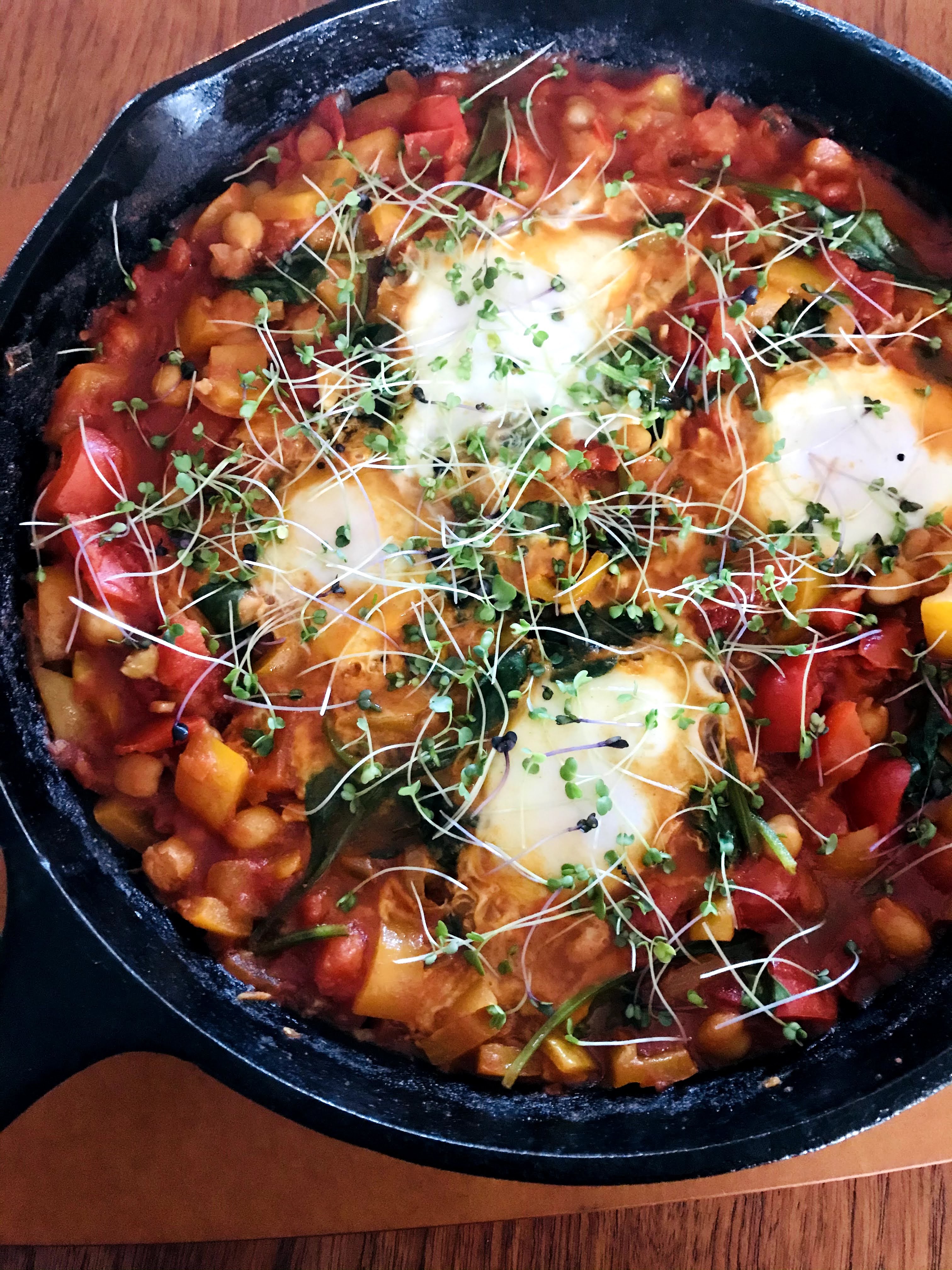
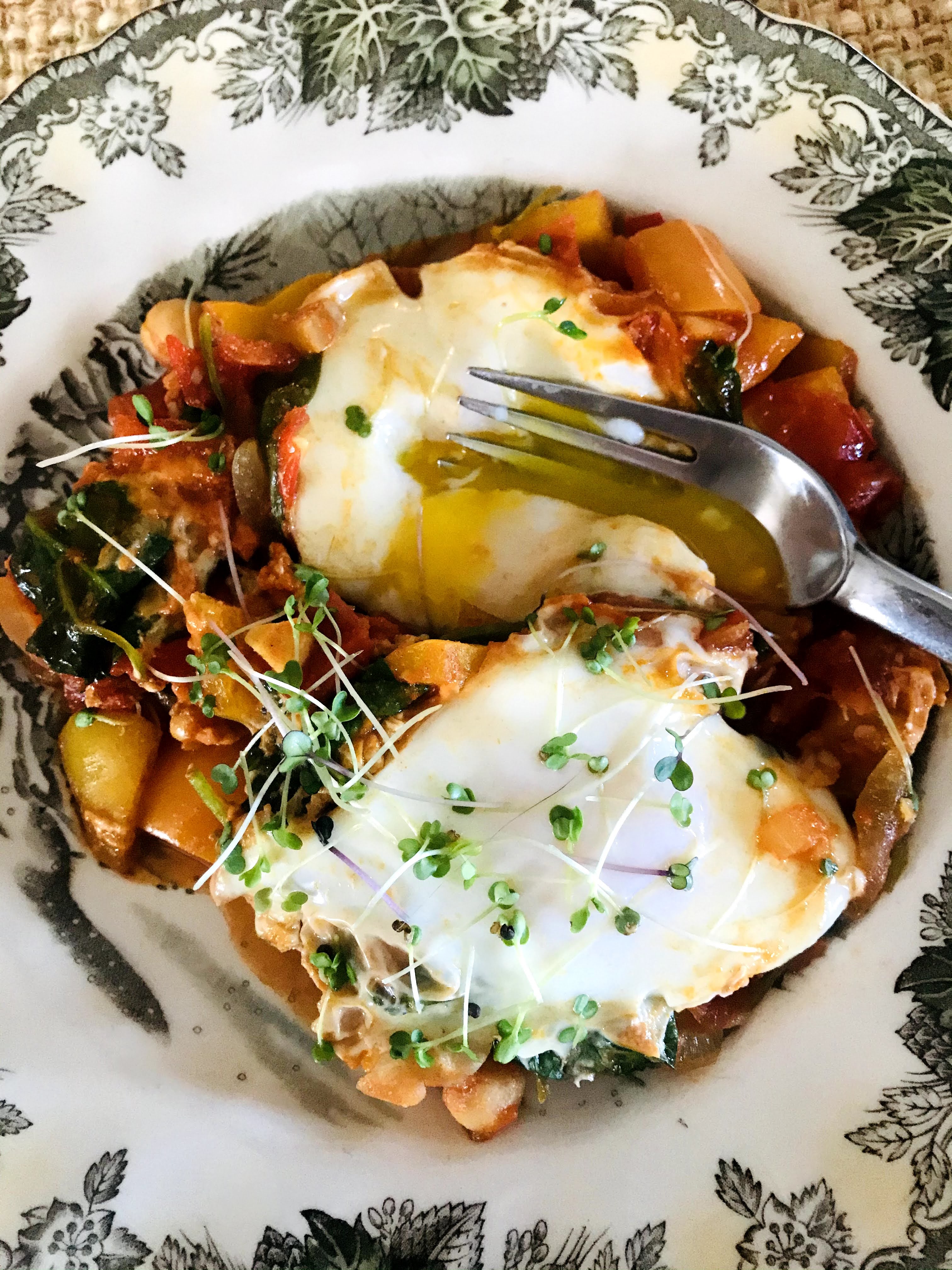
As the wind throws our wind chimes against the house, and stirs up whitecaps on the lake; I sit beside our wood burner feeling quite cozy. I was thinking about our kitchen fest last holiday weekend; I absolutely love egg dishes and had made Shashuka on Sunday. The dish’s name means ‘all mixed up’ and in a sense it is. Its name dates back to the Ottoman Empire and is a favorite in the Middle East, Israel and North Africa. It’s hardy, affordable and delicious with warm spices of cumin and smoked paprika, along with tomatoes, sweet peppers, chickpeas, onion, garlic and of course eggs. There are several similar egg dishes in the world that have some of these ingredients along with their own cultural flair. I have always thought that any dish combining tomatoes and eggs is an automatic winner.

Shashuka has a comforting nature and healthy ingredients. There are many variations that allow for levels of spiciness, along with vegetables, herbs and meat. You can add ground lamb or sausage before sautéing the onion and pepper, and garnish it with feta; or you can make it more Tex-Mex by omitting the paprika and adding chili powder, black beans or corn, then finishing it with chopped fresh cilantro and a squeeze of lime juice. It’s just plain flexible, so let your imagination soar. These days, practically any dish in which eggs are cooked in a sauce may be called Shashuka. In my last cookbook I have a recipe for Green Shashuka, made with spinach, Swiss chard, arugula or kale; along with onions, garlic, herbs, cream and feta.

SHASHUKA

INGREDIENTS:

  • 2 tablespoon extra-virgin olive oil
  • 1 yellow onion, chopped
  • 2 sweet peppers, I like one red and one yellow, cut into 1 inch pieces
  • 4 cloves garlic, minced
  • 2 15-oz cans fire roasted tomatoes (or 6-8 fresh Roma tomatoes, chopped)
  • 1 15-oz can rinsed chickpeas
  • 2 teaspoons ground cumin
  • 2 teaspoons smoked paprika
  • 1/2 teaspoon Aleppo pepper flakes
  • 1/2 teaspoon freshly ground black pepper
  • 1/4 cup tomato paste
  • 2 cups packed baby spinach
  • 2 fresh eggs per person
  • 1/2 cup fresh micro-greens, chopped fresh parsley or cilantro for garnish
Let’s start with onions and garlic
Then add beautiful peppers and tomatoes

INSTRUCTIONS:

  1. In a large non-stick or cast iron skillet, heat your oil over medium-high heat. Add onions and sauté for 3-4 minutes or until soft and translucent; add garlic and sauté 1 minute more. Add peppers and fresh tomatoes if using; cook until soft, about 8-10 minutes.
  2. Add fire-roasted tomatoes if using, then cumin, smoked paprika, Aleppo pepper (or red pepper flakes), black pepper, chickpeas and tomato paste. Stir to combine. Simmer until thickened, about 5-8 more minutes.
  3. Stir in baby spinach and fold gently until spinach wilts. Make indentations in the sauce and gently crack the eggs into the wells. Season eggs with salt and pepper. Cover the skillet, and cook until the egg whites are just set, but yolks are still soft, about 7-10 minutes.
  4. Carry skillet to table and serve hot, sprinkled with garnish of your choice.

Serves: 2-6

Eggs poaching in sauce
Beautiful Shashuka ready to eat!!

“Food is love!!”

Notch It Up!

I’m sure many of you have made something for your families that needed something extra, but you’re not quite sure what it is. Well, I may have the answer for you: Roasted Sweet Pepper and Tomato Sauce. This sauce has it all; it’s sweet, yet piquant, savory and adaptable to so many dishes. The secret is in the roasting. Roasting as we know deepens the flavor of all vegetables and this is no exception. Roasting is so helpful that you can make this sauce even with greenhouse peppers and tomatoes. For me, if I’m going to go through the process, why not make enough to put up? This sauce can be canned in a water bath for 15 minutes, or frozen in half-pint jars. If you roast one sheet pan of peppers, and one sheet pan of tomatoes and garlic it will yield about 5-6 half pints.

But the real deal is just how many uses you will have for it! I’m fond of plating a sauce under an entre like lamb meatballs (next week’s recipe) or cauliflower cake. You can spoon it over a piece of toast or an English muffin and top it with a poached egg. Spoon it over scrambled eggs, or hard boiled eggs or on a sandwich instead of mayo. You are only limited by your imagination!

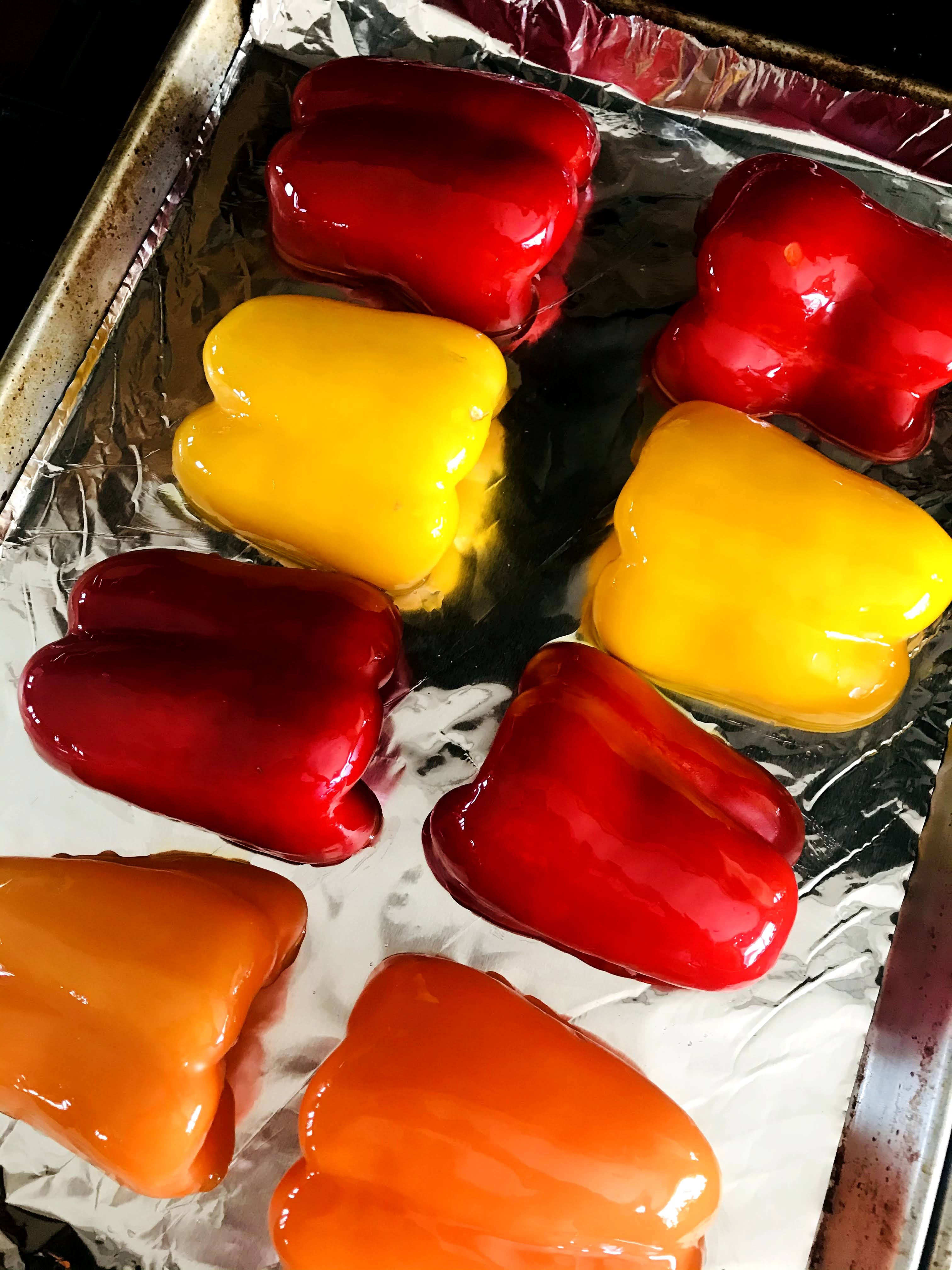
Sweet peppers ready to be roasted
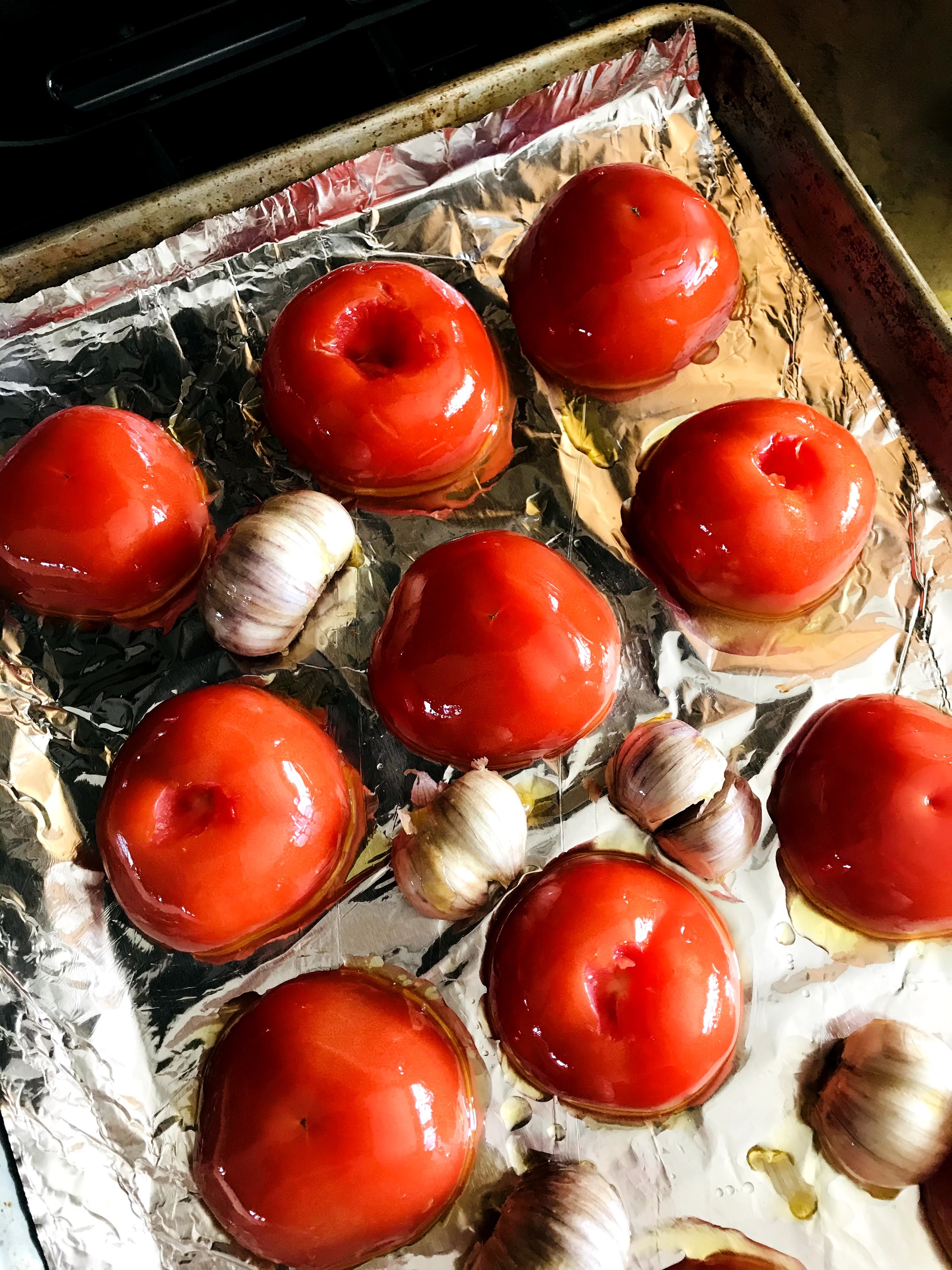
Halved tomatoes and garlic ready for roasting.

ROASTED SWEET PEPPER AND TOMATO SAUCE

INGREDIENTS:

  • 2 sweet peppers, your choice of color, but include one red, halved vertically and seeded
  • 2 tomatoes, cored and cut in half horizontally
  • 4 tablespoons extra virgin olive oil
  • Kosher salt and freshly ground black pepper to taste
  • 1 head of garlic, tops trimmed just enough to expose cloves
  • 1 1/2 tablespoons red wine vinegar
  • 1 teaspoon pure maple syrup
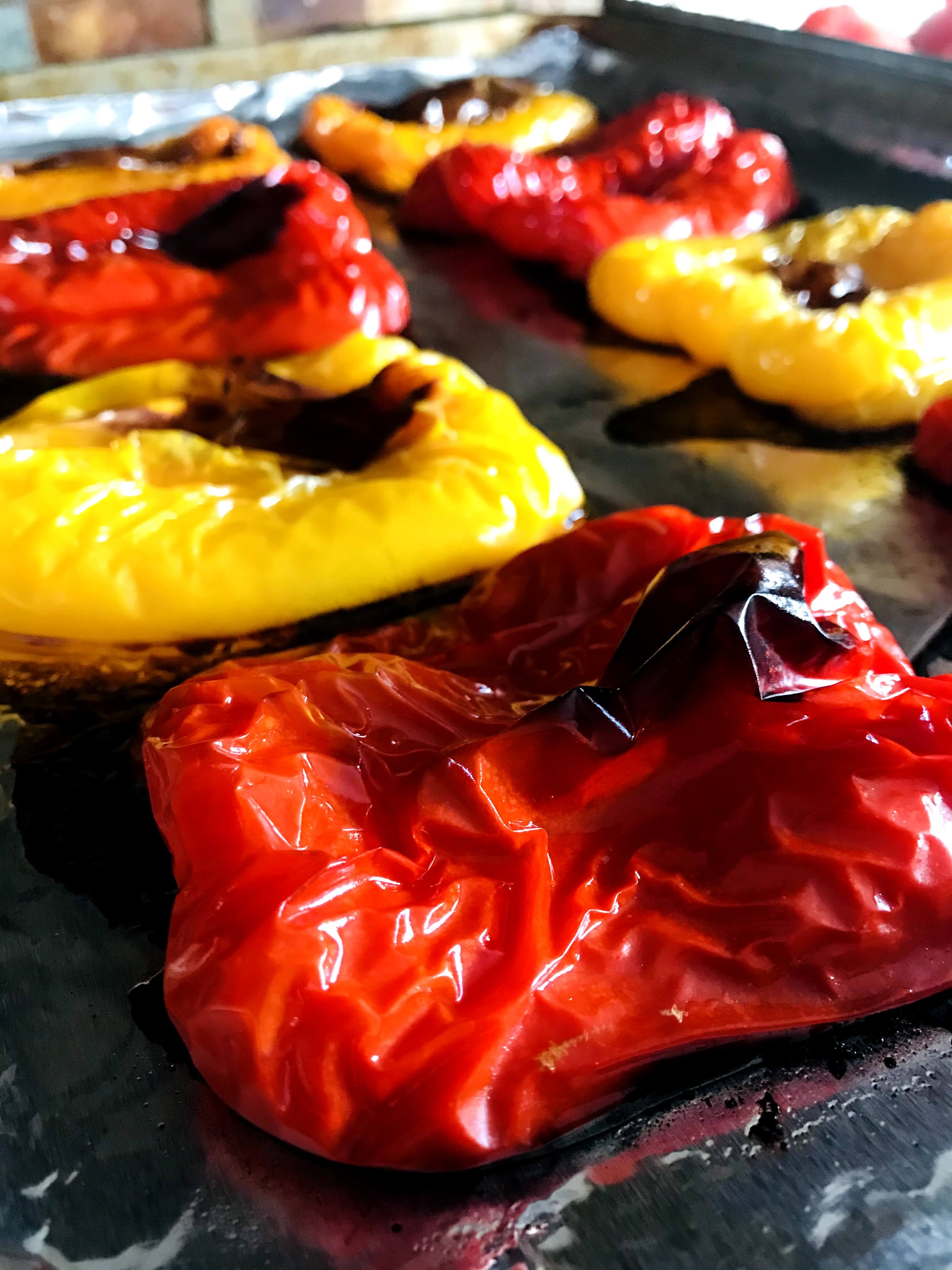
Roasted peppers
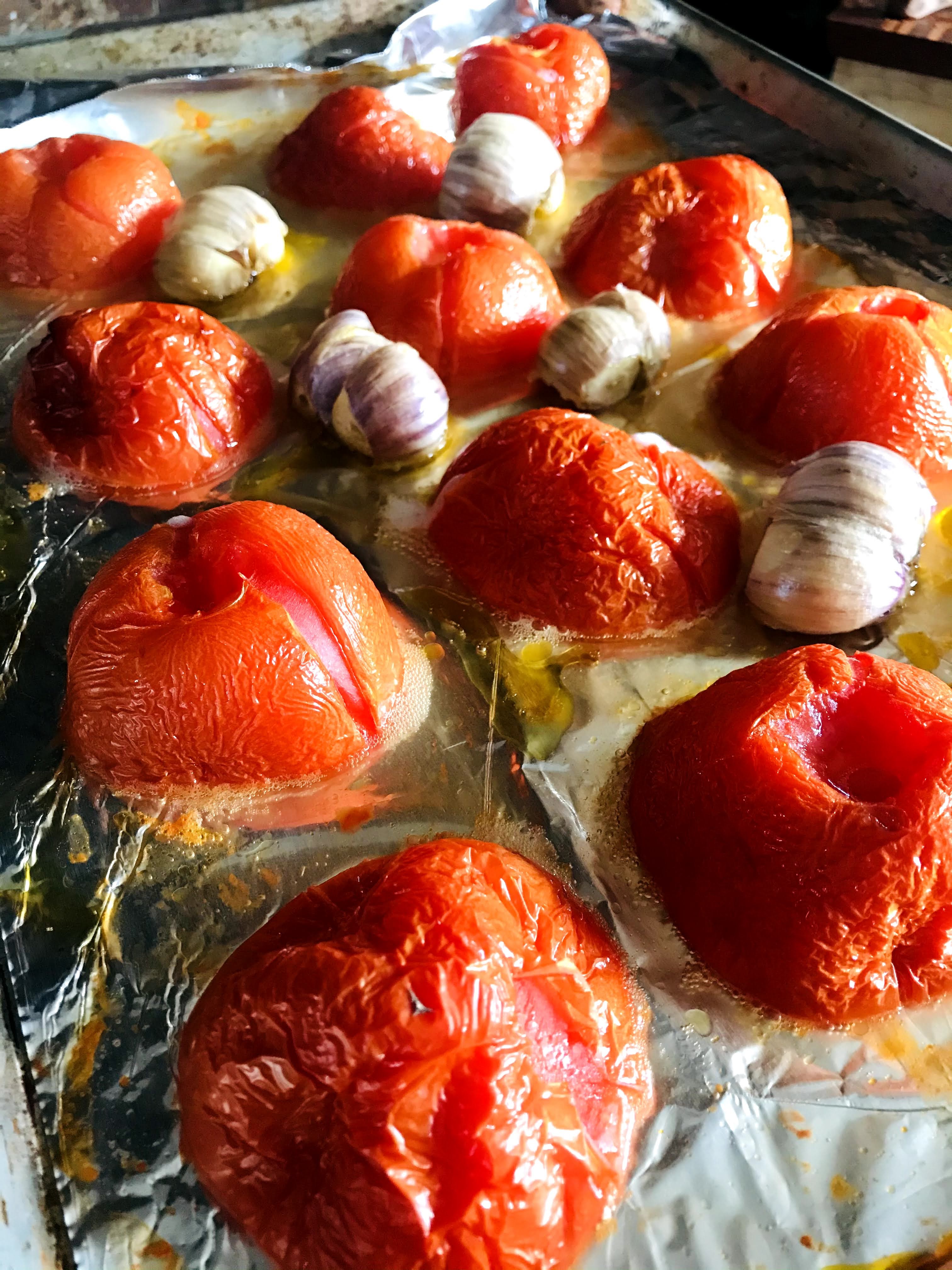
Roasted tomatoes

INSTRUCTIONS:

  1. Preheat your oven to 425 degrees F.
  2. Line a large sheet pan with aluminum foil (if you are preparing a batch of quantity, line two baking sheets; using one for peppers and one for tomatoes). Place peppers, tomatoes and garlic on sheet pan.
  3. Baste vegetables with olive oil, then add your salt and pepper. Place in oven and set your timer for 20 minutes. Rotate trays from top to bottom and roast an additional 20 minutes. Remove the tomatoes and roast the peppers for approximately 20 minutes more. You want the peppers charred in various places. If doing a single batch place everything on one sheet pan and roast for 35 minutes.
  4. Let cool slightly, then with a paring knife, carefully pull off the skins of tomatoes, then repeat with the peppers. Discard skins. Squeeze the garlic out of its papery skins.
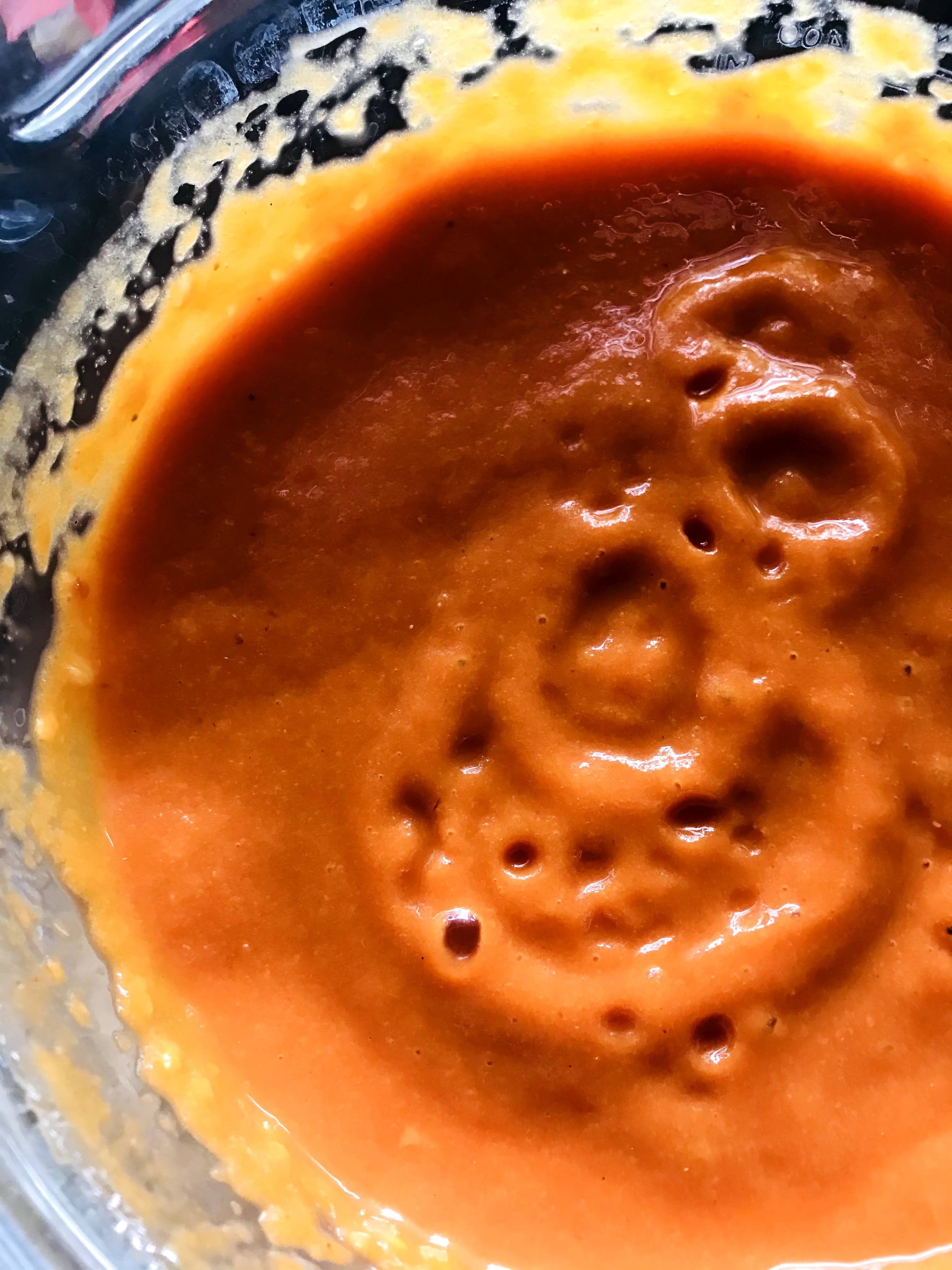
  5. In a blender or food processor, place your tomatoes, peppers, garlic, red wine vinegar, maple syrup and some additional salt and pepper. Blend or pulse for about 1 minute. Add an additional 3 tablespoons of olive oil and process again until smooth. Taste and adjust seasoning adding more vinegar, salt and pepper if needed.
  6. Pour into half pint jars and can or freeze.

Yield: 1 half pint

Roasted red pepper and tomato sauce just blended.

“An ounce of sauce covers a multitude of sins.” —Anthony Bourdain

Hunkering Down

Most of the leaves are off the trees, and the view from my window is brown and gray. We are preparing to self-quarantine for the winter. Our larder and freezers are full of food prepared during our growing season. For all practical purposes we are ready to be home. The wood is stacked and the farm put away for the season.

Winter is actually a much needed quiet time on the farm, regardless of the pandemic. Val and I have stacks of books at the ready. The days are centered around food, discussion, reading, writing and cribbage. It is a simple life that suits us. There are times when the only sounds are the ticking of clocks, the wind across the lake and the crackling of the wood stove. This quiet is the counterbalance to the pandemic and the political tension all around us. With open hands, rather than fists, we will heal our tattered hearts and listen.

The following recipe makes more Indian butter sauce than you will need for one head of cauliflower, but it freezes beautifully and can be at the ready the next time you want to make it. If you want a little more bulk, steam some jasmine rice and serve it along side. It soaks up that wonderful sauce; and you might not have leftovers. You also will want all your spices measured out before you make the sauce, so you can sprinkle them in all at once. Don’t be intimidated by the list of ingredients, it comes together rather quickly; and you will find it on your regular rotation.

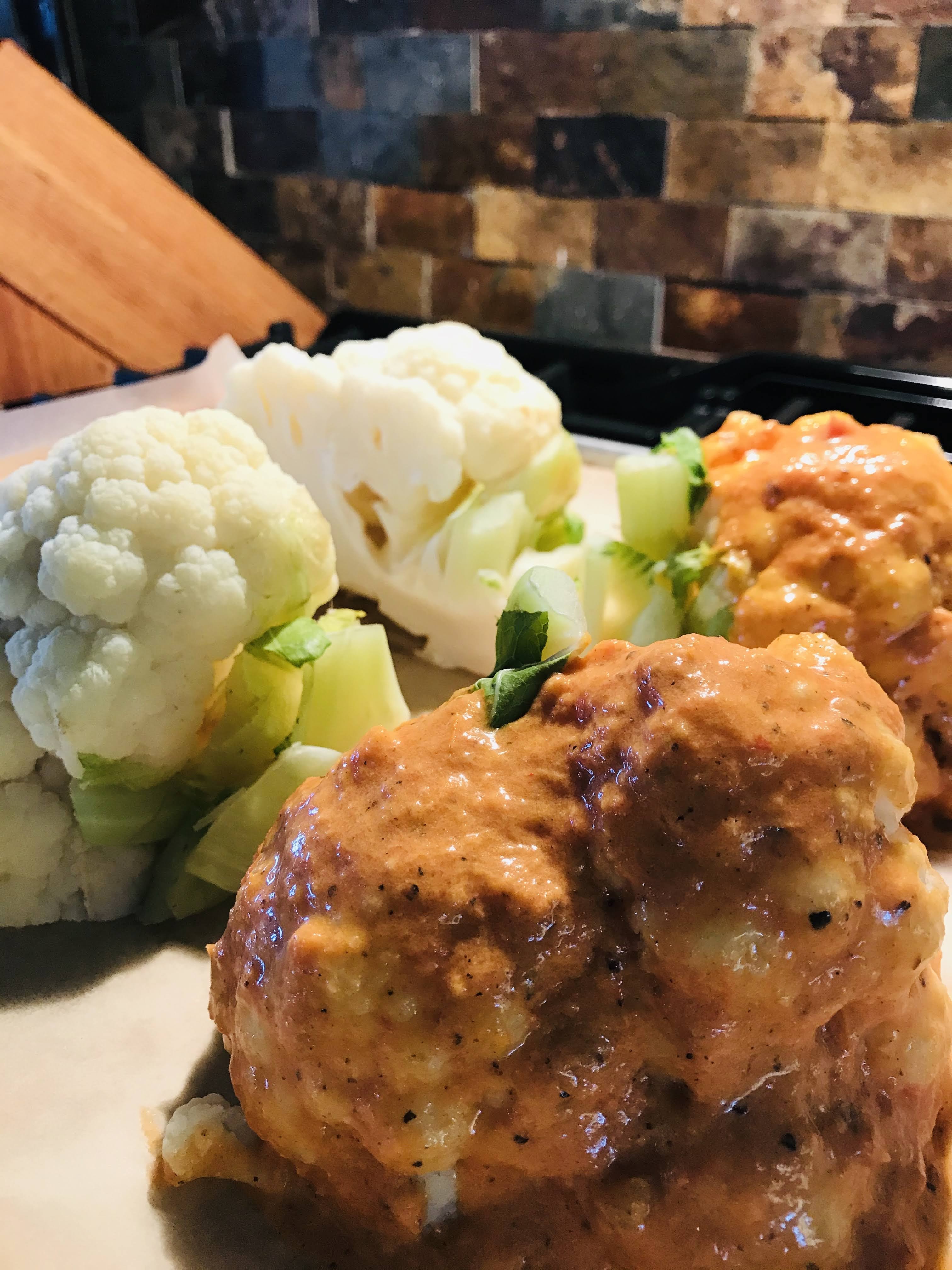
Steamed cauliflower sections with Indian butter sauce ready for roasting.

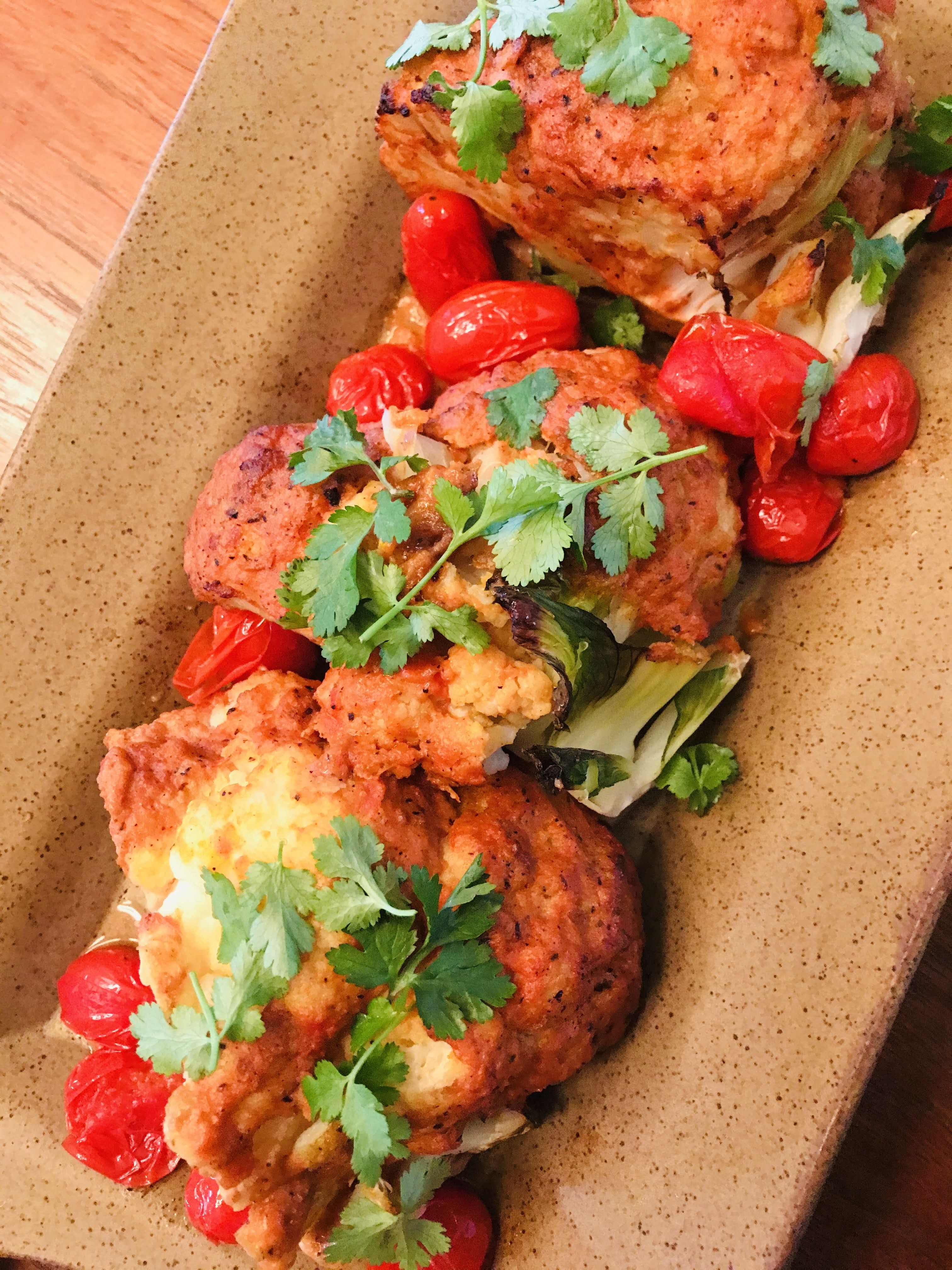
ROASTED CAULIFLOWER WITH INDIAN BUTTER SAUCE

INGREDIENTS:

  • 1 large head of cauliflower, cut in quarters leaving as much of the green leaves as possible
  • 4 tablespoons (1/2 stick) unsalted butter
  • 2 large or 3 small shallots, minced
  • 2 teaspoons ground cumin
  • 2 teaspoon garam masala
  • 2 teaspoons fresh lime juice
  • 1 1/2 teaspoons kosher salt
  • 2 teaspoons freshly grated ginger
  • 2 large garlic cloves, grated on Microplane or minced
  • 1/2 teaspoon crushed red pepper flakes
  • 1 28 ounce can fire-roasted diced tomatoes and their juices
  • 1 cup heavy cream
  • 1 teaspoon finely grated lime zest
  • Cooked jasmine rice (if using)
  • Chopped fresh cilantro, for serving
Roasted cauliflower with Indian butter sauce

INSTRUCTIONS:

  1. In a large pot over high heat, place a steamer basket, 2 cups water, and your quartered cauliflower. Cover, bring to a boil and steam for 10 minutes. Remove the cauliflower with tongs and gently let it drain on a clean kitchen towel. Preheat oven to 425 degrees F.
  2. Next, make you butter sauce. In a medium heavy sauce pan over medium high heat, melt 2 tablespoons of the butter, add the shallots and a pinch of salt; cook until golden brown, about 5-8 minutes.
  3. Stir in the garlic, ginger, red pepper flakes, cumin, paprika, garam masala, and lime juice. Sauté for another 2 minutes.
  4. Add the heavy cream, and tomatoes with their juices. Add salt and freshly ground black pepper to taste. Bring to a boil, then reduce heat to medium and simmer for 15 minutes, stirring occasionally. Take off heat and using a stick blender, blend until smooth. Add the remaining 2 tablespoons of butter, and lime zest.
  5. On a large baking sheet lined with parchment paper, place your drained cauliflower quarters evenly on it. Baste each quarter generously with sauce and roast for about 25 minutes.
  6. Place cauliflower on attractive platter and sprinkle with chopped fresh cilantro.

Serves 4

Beautiful roasted cauliflower, with Indian Butter Sauce
Enjoy!!

“Loneliness is the poverty of self; solitude is the richness of self” —May Sarton

Sweet and Sour

There’s a reason fall is called a transitional season. The wind is howling here today with 50 mph gusts, sending our bird feeders crashing against our deck. It’s in the 30’s with periods of snow, mixing in with the falling leaves, sending everything on a Twister ride. No worries, the forecast for next Sunday is 70 degrees!

We are fortunate that our larder is full. Comfort food means different things to each of us. I love it when we turn the corner from summer vegetables to fall. I enjoy pairing vegetables with whole roasted chickens or roasting them for sheet-pan dinners. I’m a visual person, after all, we eat with our eyes, and I love to have bright colors and contrasts in food. This dish is perfect when red cabbage and apples are at Market. It combines the best of color and contrast; as it’s both sweet and sour. It comes together in under an hour and pairs well with chicken, pork or duck.

Sautéing the onions and cabbage

SWEET AND SOUR RED CABBAGE

INGREDIENTS:

  • 2 tablespoons unsalted butter
  • 1 medium yellow onion, chopped
  • 1 medium red cabbage, cored and thinly sliced (about 6-8 cups)
  • 3/4 cups apple cider or fresh apple juice
  • 1 teaspoon salt
  • 3 tablespoons fresh dill, chopped, plus more to garnish
  • 2 teaspoons fennel seed
  • 1/2 cup golden raisins
  • 3-4 tablespoons apple cider vinegar
  • 1 tablespoon local honey

INSTRUCTIONS:

  1. In a large pot sauté the onions in butter until lightly browned. Add the cabbage and sauté for an additional 10 minutes, stirring occasionally. The cabbage will reduce in volume quite a bit.
  2. Add the remaining ingredients except the honey. Cover, cook on low heat for about 25-30 minutes.
  3. Add honey and adjust with more vinegar or honey if needed.

Serves 4

Colorful and delicious!

“Vegetables to me are….I don’t want to say the most exciting part of cooking, but certainly a very exciting part of cooking, because they continue to change. They come into season and they go through different phases.”

–Thomas Keller

Deep Roots

As we prepare to self-quarantine for the winter, I am wondering how many people really enjoy being home? What is the meaning of home for each of us? Is it easier to be home as we age? By the time I turned 30, I had already moved 36 times in my life. I remember never really feeling at ease or content when I was at home. The following 36 years I have moved 3 times. I have lived in a rural climate now for 14 years and I find that my sense of place has changed dramatically since I lived in the urban world.

My writing desk overlooks both marsh and lake. I face a large window that beckons I not only write, but rest in this environment. I stare at our bird feeders and the weather for long periods of time. I learn subtleties, and patterns of nature and the seasons. I find this calming; and who wouldn’t want to feel calmer during these days of upheaval?

It seems to me, when I lived in the city I was much more interested and connected to both entertainment and personal possessions. Being pleasing and accepted by people was of prime importance. It wasn’t until I began searching out periods of solitude and quiet that I began requiring those things to stay balanced. As I stay in one place, my roots grow deeper in the soil, providing a vessel for my own thoughts and perspectives. I feel held. My relationship with my wife is nurtured by this sense of place. We have our rhythms and interests that continue the story of this land. We both love the quiet, growing and cooking food along with sharing that food with others. For some, the meaning of roots is about tradition, for us the meaning of roots is about the land, food and relationships. Our relationships are based on mutual respect and love. They are reciprocal in the most fundamental of ways. We have each others backs. We can ask for help, and often it is given without request. There is laughter, discussion and heart. As Joni Mitchell once said, “All we ever wanted was to come in from the cold.”

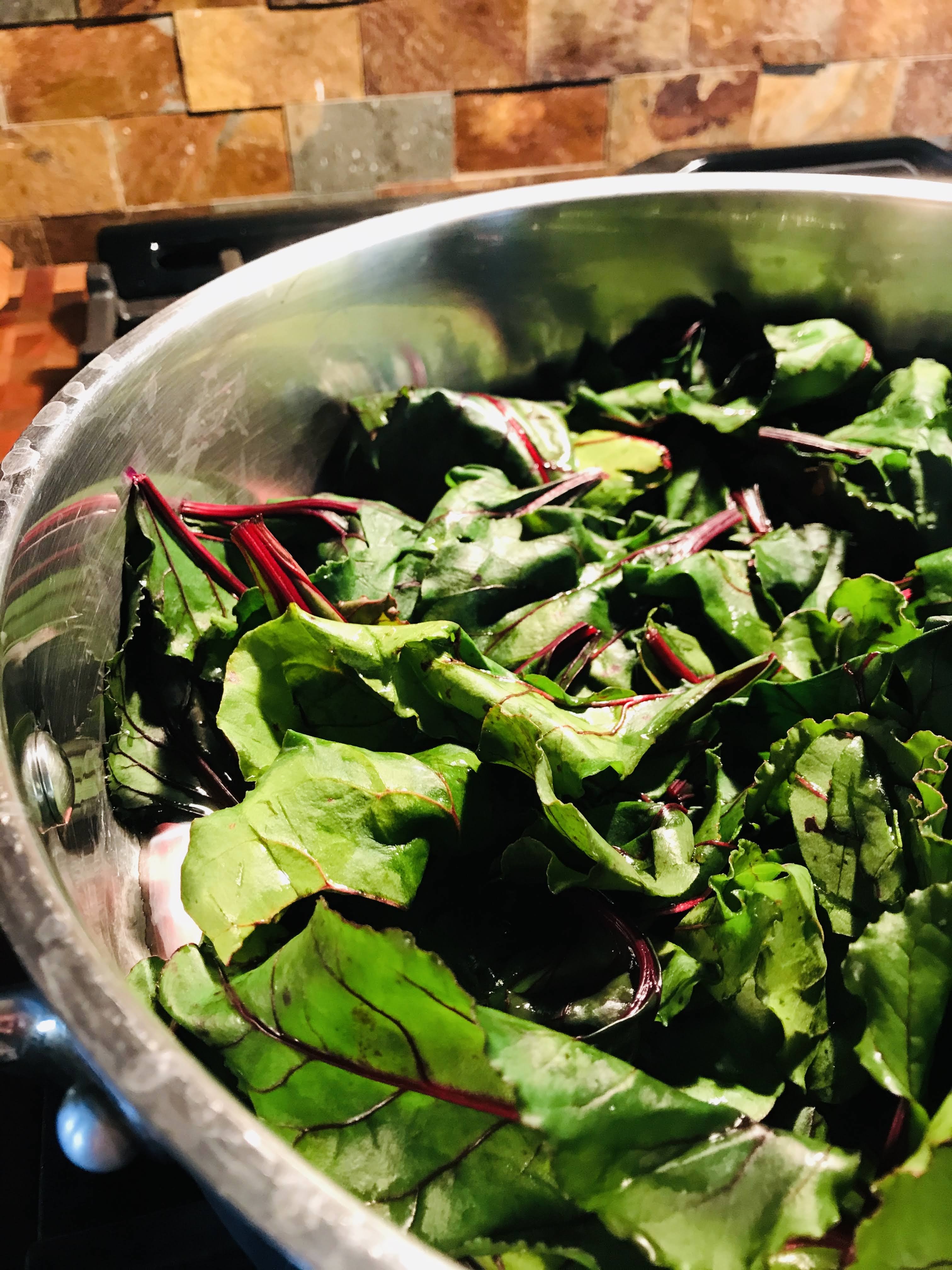
The following recipe has some flexibility to it. I love purchasing (or growing) beets with greens. The greens are beautiful, healthy and add color and interest to this meal salad. If beet greens are not available, arugula or spinach are a good option, but use them raw rather than sautéed. I also enjoy alternative dressing ideas. The basic dressing uses extra-virgin olive oil, red wine vinegar and garlic. Try using extra-virgin olive oil, white wine vinegar and peach or apricot jam. Beets love being pared with stone fruits; or you can use orange juice. Free you imagination to add interest and surprise. If you find yourself out of capers, chop up some olives; and chevre or goat cheese can easily substitute for feta. No pistachios? Try toasted walnuts.

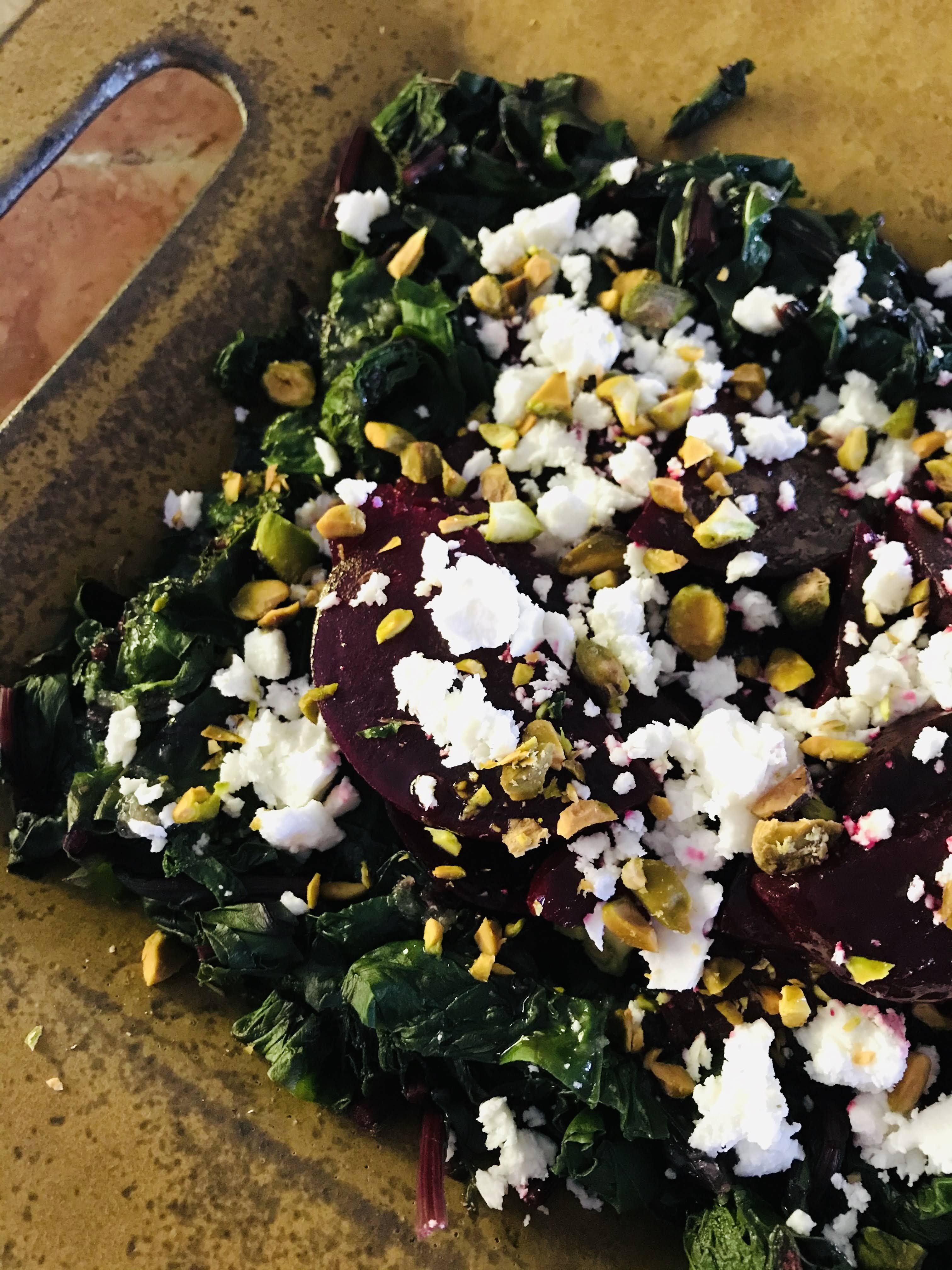
Savory, hearty and delicious

ROASTED BEET SALAD WITH FETA & PISTASCHIOS

INGREDIENTS:

  • 6 tablespoons extra-virgin olive oil
  • 2 1/2 tablespoon red wine vinegar
  • 1 tablespoon minced garlic
  • 7 medium-large beets with greens
  • 1 cup water
  • 2 tablespoons chopped drained capers
  • 3/4 cup crumbled feta cheese (about 3 ounces)
  • 3 tablespoons chopped roasted pistachios
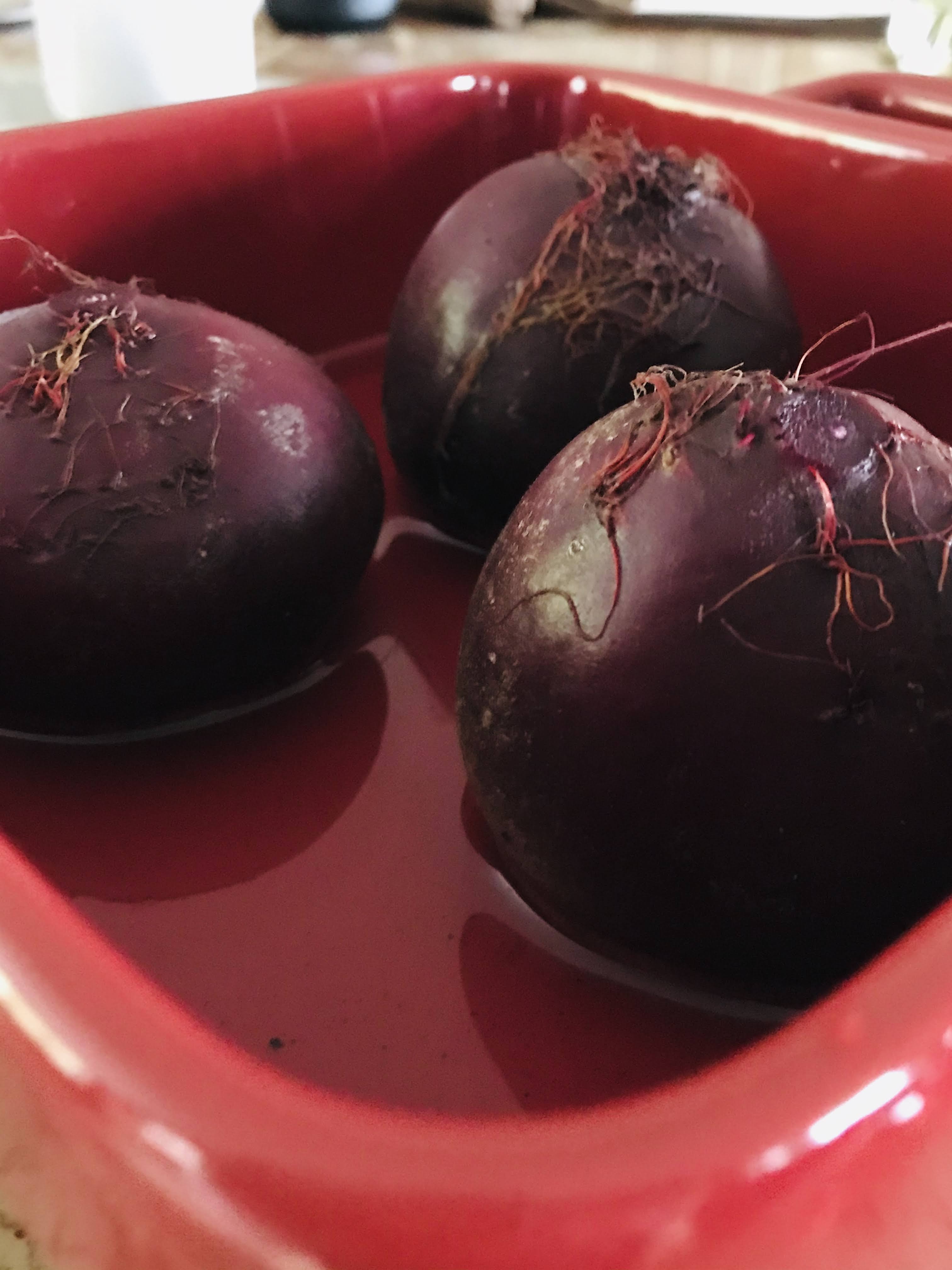
Beets ready to go into oven
Vibrant beet greens

INSTRUCTIONS:

  1. Preheat oven to 375 degrees F. Whisk oil, vinegar and garlic in small bowl to blend. Season dressing generously with salt and fresh ground black pepper.
  2. Cut tops off beets; reserve greens. Arrange beets in single layer in a baking dish; add 1 cup water. Cover with aluminum foil and bake until beets are tender when pierced with a knife; about 1 hour 15 minutes. Let cool until you can handle them and peel off the skins. I pick them up with paper towels and slip them off.
  3. Cut beets in half and slice thinly. Transfer to large bowl and mix with capers and 1/4 cup dressing. Season with salt and freshly ground black pepper.
  4. Cut stems off beet greens and discard. Wash greens, then with some water still clinging to the leaves, transfer to large pot or skillet. Stir over high heat until just wilted but still bright green, about 4 minutes. Drain greens; squeeze out excess moisture. Cool; chop coarsely. Transfer to medium bowl and toss with enough dressing to coat. Season with salt and pepper.
  5. Arrange beets in center of platter. Surround with greens; sprinkle with feta and pistachios. Drizzle with any remaining dressing.

Serves 4-6

Yum.

“A tree with strong roots laughs at storms. –Malay proverb

Sounds Of Silence

As we move closer to the presidential election, I find myself feeling overwhelmed by both the pandemic and our turbulent political discourse. I traverse between a feeling of calm to a nameless agitation that grabs me the moment I leave the safety of our home. It seems that the world is becoming more and more dangerous. My heart grieves for the victims of Covid, the poisoning of our planet for profit, the inequality and injustice displayed by people in power. Our problems seem overwhelming. I often wonder what impact one person could possibly have to change the tone of the conversation, much less the world? As an individual how do I live a life that nurture others, the planet and myself? How do I stay authentic to my beliefs in a world that wants to label me?

In the small microcosm of my life, I look for signs of hope. How have I made a difference? Since I moved to the country, my greatest teachers have been nature, the seasons, and the land. If we care for the land, the land offers up the food that both feeds us and provides our livelihood. That clean, wholesome food is taken to the farmers market and sold to people that care about what they feed themselves and their families. It’s a life that is simple, focused and real. We place a seed in the ground and have faith that it will grow. I believe that we often receive what we put into the world; a sort of what goes around, comes around. When I am kind to people, it follows that people are generally kind to me. But what happens when people are unkind, disrespectful, and angry? What happens when there is drought or deluge or crop failure? When a pandemic strikes or unemployment, or changes we didn’t expect or ask for? I believe this is when our faith is really tested, when our priorities and attitudes matter.

It seems to me that faith, the belief in things unseen, is about the things in life that cause us to question, to change, to grow. I don’t believe that the challenges in life are judgements, but opportunities to understand the world and ourselves more fully. How do we cultivate our better selves when we are up against our fears and the rapid pace of change? We are all flawed human beings; there are no saints among us. How do we nurture our inter-connectedness? How do we come to realize what happens to one of us, happens to us all? My greatest challenge is to keep my heart open, to feel pain when someone is hurting, to look at the glass as half full.

As the fall prepares us for winter, may we take the time to reflect and adopt a slower pace. The land rests, and in the same sense so do I. Dormancy is a gift. I can’t assimilate life without periods of quiet. There is time for long morning coffee and deep listening. Clocks tick, fires burn and hearts beat. It is a season where less is more. This resting period is a time to replenish both our physical and emotional beings. In this quiet stillness I hear a small voice say, “Your faith is measured by the wideness of your heart.” One of my favorite poets, Stanley Kunitz said it in a different way: “Live in the layers, not on the litter.” In these layers of life, the peace I sought is found.

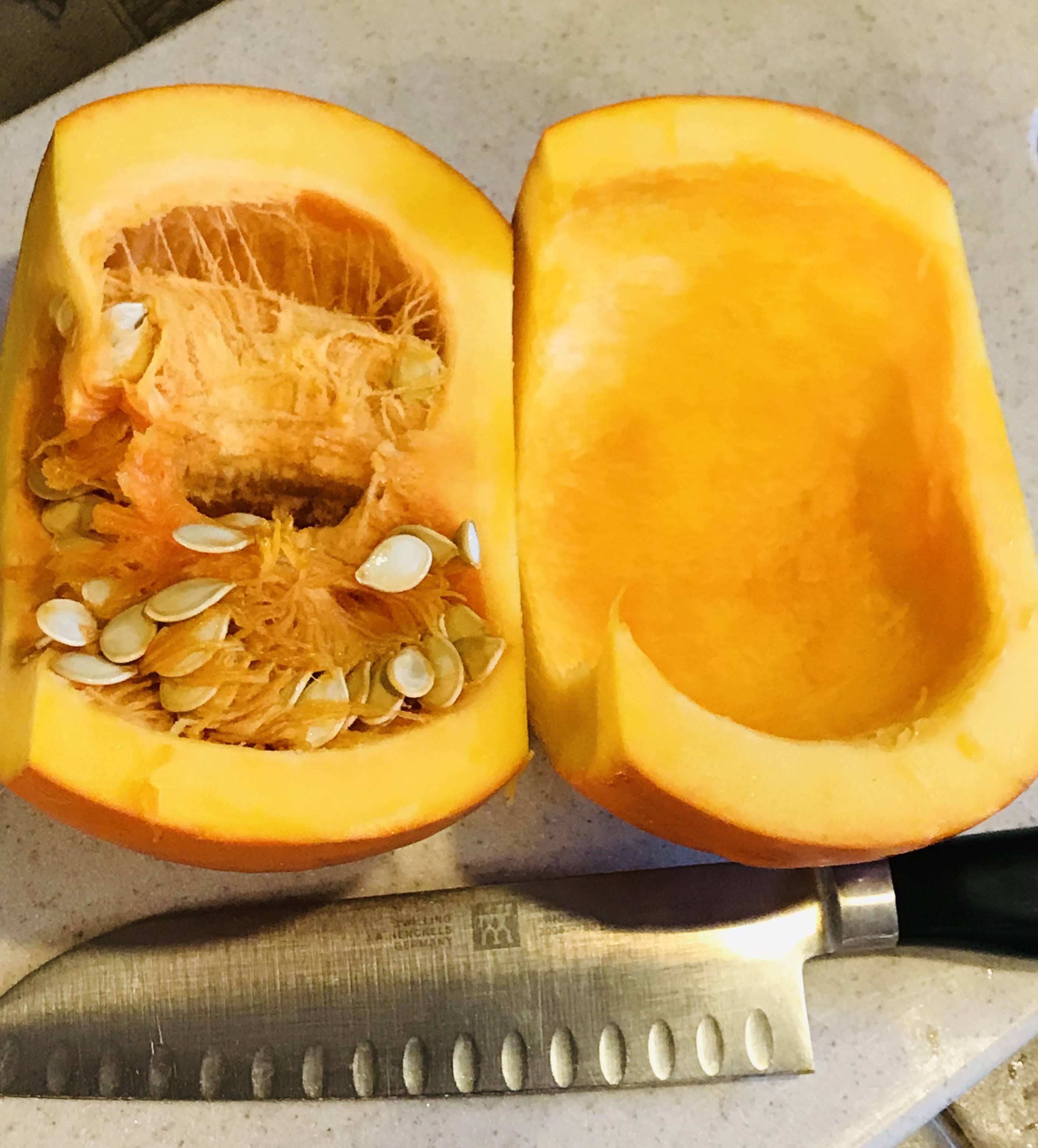
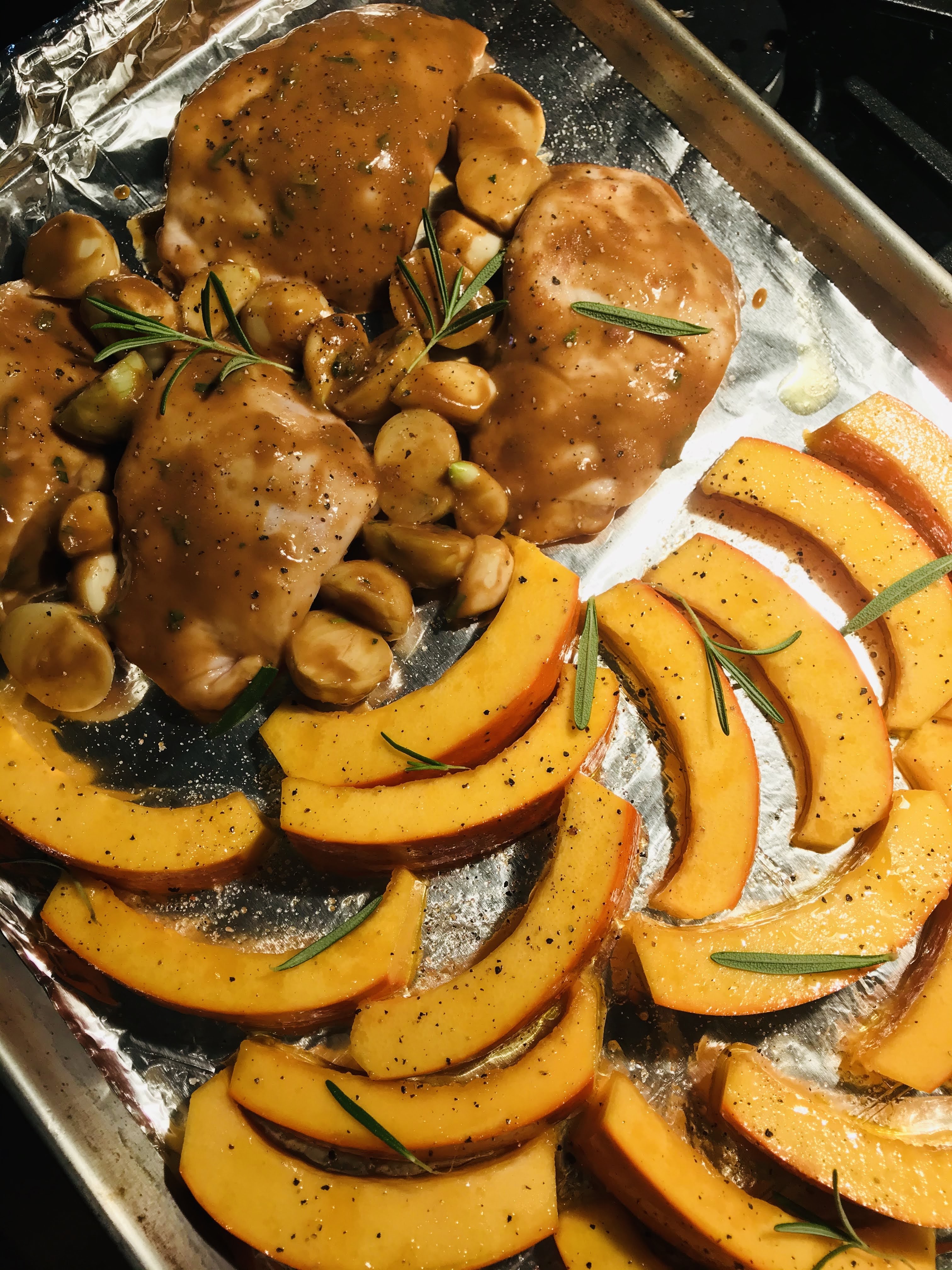
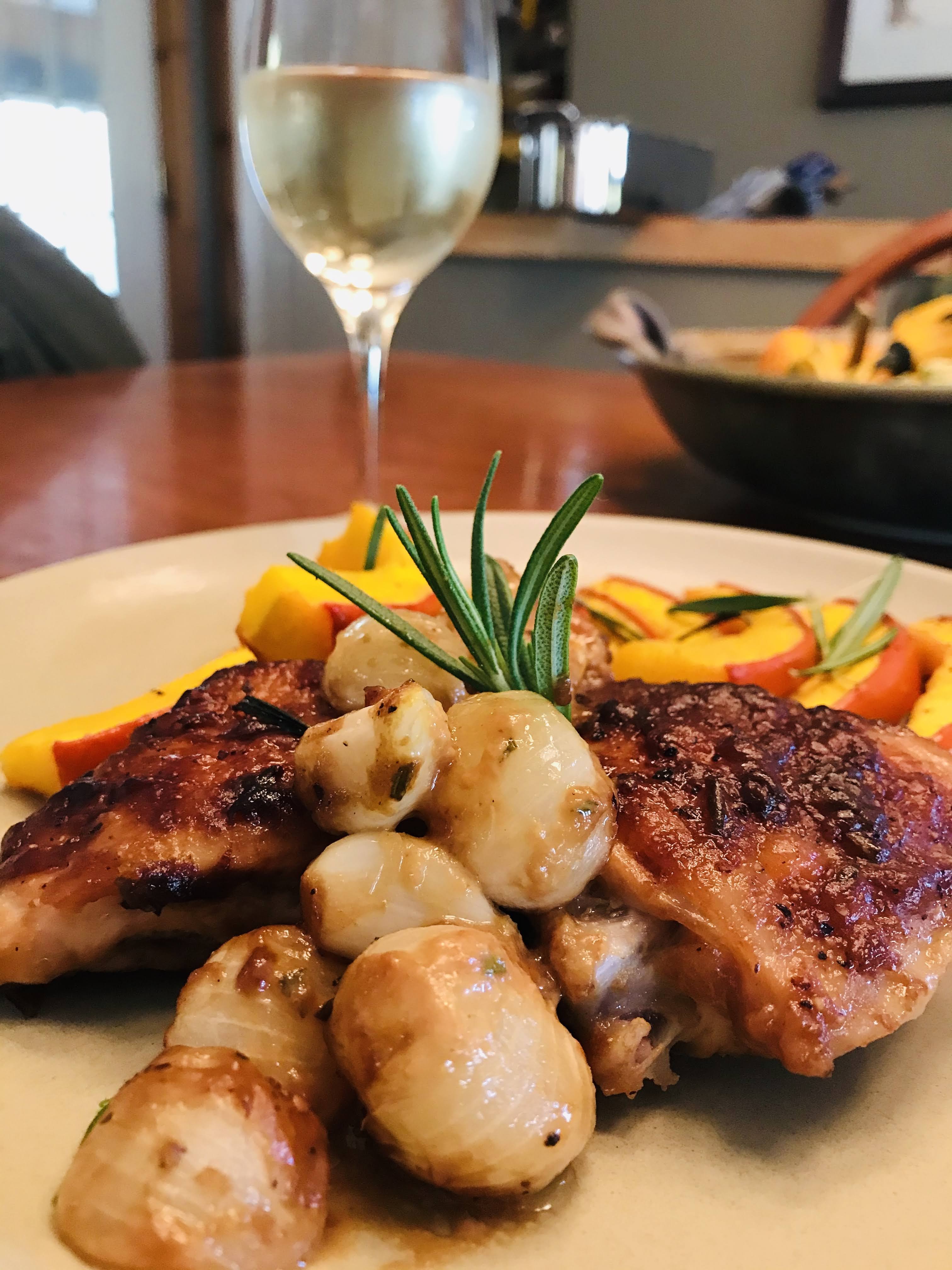
Although food is my passion, there are days when I’m involved in other interests or projects. This is when the simplicity of a sheet pan dinner is exactly what I turn to for a meal that is virtually hands off, yet delicious. They are basically designed around a protein and a vegetable. This one uses everything that I have either in freezer or pantry. Although I have used pumpkin as the vegetable, you could just as easily use sweet potatoes or butternut squash. Don’t forget to save your pumpkin seeds to roast, for an added treat.

A delicious sugar pumpkin, loaded with seeds.
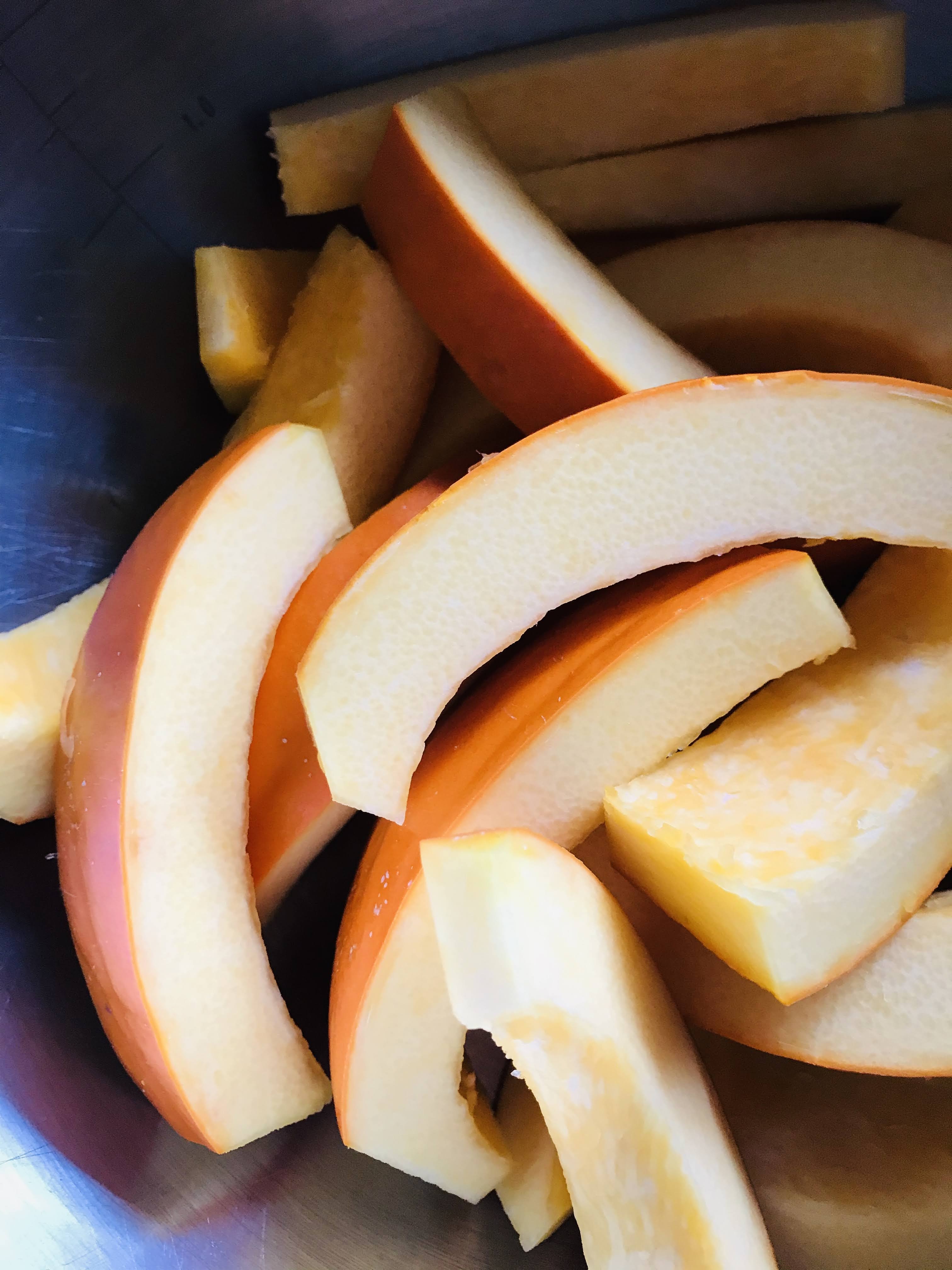
Pumpkin wedges, ready to be tossed with olive oil and maple syrup.

DIJON-ROSEMARY CHICKEN THIGHS WITH MAPLE GLAZED PUMPKIN

INGREDIENTS:

  • 3 tablespoons Dijon mustard
  • 5 tablespoons extra-virgin olive oil
  • 1 1/2 tablespoons balsamic vinegar
  • 5 large garlic cloves, peeled and left whole
  • 6 skin-on, bone-in chicken thighs
  • 5 shallots, halved lengthwise
  • 1 small sugar pie pumpkin (about 2 lbs.)
  • 2 tablespoon pure maple syrup
  • Kosher salt and freshly ground black pepper to taste
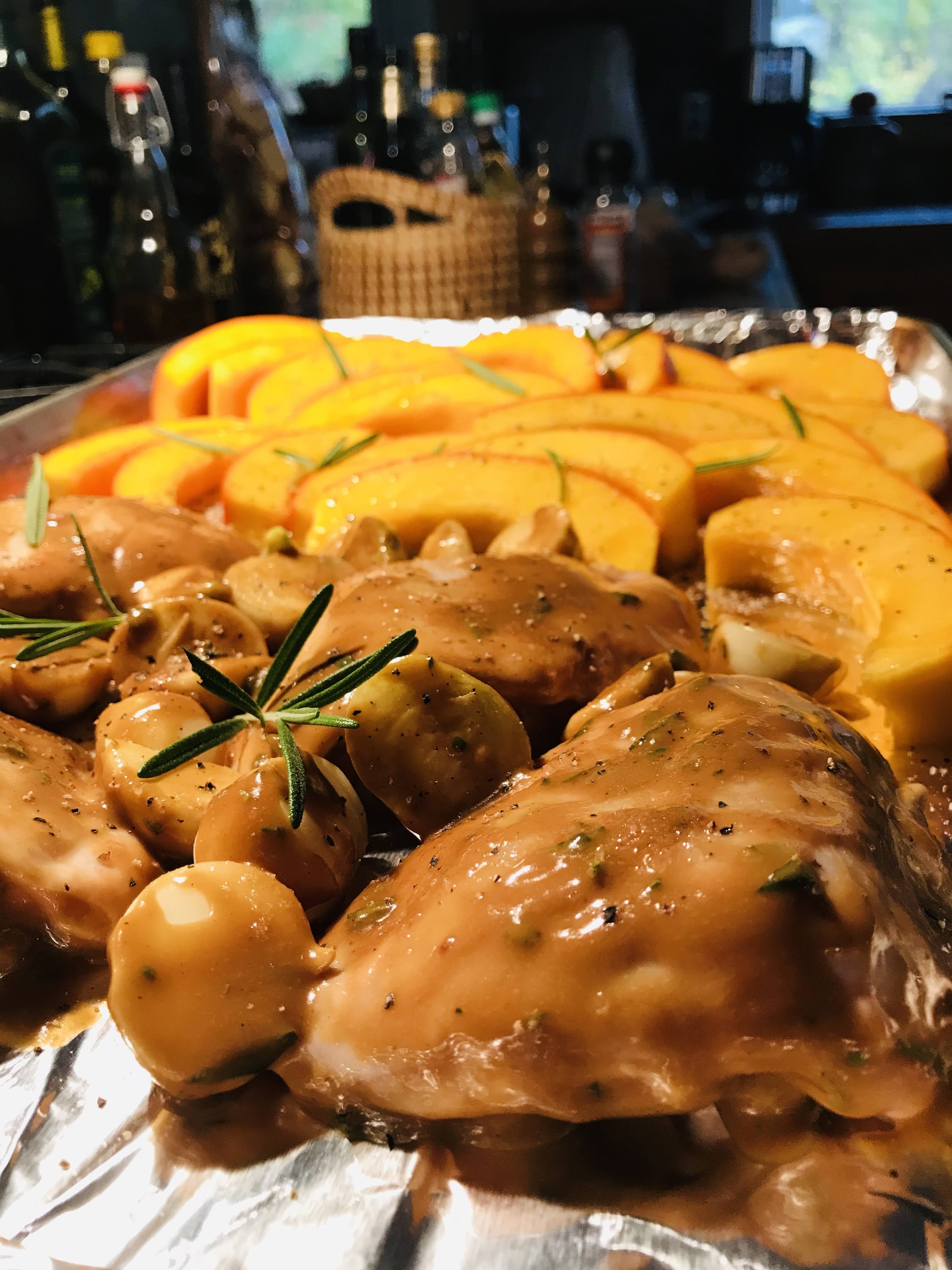
Ready for the oven
Seasoned perfectly

INSTRUCTIONS:

  1. Preheat the oven to 400 degrees F. Line a large sheet pan with aluminum foil.
  2. In a large bowl, whisk together the mustard, 3 tablespoons of the oil, the vinegar, garlic, and rosemary. Add the chicken, garlic and shallots and toss to coat. Let stand at room temperature while you prepare the pumpkin.
  3. Cut off the top and bottom of the pumpkin, then cut it in half lengthwise and remove the seeds. Cut each half into 1-inch wedges. In another large bowl, stir together the maple syrup and the remaining 2 tablespoons olive oil. Add the pumpkin and toss to combine. Place the pumpkin wedges in a single layer on one end of the prepared pan. Remove the chicken, garlic and shallots from the marinade and place on the other side of the pan. Season generously with salt and pepper.
  4. Roast until the chicken is opaque (160 degrees F) throughout and the pumpkin is golden brown and soft, about 45-50 minutes. Serve right away. Sprinkle fresh rosemary leaves as a garnish.

Serves 4-6

Beautifully golden and aromatic
ENJOY!!

“Silence isn’t empty, it’s full of answers.”

1 3 4 5 10